Convert Doses — Opioid Conversion Calculator
Enter source opioid and dose, then choose a target medication.
Source Medication
Enter per-dose amount with times/day, or enter total daily dose and leave times/day empty.
Target Medication
Cross-tolerance (25\u201350% typical)
Notes & Cautions
- Educational use only. Not medical advice or a prescribing tool.
- Reduce for incomplete cross-tolerance when switching opioids (typically 25\u201350%).
- Methadone and fentanyl patch conversions are approximate and context-dependent.
- Buprenorphine is not included; avoid converting to/from MME for partial agonists.
Quick Example
Oxycodone 10 mg taken 3×/day = 30 mg/day. MME = 30 × 1.5 = 45. Apply 25% reduction = 33.75 MME. Convert to morphine: 33.75 ÷ 1 = 33.75 mg/day. At 4 doses/day, per dose = 8.4 mg; round to 7.5\u201310 mg.
Educational tool, not medical advice. Check this tool’s method and limitations before interpreting a result. Talk to a qualified healthcare professional before making decisions about medication, diet, exercise, or treatment. See our Terms of Use.
Your rating helps improve Opioid Conversion Calculator: Equianalgesic Dose Conversion. We store only an anonymized vote (no personal data).
How to Use Opioid Conversion Calculator: Equianalgesic Dose Conversion
Step 1: Select source opioid and enter dose
Choose the current opioid (morphine, oxycodone, hydrocodone, fentanyl, methadone, or others) from the dropdown. Enter the per‑dose amount in mg and how many times per day, or enter the total daily dose directly. For fentanyl patches, enter the mcg/hr strength.
Step 2: Review source MME calculation
The opioid conversion calculator automatically converts your source regimen to morphine milligram equivalents (MME/day) using published equianalgesic factors. The MME status bar updates in real time to show your current exposure level.
Step 3: Set cross‑tolerance reduction percentage
Choose a cross‑tolerance reduction (typically 25–50%) to lower the equianalgesic dose when switching opioids. This safety step accounts for incomplete cross‑tolerance between different opioid medications.
Step 4: Choose target opioid medication
Select the target opioid you want to convert to. Optionally enter the target dosing frequency (times per day) to see an estimated per‑dose amount alongside the daily total.
Step 5: Review conversion results and rounding
Review the conversion result panel showing source MME, adjusted MME after reduction, and the target dose in mg/day or mcg/hr. Check optional rounding suggestions to common tablet or patch strengths, then verify with a trusted reference.
Step 6: Consult the equianalgesic table
Switch to the Equianalgesic Table tab to see all opioid conversion factors, equivalent doses for 30 MME, and common conversion pairs like morphine to oxycodone or oxycodone to fentanyl patch.
Key Features
- Convert between 11 opioids including morphine, oxycodone, fentanyl, and methadone
- Equianalgesic reference table with MME factors and common dose equivalents
- Automatic MME/day calculation with cross‑tolerance reduction (25–50%)
- Per‑dose breakdown with rounding to common tablet and patch strengths
- Non‑linear methadone conversion using bracketed dose‑dependent factors
- Educational safety markers at 50 and 90 MME/day thresholds
Understanding Opioid Conversion Results
How the Opioid Conversion Formula Works
The opioid conversion calculator follows a three‑step workflow. 1) Convert the source regimen to morphine milligram equivalents (MME/day) using an equianalgesic factor. For example, oxycodone has a factor of 1.5, so 20 mg/day equals 30 MME/day. Special rules apply to certain drugs: fentanyl patches use mcg/hr × 2.4 ≈ MME/day, while methadone conversion is non‑linear and depends on the total daily methadone dose. 2) Apply a cross‑tolerance reduction (commonly 25–50%) to lower the starting dose of the new opioid. 3) Convert the adjusted MME/day to the target drug by dividing by its equianalgesic factor. If you enter target doses/day, the calculator also displays an approximate per‑dose amount for quick review.
MME Reference Ranges and Safety Thresholds
Many organizations flag daily MME ranges to help contextualize opioid exposure. While not a prescribing rule, totals around 50 MME/day often prompt additional caution and review, and totals around 90 MME/day are commonly considered high exposure warranting careful monitoring. The opioid conversion calculator displays these thresholds with color-coded indicators: green for lower MME (<50), amber for moderate MME (50–89), and red for high MME (≥90). Final clinical decisions require a full patient assessment including indication, prior response, co‑medications, and monitoring plans.
Assumptions and Limitations
Equianalgesic tables are averages from limited data and can vary by source. Formulation (immediate-release vs extended-release), patient factors (age, renal/hepatic function), and drug interactions can meaningfully change response. Methadone and transdermal fentanyl have complex pharmacokinetics and conversion nuance; this opioid conversion calculator uses common educational factors, not clinical protocols. Buprenorphine is intentionally excluded from MME‑based conversions because it is a partial agonist. Always confirm results in a trusted reference and apply professional clinical judgment.
Complete Guide: Opioid Conversion Calculator: Equianalgesic Dose Conversion

Opioid conversion calculator with equianalgesic dose table. Convert morphine, oxycodone, fentanyl, hydrocodone, methadone doses and calculate MME/day instantly.
On this page
What the opioid conversion calculator solves
Switching between opioids requires translating the current regimen into an estimated equianalgesic dose of the new medication. Doing this by hand involves several steps: calculating total daily intake, consulting equianalgesic factors, applying a cross-tolerance reduction, and then translating the result into practical dosing. The process is error-prone when rushed. This opioid conversion calculator streamlines those steps so you can review an evidence-based estimate in seconds, keep assumptions visible, and avoid mental arithmetic while you focus on clinical context.
The goal is transparency, not automation. The output highlights conversions and assumptions so you can verify each part against a trusted reference. You can also pair the conversion with theMorphine Equivalent Calculator when you want to review a patient's total MME exposure more broadly.
How the opioid conversion calculator works
The opioid conversion calculator converts the source regimen to morphine milligram equivalents (MME/day) using published equianalgesic factors. For example, 10 mg of oxycodone has an MME of 15 because oxycodone's factor is 1.5; a fentanyl patch rated 25 mcg/hr counts as about 60 MME/day (25 × 2.4). After conversion, you select a cross-tolerance reduction (commonly 25–50%). The tool reduces the MME accordingly, then divides by the target drug's factor to estimate the target daily dose. If you provide a target frequency, it shows an estimated per-dose amount for quick planning.
Equianalgesic factors differ by source and context. The factors in this tool reflect common educational tables and are intended for learning, not prescribing. Always cross-check with a trusted reference and align with local protocols before making clinical decisions.
MME: what morphine milligram equivalents measure
MME (morphine milligram equivalent) is a way to express total opioid exposure in morphine-equivalent terms so that different drugs can be compared on a common scale. For example, oxycodone 20 mg/day = 30 MME, hydromorphone 8 mg/day = 32 MME, and a fentanyl 25 mcg/hr patch = 60 MME/day. The opioid MME calculator uses these equivalents to make conversions between medications straightforward and transparent.
MME is not a potency guarantee, a toxicity prediction for an individual, or a dosing rule. People metabolize and respond to opioids differently; comorbidities and co-medications also matter. Educational thresholds (extra caution around 50 MME/day and high exposure at 90 MME/day) are signals to reassess, not hard prescribing limits.
For a total-exposure review, you can compute all concurrent opioids with theMME calculator, then use this page to translate that exposure into a specific target agent if a switch is being considered.
Morphine to oxycodone conversion explained
The morphine to oxycodone conversion is one of the most commonly searched opioid conversions. Oxycodone is approximately 1.5 times more potent than oral morphine on a milligram-for-milligram basis. This means the equianalgesic ratio is roughly morphine 30 mg = oxycodone 20 mg (both providing about 30 MME). To convert morphine to oxycodone, divide the daily morphine dose by 1.5 to get the equianalgesic oxycodone dose.
For example, a patient on morphine 60 mg/day would have an equianalgesic oxycodone dose of 40 mg/day (60 ÷ 1.5). After applying a 25% cross-tolerance reduction, the starting oxycodone dose would be approximately 30 mg/day. Conversely, to convert oxycodone to morphine, multiply the oxycodone dose by 1.5. Oxycodone 30 mg/day = 45 MME = morphine 45 mg/day before reduction.
The same principle applies to hydrocodone: since hydrocodone and morphine share a factor of 1.0, they are roughly equivalent milligram-for-milligram (hydrocodone 30 mg ≈ morphine 30 mg). To convert hydrocodone to oxycodone, divide the hydrocodone dose by 1.5.
Fentanyl patch conversion and MME calculation
Fentanyl transdermal patches are dosed in mcg/hr rather than mg/day, making the conversion slightly different from oral opioids. A commonly used educational approximation is 1 mcg/hr of fentanyl ≈ 2.4 MME/day. Using this factor:
- Fentanyl 12 mcg/hr patch ≈ 28.8 MME/day
- Fentanyl 25 mcg/hr patch ≈ 60 MME/day
- Fentanyl 50 mcg/hr patch ≈ 120 MME/day
- Fentanyl 75 mcg/hr patch ≈ 180 MME/day
- Fentanyl 100 mcg/hr patch ≈ 240 MME/day
To convert from an oral opioid to a fentanyl patch, first calculate the total daily MME, apply the cross-tolerance reduction, then divide by 2.4 to get the mcg/hr patch strength. For example, morphine 90 mg/day = 90 MME. After a 25% reduction (67.5 MME), divide by 2.4 = 28.1 mcg/hr, suggesting a 25 mcg/hr patch as a conservative starting point.
To convert a fentanyl patch to oxycodone or another oral opioid, multiply the mcg/hr by 2.4 to get MME/day, then divide by the target drug's factor. The opioid conversion calculator handles these steps automatically.
Methadone conversion: non-linear dose factors
Methadone is unique among opioids because its equianalgesic conversion factor changes depending on the dose level. Unlike morphine or oxycodone which have fixed factors, methadone becomes relatively more potent at higher doses. The commonly used educational brackets are:
- Methadone 1–20 mg/day: MME factor ≈ 4 (so 10 mg methadone ≈ 40 MME)
- Methadone 21–40 mg/day: MME factor ≈ 8 (so 30 mg methadone ≈ 240 MME)
- Methadone 41–60 mg/day: MME factor ≈ 10 (so 50 mg methadone ≈ 500 MME)
- Methadone ≥61 mg/day: MME factor ≈ 12 (so 80 mg methadone ≈ 960 MME)
Converting to methadone from MME requires an inverse approach, working backward through the brackets to find the dose that matches. Because methadone has a long and variable half-life (8–59 hours), accumulation is a major concern. The numbers this opioid conversion calculator produces for methadone are rough educational estimates. Clinical methadone conversions typically require experienced oversight, slow titration, and close monitoring.
Cross-tolerance: why reduce the target dose
Tolerance to the current opioid does not fully transfer to a different opioid. This phenomenon, called incomplete cross-tolerance, means that the equianalgesic dose of a new opioid may produce stronger effects than expected. To lower risk during a switch, many references recommend starting the new opioid at a reduced equianalgesic dose, often 25–50% lower. That reduction is a pivotal safety step and is built into this opioid conversion calculator.
The exact reduction depends on the patient's status, the clinical setting, and the specific agents involved. Choosing a higher reduction provides a more conservative starting point, with room for careful titration. For patients on high doses (≥90 MME/day) or when converting to methadone, larger reductions (up to 50–75%) may be considered. The calculator allows you to set any reduction from 0% to 90% to accommodate different clinical scenarios.
How to read the equianalgesic dose table
The equianalgesic table (accessible via the Equianalgesic Table tab in the calculator) lists each supported opioid with its MME conversion factor and the dose equivalent to 30 MME. The reference baseline is oral morphine: 30 mg of oral morphine = 30 MME. To find how much of another drug equals that same exposure, look at the “= 30 MME” column. For example:
- Oxycodone: 30 MME ÷ 1.5 = 20 mg (so oxycodone 20 mg ≈ morphine 30 mg)
- Hydromorphone: 30 MME ÷ 4 = 7.5 mg (so hydromorphone 7.5 mg ≈ morphine 30 mg)
- Codeine: 30 MME ÷ 0.15 = 200 mg (so codeine 200 mg ≈ morphine 30 mg)
- Fentanyl: 30 MME ÷ 2.4 = 12.5 mcg/hr (so a 12 mcg/hr patch ≈ morphine 30 mg/day)
The table also includes common conversion pairs (like morphine to oxycodone, oxycodone to fentanyl patch) as a quick reference. These values do not include cross-tolerance reduction. Use the dose converter tab to apply the full conversion with reduction and rounding.
Input details: per-dose vs per-day
You can enter either a total daily dose or a per-dose amount with the number of doses per day. For transdermal fentanyl, enter the patch strength (mcg/hr). For the target agent, specifying doses per day lets the calculator estimate an approximate per-dose amount. This is useful when comparing immediate-release schedules (for example, four doses per day) or when planning the first few administrations during a switch.
If you need to design a full schedule or translate mg into mL or tablets, theDosage Calculator can help with per-dose vs per-day math, maximums, and practical units. For pediatrics, use thePediatric Dose Calculator.
Rounding and practical strengths
Results include optional rounding suggestions to common strengths (for example, 5, 7.5, 10, 15 mg tablets; 12, 25, 50 mcg/hr patches). Rounding is not a recommendation. It is there to save time when you are matching a plan to available products or checking plausibility. Always confirm that rounded values are reasonable, that the formulation matches your intent (IR vs ER), and that product labeling supports splitting or the chosen administration method.
Safety checks and patient factors
A safe opioid switch considers more than equianalgesic math. Evaluate renal and hepatic function, drug interactions (for example, CYP inhibitors/inducers), age, frailty, sleep-disordered breathing, and concomitant sedatives. If reduction or titration is needed, consider a slower approach with closer follow-up. For renal dosing questions, theeGFR Calculator helps quantify kidney function. For timing and accumulation considerations, see theDrug Half-Life Calculator.
Pain is subjective and dynamic. If you are tracking symptoms, thePain Scale Calculator can help standardize documentation alongside functional goals.
Worked examples
Example A — Oxycodone to morphine conversion:
A patient takes oxycodone 10 mg three times daily. Daily total = 30 mg. MME = 30 × 1.5 = 45. Apply a 25% reduction → 33.75 MME. Morphine factor is 1, so target ≈ 33.75 mg/day. If planning four daily doses, per dose ≈ 8.4 mg. A practical rounded start might be 7.5–10 mg per dose depending on clinical judgment and monitoring.
Example B — Morphine to fentanyl patch conversion:
A patient takes morphine 60 mg/day. MME = 60. Apply a 25% reduction → 45 MME. Fentanyl patches use ≈ 2.4 MME/day per mcg/hr, so 45 ÷ 2.4 ≈ 18.75 mcg/hr. The nearest common strength is 12 or 25 mcg/hr; in many contexts, starting at 12 mcg/hr with reassessment is more conservative, but clinical guidance and individual factors govern.
Example C — Converting to methadone:
Suppose the adjusted MME is 120. Using bracketed inversion, 120 ÷ 10 ≈ 12 mg/day would fall within the 1–20 mg/day methadone bracket (factor ≈ 4), so we check: 12 × 4 = 48 MME (too low). Try factor 8: 120 ÷ 8 = 15 mg/day (bracket 1–20 still applies if we use factor 4, giving 60 MME — still below 120). The correct inverse gives approximately 15 mg/day at factor 8. Because methadone builds and has variable kinetics, a cautious plan with close follow-up is essential.
Example D — Fentanyl 50 mcg/hr patch to oxycodone:
Fentanyl 50 mcg/hr = 50 × 2.4 = 120 MME/day. Apply 25% reduction → 90 MME. Oxycodone factor = 1.5, so 90 ÷ 1.5 = 60 mg/day oxycodone. At 4 doses/day, that is 15 mg per dose. The nearest common oxycodone strength is 15 mg. Note: this is a high-exposure conversion (≥90 MME) and warrants close monitoring.
Related tools
- Morphine Equivalent Calculator — review total MME exposure across multiple concurrent opioids.
- Dosage Calculator — translate mg into mL/tablets with daily maximums.
- Pediatric Dose Calculator — child-specific dose math by weight.
- Drug Half-Life Calculator — consider accumulation and timing between doses.
- eGFR Calculator — support renal adjustments for opioid dosing.
- Pain Scale Calculator — track symptoms and functional outcomes.
Browse the full calculators index or see more tools in theClinical & Medications category.
References and further reading
For educational context on MME, equianalgesic dosing, and safe opioid prescribing practices, see:
- Centers for Disease Control and Prevention (CDC) — Clinical Practice Guideline for Prescribing Opioids, including morphine milligram equivalent guidance and caution thresholds.cdc.gov
- National Institute on Drug Abuse (NIDA) — Opioid research topics including tolerance, dependence, and pharmacology.NIDA — Opioids
Disclaimer: This article and the opioid conversion calculator are for education only and do not constitute medical advice. Conversions are estimates based on common equianalgesic factors; clinical care requires individualized assessment, monitoring, and consultation with authoritative references.

Written by Marko Šinko
Co-Founder & Lead Developer
Computer scientist and developer working on calculator implementation, data handling, and accessible interfaces. His authorship describes development work, not independent medical review.
View full profileFrequently Asked Questions
What is an opioid conversion calculator?
An opioid conversion calculator is an educational tool that estimates an equianalgesic dose when switching from one opioid to another. It converts the source medication to morphine milligram equivalents (MME) and applies a cross‑tolerance reduction so the target dose is typically lower and safer as a starting point.
How do I convert morphine to oxycodone?
Morphine and oxycodone have an approximate ratio of 1:0.67 (or oxycodone factor 1.5). For example, morphine 30 mg/day equals 30 MME, which converts to about 20 mg/day of oxycodone (30 ÷ 1.5). Always apply a 25–50% cross‑tolerance reduction when switching, so a conservative starting oxycodone dose would be 10–15 mg/day.
How many MME is a 25 mcg fentanyl patch?
A 25 mcg/hr fentanyl patch is approximately 60 MME/day using the common educational factor of 2.4 MME per mcg/hr (25 × 2.4 = 60). Similarly, a 50 mcg/hr patch equals about 120 MME/day, and a 75 mcg/hr patch equals about 180 MME/day. These are estimates; factors vary by source.
How does methadone conversion work?
Methadone has non‑linear, dose‑dependent conversion factors. At 1–20 mg/day the MME factor is approximately 4; at 21–40 mg/day it is about 8; at 41–60 mg/day it is about 10; and at 61+ mg/day it is about 12. This makes methadone conversions more complex and approximate than other opioids.
Why reduce the target dose for cross‑tolerance?
When switching opioids, tolerance to the current drug does not fully transfer to the new one (incomplete cross‑tolerance). Starting the new opioid at a reduced equianalgesic dose (typically 25–50% lower) helps reduce the risk of adverse effects. A higher reduction percentage gives a more conservative starting dose with room for careful titration upward.
What is the oxycodone to fentanyl patch conversion?
First convert oxycodone to MME by multiplying the daily dose by 1.5. For example, oxycodone 40 mg/day = 60 MME. Then divide by 2.4 to get the fentanyl patch strength: 60 ÷ 2.4 = 25 mcg/hr. After applying a 25% cross‑tolerance reduction, the starting dose would be about 18.75 mcg/hr, suggesting a 12 or 25 mcg/hr patch depending on clinical judgment.
Does this support buprenorphine conversions?
No. Buprenorphine is a partial agonist with unique pharmacology and is not recommended for standard MME‑based equianalgesic conversion. Converting buprenorphine to or from MME can be misleading and potentially unsafe. Buprenorphine dosing should follow specific clinical protocols.
Is this opioid conversion calculator a prescribing guide?
No. This tool is for education only and does not constitute medical advice. Equianalgesic factors are averages from limited data. Clinical decisions require individualized patient assessment, monitoring, drug interaction review, and consultation with authoritative references and local protocols.
Related Calculators

Adjusted Body Weight Calculator — Dosing Weight (ABW)
Compute ABW for dosing with our adjusted body weight calculator, alongside IBW reference. Essential for accurate medication dosing, especially in obesity.

Alcohol Calculator: Drinks, Calories, Cost and BAC
Use our alcohol calculator to track standard drinks, alcohol calories, cost, and estimated BAC. Plan sessions, see time to sober, and make informed choices.

Alcohol Units Calculator UK — Weekly Tracking & Limits
Free alcohol units calculator for UK weekly tracking. Convert drinks to units, check against the 14-unit guideline, and see calories, standard drinks, and more.

BAC Calculator — Estimate Blood Alcohol Level by Drink
Use our BAC calculator to estimate blood alcohol levels from drinks, ABV, weight, sex, and hours. See limit markers, impairment ranges, and time to sober.

Caffeine Calculator: Daily Intake Tracker & Safe Limits
Use our caffeine calculator to total daily milligrams from coffee, tea, energy drinks, and custom doses, then check the running total against the 400 mg limit.
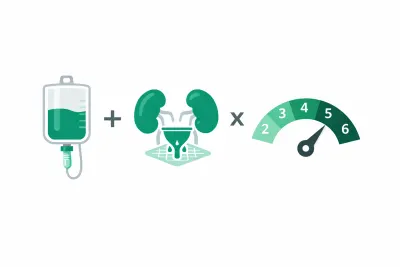
Carboplatin AUC Calculator — Calvert Formula Dosing
Free carboplatin AUC calculator using the Calvert formula to find chemotherapy dose in mg from target AUC, GFR, and Cockcroft-Gault creatinine clearance.