Calculate Your AST to ALT Ratio
Enter your AST and ALT values from the same blood test report to compute the De Ritis ratio instantly. Get a visual gauge chart, enzyme-level assessment, and clinical pattern interpretation.
Aspartate aminotransferase from your lab report (typical ULN ≈ 35–40 U/L)
Alanine aminotransferase from the same blood draw (typical ULN ≈ 35–40 U/L)
Educational tool, not medical advice. Check this tool’s method and limitations before interpreting a result. Talk to a qualified healthcare professional before making decisions about medication, diet, exercise, or treatment. See our Terms of Use.
Your rating helps improve AST/ALT Ratio Calculator (De Ritis Ratio). We store only an anonymized vote (no personal data).
How to Use AST/ALT Ratio Calculator (De Ritis Ratio)
Step 1: Enter Your AST Value
Type your AST (aspartate aminotransferase) value in U/L from your blood test report. The typical upper limit of normal is around 35–40 U/L.
Step 2: Enter Your ALT Value
Type your ALT (alanine aminotransferase) value in U/L from the same blood draw. Do not mix values from different lab dates.
Step 3: Calculate the Ratio
Tap Calculate Ratio to compute the AST to ALT ratio (De Ritis index) instantly. The result appears with a visual gauge and classification.
Step 4: Review Your Results
Check the color-coded ratio gauge, individual enzyme assessments, and the clinical patterns table to understand where your ratio falls on the spectrum.
Step 5: Compare Clinical Patterns
Use the reference table to compare your ratio with patterns commonly associated with different liver and non-liver conditions.
Key Features
- Instant AST/ALT ratio with visual gauge chart
- 5‑tier clinical interpretation (ALT‑predominant to AST‑predominant)
- Individual AST and ALT enzyme level assessment
- Reference ranges with color‑coded normal indicators
- Common clinical patterns comparison table
- Mobile‑optimized design with accessible inputs
Understanding Your AST/ALT Ratio Results
How to Calculate the AST to ALT Ratio
The AST/ALT ratio (De Ritis ratio) is calculated by dividing your AST value by your ALT value: AST ÷ ALT. Both enzymes are measured in U/L (units per liter) from a standard blood panel. For example, if your AST is 45 U/L and your ALT is 30 U/L, the ratio is 45 ÷ 30 = 1.50. AST stands for aspartate aminotransferase and ALT stands for alanine aminotransferase — two key liver enzymes that clinicians use to evaluate liver health.
Our AST/ALT ratio calculator does this computation instantly and displays your result on a color-coded gauge chart with a 5-tier clinical interpretation, from ALT‑predominant (ratio below 0.8) through strongly AST‑predominant (ratio 2.0 or above).
AST/ALT Ratio Chart: Reference Ranges
There is no single universal “normal” AST/ALT ratio because context matters. In many healthy adults, ALT is similar to or slightly higher than AST, yielding a ratio at or below 1.0. Here is how the five clinical interpretation bands break down:
- Ratio < 0.8 (ALT‑predominant): ALT notably exceeds AST. Common in non-alcoholic fatty liver disease (NAFLD), chronic viral hepatitis, and medication-related elevations.
- Ratio 0.8–1.0 (Mildly ALT‑predominant): ALT slightly higher than AST. Frequently a normal finding when absolute values fall within the reference range.
- Ratio 1.0–1.5 (Borderline): AST and ALT are roughly equal. Could be normal or suggest early chronic liver disease. Absolute values and clinical history guide interpretation.
- Ratio 1.5–2.0 (Moderately AST‑predominant): AST is notably higher. This pattern may appear with alcohol use, advancing fibrosis, or non-liver causes like muscle injury.
- Ratio ≥ 2.0 (Strongly AST‑predominant): Classically described in alcoholic hepatitis and advanced cirrhosis. Also possible with Wilson disease, cardiac injury, or hemolysis.
Always pair the AST to ALT ratio with absolute values (how high each enzyme is relative to your lab's reference range), medication history, alcohol exposure, recent exercise, and other labs. Discuss questions with a clinician who can evaluate the complete clinical picture.
Assumptions & Limitations
The ratio assumes both numbers are from the same blood sample and expressed in U/L. If ALT is 0, the ratio is undefined (division by zero). AST is found in skeletal muscle, cardiac muscle, kidneys, and red blood cells — so intense exercise, muscle injury, or hemolysis can raise AST relative to ALT and inflate the ratio without a primary liver problem. The AST/ALT ratio is a descriptive tool, not a diagnostic test, and should never be used to self‑diagnose or change treatment without consulting a healthcare professional.
Complete Guide: AST/ALT Ratio Calculator (De Ritis Ratio)

On this page
Use our free AST/ALT ratio calculator to compute the De Ritis index instantly. Visual ratio chart, enzyme-level assessment, and clinical patterns guide. The AST/ALT ratio calculator is fast, mobile-friendly, and transparent: it shows the exact computation alongside a color-coded gauge chart and clinical interpretation bands. It is not a diagnosis. Use it to organize information from your lab report and prepare better questions for a clinician.
If you are exploring health tools today, keep our complete calculators index handy. You can also try our dedicated liver function calculator if you want to look beyond AST and ALT at a broader set of liver markers. When a high De Ritis ratio raises concern for scarring, the FIB-4 calculator combines the same AST and ALT with your age and platelet count to estimate advanced liver fibrosis risk.
What Is the De Ritis Ratio?
The AST/ALT ratio — also known as the De Ritis ratio or De Ritis index — was first described by the Italian scientist Fernando De Ritis in 1957. It is the result of dividing aspartate aminotransferase (AST) by alanine aminotransferase (ALT), both measured in units per liter (U/L) from a standard blood panel. The ratio highlights relative changes between the two enzymes and can help clinicians distinguish between different types of liver disease, though no single number guarantees a diagnosis.
In clinical settings, patterns like “ratio less than 1,” “ratio around 1,” and “ratio of 2 or higher” appear frequently because they loosely correspond to groups of conditions. That is why our AST/ALT ratio calculator pairs the result with context notes and a visual gauge chart rather than a definitive label. The ratio is one piece of a larger clinical puzzle that includes absolute enzyme levels, patient history, imaging, and other lab results.
AST vs. ALT: Key Differences
ALT (alanine aminotransferase) is found predominantly in the liver, making it a more liver-specific marker. When ALT is elevated, the primary suspicion usually centers on hepatic causes. AST (aspartate aminotransferase) is found in the liver but also in skeletal muscle, cardiac muscle, kidneys, brain, and red blood cells. Because AST has multiple tissue sources, it can rise from non-liver causes — which is precisely why the ratio between the two enzymes provides useful diagnostic context.
Most laboratories report reference intervals for AST and ALT with upper limits of normal (ULN) commonly in the 30–40 U/L range for adults, though this varies by lab method, age, sex, and population. Your lab printout is the authority for your specific reference range. Mild elevations are common and can be transient; sustained or substantial changes deserve follow-up with a clinician who can review history, exposures, and additional tests.
Understanding the difference between AST and ALT is fundamental to interpreting the AST to ALT ratio correctly. If you also need to understand your overall metabolic picture, our A1C calculator and BMI calculator can provide additional health context.
How to Calculate the AST to ALT Ratio
The calculation is straightforward: take your AST value and divide it by your ALT value. Both numbers must come from the same blood draw and be expressed in the same units (U/L). For example:
- AST = 48 U/L, ALT = 60 U/L → Ratio = 48 ÷ 60 = 0.80
- AST = 55 U/L, ALT = 40 U/L → Ratio = 55 ÷ 40 = 1.38
- AST = 120 U/L, ALT = 50 U/L → Ratio = 120 ÷ 50 = 2.40
Our calculator does this computation instantly when you enter your values. Tap Calculate Ratio and you will see the result on a visual gauge chart alongside a 5-tier clinical classification. For broader liver assessment context, you might also explore our Child-Pugh score or MELD score calculators, noting that those scores combine multiple lab values and serve different clinical purposes.
AST/ALT Ratio Calculator Chart and Interpretation
The AST/ALT ratio chart in our calculator divides results into five clinical interpretation bands. This is more granular than the traditional three-tier approach, providing a clearer picture of where your ratio falls on the spectrum:
| Ratio Range | Classification | What It Suggests |
|---|---|---|
| < 0.8 | ALT-predominant | NAFLD, viral hepatitis, medication effects |
| 0.8–1.0 | Mildly ALT-predominant | Often normal, mild hepatic conditions |
| 1.0–1.5 | Borderline | Normal (if values low), early chronic liver disease |
| 1.5–2.0 | Moderately AST-predominant | Alcohol use, advancing fibrosis, muscle injury |
| ≥ 2.0 | Strongly AST-predominant | Alcoholic hepatitis, advanced cirrhosis, Wilson disease |
Interpretation always depends on both the ratio and the absolute enzyme values. An AST/ALT ratio of 0.80 with AST at 24 and ALT at 30 (both within normal range) has very different clinical significance than the same ratio with AST at 240 and ALT at 300. Context — symptoms, timing, medications, alcohol exposure — guides next steps.
Patterns in Common Liver Conditions
The AST to ALT ratio is one of many clues clinicians consider. Here are general tendencies, paired with the caveat that real cases do not always follow the textbook:
- Alcohol-related liver disease: AST tends to be higher than ALT, often producing a De Ritis ratio of 2.0 or above. A classic pattern is AST elevated but typically below 300 U/L, with ALT relatively lower. This pattern helped establish the De Ritis ratio as a clinical tool.
- Non-alcoholic fatty liver disease (NAFLD/NASH): ALT usually predominates, yielding a ratio below 1.0. As fibrosis progresses toward cirrhosis, the ratio may gradually rise above 1.0. For weight-related context, see our BMI calculator and body fat percentage calculator.
- Chronic viral hepatitis (B and C): ALT is typically elevated more than AST in early stages. With advancing disease and fibrosis, the ratio may shift toward or above 1.0.
- Acute hepatitis: Both enzymes can spike dramatically (into the thousands). The ratio is less informative during acute episodes; absolute values and clinical course matter more.
- Cholestatic liver disease: Alkaline phosphatase (ALP) and bilirubin are often more informative than the AST/ALT ratio in cholestatic patterns.
- Drug-induced liver injury: The pattern varies widely depending on the medication. Some drugs cause predominantly ALT elevation; others affect both enzymes.
When broader liver function assessment is a concern, clinicians combine enzyme ratios with additional markers. For educational context, compare our liver function calculator, Child-Pugh score, and MELD score — they each serve a different purpose but illustrate how multiple labs fit together in clinical decision-making.
Exercise, Muscle Injury, and False Elevations
One of the most common sources of confusion with the AST/ALT ratio is exercise-related AST elevation. Because AST is present in skeletal muscle, strenuous exercise, heavy lifting, marathon running, or muscle trauma can raise AST significantly — sometimes into ranges that suggest liver disease when the liver is actually healthy. ALT may also rise slightly after intense exercise, but AST rises disproportionately, which pushes the ratio higher.
Practical tips to minimize this confounding factor:
- Avoid intense training for 24–48 hours before a blood draw
- If you recently trained hard, tell your clinician so they can interpret results in context
- Consider a repeat test under controlled conditions if results seem inconsistent
- CK (creatine kinase) can help distinguish muscle-origin AST elevation from hepatic causes
Hemolysis during phlebotomy — when red blood cells break in the sample tube — can also falsely elevate AST. Lab reports often flag hemolysis; if present, repeating the test may be warranted. If you track alcohol consumption, our alcohol units calculator can help estimate grams of alcohol across drink types, adding practical context to lab discussions.
How the AST/ALT Ratio Compares With Other Liver Calculators
The AST/ALT ratio calculator focuses on a single, simple computation. There are several other clinical tools that combine multiple lab values for more comprehensive liver assessment:
- FIB-4 Index: Combines age, AST, ALT, and platelet count to estimate liver fibrosis risk. More predictive than the simple ratio for staging fibrosis.
- MELD Score: Uses bilirubin, INR, and creatinine (± sodium) to estimate mortality risk in advanced liver disease and prioritize transplant candidates.
- Child-Pugh Score: Combines lab values with clinical findings (ascites, encephalopathy) to stage cirrhosis severity into Class A, B, or C.
- APRI (AST to Platelet Ratio Index): Uses AST and platelet count to screen for significant fibrosis, particularly in hepatitis C.
None of these are interchangeable with the simple AST to ALT ratio. The De Ritis ratio is primarily descriptive and educational — it helps you understand the relationship between two enzymes — while the other scores combine multiple variables for risk stratification. Still, comparing them helps illustrate how labs fit into broader clinical reasoning.
When to Be Concerned About Your AST/ALT Ratio
While a single ratio value should not cause alarm, certain situations warrant prompt medical attention:
- Both AST and ALT are significantly elevated (more than 3× the upper limit of normal)
- The ratio is above 2.0 and you have a history of alcohol use
- You notice symptoms such as jaundice (yellowing of skin or eyes), abdominal pain, dark urine, or persistent fatigue
- Your enzyme levels are rising over multiple consecutive blood tests
- You are taking medications known to affect the liver (statins, acetaminophen, certain antibiotics)
In these situations, your clinician may order additional tests such as GGT (gamma-glutamyl transferase), alkaline phosphatase, bilirubin, albumin, INR, and imaging studies. The AST/ALT ratio is a starting point for questions, not an endpoint for answers.
Next Steps and Follow-Up
If your AST to ALT ratio or absolute enzyme values are new or unexpected, repeating the tests after a short interval (as advised by your clinician) is standard practice. Bring a list of medications and supplements, note alcohol use, recent infections, heavy exercise, and any new symptoms. Over time, trends in enzyme levels — not a single number — tend to be most informative for clinical decisions.
For day-to-day preparation, a simple checklist helps: schedule labs when you are well-rested, avoid strenuous training the day before, hydrate normally, and keep meals routine. If your clinician suggests a repeat draw, try to match conditions so comparisons are fair. Pair enzyme results with symptoms, physical exam, and other labs rather than drawing big conclusions from the ratio alone.
If you are building a personal dashboard of health metrics, bookmark our calculators hub to revisit tools you find useful. For related lab assessments, check our creatinine clearance calculator (kidney function) and eGFR calculator (kidney function assessment).
Authoritative introductions to AST and ALT tests are available from public, non-commercial sources. For example, see MedlinePlus: liver function tests, and ALT blood test. These are broad educational resources (not personalized medical advice) that explain how liver enzymes are measured and interpreted in clinical practice.
As you track numbers over time, keep notes in the same place you record results — include sleep quality, training intensity, alcohol consumption, new medications, and symptoms. Patterns in these notes often explain short-term bumps in AST or ALT. When you share the log with a clinician, it saves time and makes follow-up planning more efficient.

Written by Jurica Šinko
Founder & CEO
Entrepreneur and health information advocate, passionate about making health calculations accessible to everyone through intuitive digital tools.
View full profileFrequently Asked Questions
What is the AST/ALT ratio (De Ritis ratio)?
The AST/ALT ratio, also called the De Ritis ratio or De Ritis index, is a simple calculation: AST divided by ALT. Both are liver enzymes measured in U/L from a blood test. The ratio helps describe patterns seen in liver disease, alcohol-related conditions, and other clinical contexts, but it is not a diagnosis by itself.
What is a normal AST to ALT ratio?
There is no single "normal" value. Many healthy adults have a ratio near or below 1.0 because ALT tends to be slightly higher than AST. A ratio between 0.8 and 1.0 is common in healthy individuals. Interpretation always depends on both the ratio and the absolute enzyme levels from your lab report.
What does an AST/ALT ratio greater than 2 mean?
A ratio of 2.0 or higher has been classically associated with patterns seen in alcoholic hepatitis and advanced cirrhosis. However, this is not specific — muscle injury, hemolysis, cardiac conditions, and Wilson disease can also produce ratios above 2. The absolute AST and ALT values and full clinical context matter.
How do you calculate the AST to ALT ratio?
Divide your AST value by your ALT value. For example, if AST is 60 U/L and ALT is 40 U/L, the ratio is 60 ÷ 40 = 1.50. Both values must be from the same blood draw and in the same units (U/L). Our calculator does this instantly and shows a visual interpretation chart.
Can exercise change the AST/ALT ratio?
Yes. AST is present in skeletal muscle, so strenuous exercise, trauma, or heavy physical activity can raise AST relative to ALT, increasing the ratio without a primary liver problem. Many clinicians recommend avoiding intense exercise for 24–48 hours before a blood draw for accurate liver enzyme results.
Is the AST/ALT ratio useful for fatty liver diagnosis?
The ratio alone cannot diagnose fatty liver (NAFLD). In NAFLD, ALT typically exceeds AST, producing a ratio below 1. However, as fibrosis advances, the ratio may rise above 1. Diagnosis requires imaging, clinical history, and often additional scores. The ratio is one piece of a larger assessment.
What is the difference between AST and ALT?
AST (aspartate aminotransferase) is found in the liver, heart, muscle, kidneys, and brain. ALT (alanine aminotransferase) is more liver-specific. Because AST has multiple tissue sources, it can be elevated by non-liver conditions. This difference is why the ratio between them provides useful clinical context.
Is this AST/ALT ratio calculator accurate?
The calculator performs the exact mathematical computation AST ÷ ALT and displays your result with clinical interpretation patterns based on published medical literature. Accuracy depends on entering correct values in U/L from the same lab report. It is an informational tool and does not replace professional medical evaluation.
Related Calculators

A1C Calculator — Convert HbA1c to eAG with Targets
Use our A1C calculator to convert HbA1c to estimated average glucose (eAG). See normal, prediabetes, and diabetes thresholds in mg/dL and mmol/L. Fast results.

Albumin Calculator — Serum Albumin Level Interpretation
Free albumin calculator to interpret serum albumin levels, grade hypoalbuminemia, and compute A/G ratio plus albumin-corrected calcium from your lab results.
Albumin-Corrected Anion Gap Calculator — Hidden Acidosis
Use our albumin-corrected anion gap calculator to raise the anion gap by 2.5 per 1 g/dL of low albumin and reveal a hidden high-gap metabolic acidosis.

ANC Calculator: Absolute Neutrophil Count & Neutropenia
Free ANC calculator to calculate absolute neutrophil count from WBC and differential. Get ANC in cells/uL and x10^9/L with instant neutropenia grading.

Anion Gap Calculator — Metabolic Acidosis Evaluation
Free anion gap calculator finds serum anion gap from sodium, chloride, and bicarbonate, with albumin correction and delta ratio for metabolic acidosis.
Blood Pressure by Age Calculator: Normal Range Chart
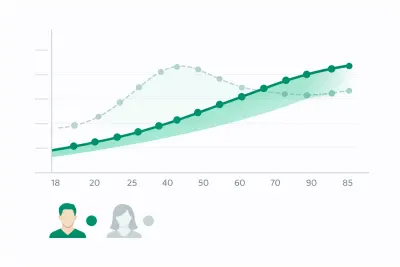
Free blood pressure by age calculator: see your percentile among adults your age and sex, plus a normal range chart of average readings from age 18 to 85.