Sprint Calculator
Distance + Time → Speed
Educational tool, not medical advice. Check this tool’s method and limitations before interpreting a result. Talk to a qualified healthcare professional before making decisions about medication, diet, exercise, or treatment. See our Terms of Use.
Your rating helps improve Sprint Calculator: Pace, Speed, Splits and Time. We store only an anonymized vote (no personal data).
How to Use Sprint Calculator: Pace, Speed, Splits and Time
Step 1: Pick what to calculate
Choose Speed, Time, Distance, or Convert. The first three solve one value from the other two. Convert estimates equivalent sprint times between distances.
Step 2: Enter distance and units
Type a sprint distance or tap a preset (60m, 100m, 200m, 400m). Switch meters/yards if needed. In Convert mode, pick a "from" and "to" distance.
Step 3: Add time or speed
Fill in minutes, seconds, and optional hundredths for time, or enter speed in m/s, km/h, or mph.
Step 4: Calculate and review
Tap Calculate to see pace per 100m/200m, speed in all units, and total time or distance. Convert mode shows equivalent times for all standard distances.
Step 5: Check auto-splits
Scroll to the split table for 10m, 50m, or 100m splits with cumulative timing. Use them to plan repeats and race targets.
Key Features
- Convert sprint times between 60m, 100m, 200m, and 400m
- Solve for time, distance, or speed from any two inputs
- Automatic splits with cumulative timing
- Pace per 100m and 200m with speed in m/s, km/h, and mph
- Metric and imperial units with quick distance presets
- Mobile-first, tap-friendly controls
Understanding Results
Formula
The sprint calculator is based on simple relationships between distance, time, and speed. In plain terms: speed = distance ÷ time. Rearranging gives time = distance ÷ speed and distance = speed × time. We report speed in meters per second (m/s), kilometers per hour (km/h), and miles per hour (mph), plus handy pacing figures like seconds per 100m and seconds per 200m. Unit conversions are exact: 1 mph = 0.44704 m/s; 1 km/h = 0.27778 m/s; 1 yard = 0.9144 meters.
Sprint Time Converter and Split Tools
The Convert mode lets you estimate equivalent sprint times between 60m, 100m, 200m, and 400m using regression factors from competitive data. For example, convert a 60m time to a 100m time or project a 200m time from your 100m result. Use the sprint pace calculator view to plan repeats and check pacing targets. This sprint speed calculator also doubles as a 100m time calculator and a 400m split calculator so you can map out realistic segment goals before a session.
Reference Ranges & Interpretation
Interpreting sprint results depends on your training background, event, and timing method. For context, recreational sprinters often run 100m in 13–17 seconds, while national‑level athletes can run 10–11 seconds. Elite men dip below 10 seconds and elite women below 11 seconds in competition, measured with fully automatic timing. For 400m, recreational times commonly range from 55–75 seconds, while competitive athletes may finish between 44–52 seconds. Treat these as broad landmarks; surface, wind, temperature, and reaction time all influence outcomes. For authoritative records and standards, see World Athletics.
Assumptions & Limitations
The tool assumes steady average speed across the entered distance, which is useful for planning and comparison but does not model real acceleration phases. Reaction time, blocks, lane stagger, wind, altitude, and track surface are not included. Hand timing typically reads faster than fully automatic timing. Use splits as planning targets, then adjust for conditions and your training plan. This tool is informational and not a training prescription.
Complete Guide: Sprint Calculator: Pace, Speed, Splits and Time

Free sprint calculator to find pace, speed, and splits for 60m, 100m, 200m, and 400m. Convert sprint times between distances and plan race-day split targets.
What the sprint calculator does
This sprint calculator turns two inputs into the third: distance, time, and speed. You can calculate how fast you ran a distance, how long a set should take at a target speed, or how far you will cover in a given time. It also gives pacing figures (seconds per 100m and per 200m) and a split table that breaks your attempt into useful segments with cumulative timing. Those splits are simple, steady-pace targets that make workouts easier to plan and compare.
A dedicated Convert mode lets you estimate equivalent sprint times between 60m, 100m, 200m, and 400m. Whether you need a 60m to 100m conversion, a 100m to 200m estimate, or a 200m to 400m projection, the sprint time converter uses regression factors from competitive data to give you a reliable starting point. The tool is built for common track sprints and supports metric and yard distances. Results do not require sign-in and are not stored.
How to enter your data
Pick what you want to calculate first. If you choose Speed, enter a distance and a finish time. If you choose Time, enter a distance and a target speed. If you choose Distance, enter a time and a speed. The fourth option, Convert, lets you estimate an equivalent time at a different sprint distance from a known result. Time accepts minutes, seconds, and optional hundredths so hand-timed efforts are easy to record. Speed can be typed in m/s, km/h, or mph with one tap to switch units.
For quick inputs, tap one of the distance presets. They fill the distance field immediately and highlight the active selection. You can then edit the time or speed and tap Calculate. If you are planning repeats, change the distance to match the rep (for example, 150m) and skim the split table to see suggested targets with cumulative times.
Converting sprint times between distances
One of the most requested features in sprint training is a sprint conversion calculator that turns a known time at one distance into an estimated time at another. Coaches and athletes frequently need to convert a 60m time to a 100m time for outdoor season planning, or project a 200m time from a 100m result. The Convert tab handles these conversions using regression factors derived from published competitive sprint data.
For example, if you run 7.20 seconds in the 60m, the tool estimates roughly 12.44 seconds for the 100m, about 26.31 seconds for the 200m, and approximately 57.74 seconds for the 400m. These are estimates, not guarantees. Athletes with a strong acceleration phase may convert better to shorter distances, while those with superior speed endurance may outperform the projection at longer sprints. The conversion table shows all four standard distances side by side for easy comparison.
Common conversion pairs include 60m to 100m, 100m to 200m, 200m to 400m, and 100m to 400m. Indoor athletes often need the 60m to 100m conversion when transitioning to outdoor competition. The factors assume typical fatigue curves from competitive sprinters. If you are a 400m specialist with above-average endurance, your actual 400m may be faster than the projection based on your 100m.
Choosing units and presets
Sprinters usually work in meters, but some facilities still mark yards. The calculator converts exactly between units (1 yard = 0.9144 m). Presets are metric because most modern tracks and timing systems are metric. If you enter yards, we convert the math internally and still show easy-to-read results. For speed, choose the unit that matches your watch or cycle: m/s for physics-style precision, km/h for international readers, or mph for U.S. readers.
If you are mixing workout types—say, a sprint warm-up followed by a short tempo or strides—you may also find a distance-based tool like the Running Pace Calculator helpful for longer efforts. For overall race equivalents and training paces, see the VDOT Calculator.
Reading pace, speed and splits
Speed is shown three ways: meters per second (m/s), kilometers per hour (km/h), and miles per hour (mph). Pace is presented as seconds per 100m and seconds per 200m. Together, these help you compare efforts at different distances. For example, if you can average 9.5 m/s over 100m, your 100m pace is about 10.53 seconds and your 200m pace target would be near 21.06 seconds—before adding realistic slowdowns from fatigue.
The split table now includes cumulative time alongside each split, making it easier to check progress at each mark during training. Splits assume steady average speed, which is not how real sprints play out. In practice, athletes accelerate off the line, hit peak velocity, and then manage deceleration. Still, steady splits are a practical starting point. Coaches often use them as idealized checkpoints, then tweak them to fit an athlete's profile. For longer repeats or tempo intervals, the same logic applies. If you want to time rests precisely, pair this tool with our Rest Time Calculator.
Example: planning a 100m
Suppose you want to plan a 100m in 12.60 seconds. Enter 100m for distance and 0:12.60 for time. The sprint calculator reports about 7.94 m/s (28.6 km/h or 17.8 mph), a pace of 12.60s per 100m, and 25.20s per 200m. The split table shows 10m marks with cumulative timing that add up to your finish time. When you practice, you might aim to be slightly ahead of the evenly-paced split for the first half (good acceleration), then hold as much of that speed as you can through the finish. Hand timing is common in practice; expect a few hundredths of variation.
For context about elite performances and record keeping, visit World Athletics, the international governing body that maintains official bests and timing standards. For U.S. event operations and youth through masters competition, USATF is a useful hub.
Example: 200m and 400m splits
If your current 100m is near 12.5, a simple training target for 200m might be about double that time, plus a small fatigue factor. Enter 200m and a goal time around 26.0–26.5 seconds to see your pacing. The table gives 50m splits with cumulative times that you can check at marks on most tracks. For 400m, enter a realistic target—say 60.0 to 70.0 seconds for many recreational athletes—and review the 100m splits. A balanced approach often means a strong but controlled first 200m and a committed, technical final 100m where posture and relaxation matter.
You can also use the Convert tab to estimate your 200m or 400m time from a known 100m result. This sprint time converter helps you set realistic goals when moving up in distance. If you are also monitoring aerobic sessions in your week, compare speeds and efforts with the Target Heart Rate Calculator. This helps keep sprint days genuinely fast while recovery and easy running days stay easy.
What counts as a good sprint time?
Sprint benchmarks vary widely by age, gender, training level, and timing method. For the 100m, recreational runners typically finish in 13–17 seconds, competitive high school athletes run 11–13 seconds, and national-level sprinters break 11 seconds. Elite men go below 10 seconds and elite women below 11 seconds with fully automatic timing. For the 200m, 26 seconds is solid for a recreational athlete, 22–24 seconds is competitive at the high school or college level, and elite times are below 20 seconds for men and below 22 seconds for women.
For the 400m, recreational times commonly range from 55–75 seconds, competitive club athletes run 48–55 seconds, and elite athletes finish under 45 seconds for men and under 50 seconds for women. The 60m, popular in indoor competition, sees elite times near 6.4–6.6 seconds for men and 7.0–7.2 seconds for women. Use these benchmarks as reference points, not as strict targets. Surface, wind, temperature, and timing precision all influence results. Track your progress over time using consistent conditions for the most meaningful comparisons.
Training: acceleration & max velocity
Short sprints are a mix of explosive acceleration and brief periods at or near maximal velocity. Improving the first 30–50m is a common way to improve 100m times. Drills like wall drills, A-marches, and short hill sprints cement posture and rhythm. Flying sprints (for example, 20m build-up + 20m fly) help athletes touch top speed in a controlled way. Your calculator splits provide even targets; in practice, accelerating a bit quicker than the even split early can be useful if you do not strain to do it.
Consistency matters more than heroics. A handful of high-quality reps done with full recoveries is better than too many reps that turn into sloppy form. Use your numbers to keep efforts crisp; save bigger volume for general conditioning days or technical sessions that are not all-out speed.
Training: intervals and rest
Intervals for sprinters vary by season. Early blocks often include short accelerations and sub-maximal technical reps. Later blocks add speed endurance, such as 120–150m reps at a controlled percentage of race effort. Use the sprint calculator to set repeat targets and to keep recovery honest. For example, 5 × 150m at 27–28 seconds with 3–5 minutes rest is a solid session for many trained athletes. If you prefer to time rests precisely, the Rest Time Calculator makes this easy on the track.
For athletes who also compete at 800m or do general fitness, pairing this sprint tool with the 5K Pace Calculator can help you hold steady efforts on longer days. When you need to gauge jump power and readiness, the Vertical Jump Calculator offers another angle on neuromuscular freshness.
Converting mph, km/h and m/s
You can type speed in the unit you know best, and the tool converts under the hood. Here are the exact factors for reference: 1 mph = 0.44704 m/s; 1 km/h = 0.2777777… m/s; and 1 yard = 0.9144 m. If your GPS watch reports km/h from a short sprint, switch to km/h, type the number, and tap Calculate. The outputs always include all three speed formats, so it is easy to translate for teammates and coaches who prefer other units.
If you occasionally blend true sprints with longer aerobic work, you may prefer long-form pacing in minutes per mile or minutes per kilometer. In that case, check the Running Pace Calculator for continuous pacing and the VDOT Calculator for training zones.
Tips, limitations and fairness
Warm up thoroughly before sprinting: 8–12 minutes of easy movement, dynamic flexibility, and gradual buildups prevent strain and make your timing more consistent. Use consistent timing methods (ideally electronic) and measure on a marked track. The split table assumes even pacing; your real splits will be faster early and slower late. That is normal. Use the numbers as targets, not as absolutes.
Conditions can shift results by a surprising amount. Wind, temperature, and surface hardness matter. Competition lanes and starting blocks can also change the equation. If you want to compare across weeks, use the same timing method at the same venue. For official records, standards and event rules, consult World Athletics and USATF. These organizations outline fully automatic timing, wind limits, and legal equipment.
Finally, sprint training should support your long-term health. Keep sprint days short and sharp, balance with recovery, and avoid stacking hard days back to back. For hydration guidance on hot days, our Water Intake Calculator is a helpful companion. Use common sense, and when in doubt, consult a qualified coach. This guide is for informational purposes only.

Written by Marko Šinko
Co-Founder & Lead Developer
Computer scientist and developer working on calculator implementation, data handling, and accessible interfaces. His authorship describes development work, not independent medical review.
View full profileFrequently Asked Questions
What is the sprint calculator used for?
It converts distance and time into pace, speed, and splits for common track sprints (60m, 100m, 200m, 400m). It can also convert sprint times between distances, such as estimating a 100m time from a 60m time, or projecting a 400m time from a 200m time.
How do I convert a 60m time to a 100m time?
Select the Convert tab, choose 60m as the source and 100m as the target, then enter your 60m time. The calculator uses regression factors from competitive sprint data to estimate your equivalent 100m time. The same method works for any pair of distances: 60m, 100m, 200m, and 400m.
How accurate is this sprint calculator?
Speed, time, and distance calculations use exact physics: speed equals distance divided by time. Distance conversions are estimates based on published regression data from competitive sprints and may vary with your fitness, race strategy, and conditions. Hand timing is typically 0.2–0.3 seconds faster than fully automatic timing.
Can it solve for time, distance, or speed?
Yes. Pick what you want to calculate, then enter the other two inputs. The tool supports m/s, km/h, mph and meters or yards. A fourth Convert mode estimates equivalent times across standard sprint distances.
Does it show 100m or 400m splits?
Yes. The tool generates automatic splits with cumulative timing: 10m splits for distances up to 120m, 50m splits for 200m–300m, and 100m splits for 400m. Splits assume steady pacing as a planning baseline.
Is 26 seconds good for a 200m sprint?
For recreational athletes 26 seconds in the 200m is a solid time. Competitive high school athletes typically run 22–25 seconds, while college and national-level athletes finish under 22 seconds. Elite men dip below 20 seconds. Times depend on age, training, surface, and conditions.
Is this sprint calculator free to use?
Yes. It is completely free, privacy-first, and stores no personal data. No sign-in required.
Does equipment and timing method matter for sprints?
Yes. Proper sprint spikes improve traction, and electronic timing is more consistent than hand timing. For meaningful comparisons, use the same timing method, track surface, and conditions each session.
Related Calculators

5K Pace Calculator — Splits, Finish Time & Pace Zones
Train smarter with the 5K pace calculator: convert goal time to precise per-km and per-mile pace and split targets. Get fast, accurate results instantly.

Agility Calculator for T‑Test and Pro Agility (5‑10‑5)
Use our agility calculator to time T‑Test and pro agility shuttles, compare attempts, track change‑of‑direction speed, check asymmetry, and monitor progress.
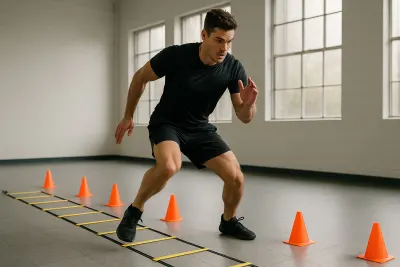
Speed, Agility & Power — Athletic Performance Calculator
Analyze running pace, race predictions, strength 1RM, and jump power in one athletic performance calculator. Mobile‑first with quick inputs and clear results.
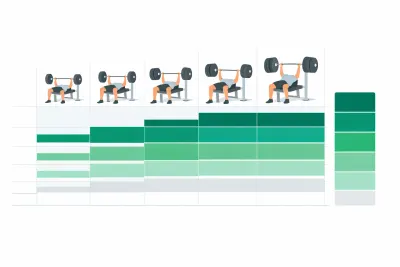
Bench Press Calculator — 1RM, Strength Level & Training
Free bench press calculator to estimate your one-rep max (1RM), compare strength standards by body weight and sex, and get percentage-based training loads.

Bench Press Calculator — 1RM Max, Sets & Plate Math
Use our bench press calculator to estimate your 1RM from reps and weight, auto‑build working sets, warm‑up ladder, and plate math in kg/lb. Mobile‑friendly.
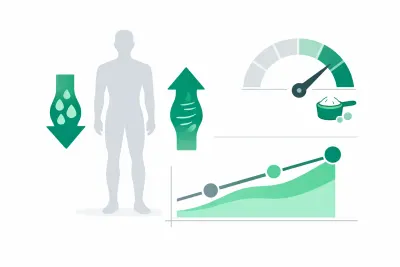
Body Recomposition Calculator — Recomp Fat Loss & Muscle
Free body recomposition calculator projects fat loss and muscle gain month by month from your calories, protein, body fat and training age. Plan a real recomp.