Calculate Weight Loss by Date — Set Pace or Target
+ Add height for BMI context (optional)
Your Weight Loss Timeline
Lose 30.0 lb (15% of current weight)
Weight to lose
30.0 lb
Time needed
30.0 weeks
Estimated finish date
Apr 14, 2027
Avg daily deficit
500 kcal
Milestones
Nov 8, 2026
7.5 lb lost
Est. weight: 192.5 lb
Dec 30, 2026
15.0 lb lost
Est. weight: 185.0 lb
Feb 21, 2027
22.5 lb lost
Est. weight: 177.5 lb
Show weekly timeline (up to 52 weeks)
| Week | Date | Est. weight (lb) |
|---|---|---|
| 0 | Sep 16, 2026 | 200.0 |
| 1 | Sep 23, 2026 | 199.0 |
| 2 | Sep 30, 2026 | 198.0 |
| 3 | Oct 7, 2026 | 197.0 |
| 4 | Oct 14, 2026 | 196.0 |
| 5 | Oct 21, 2026 | 195.0 |
| 6 | Oct 28, 2026 | 194.0 |
| 7 | Nov 4, 2026 | 193.0 |
| 8 | Nov 11, 2026 | 192.0 |
| 9 | Nov 18, 2026 | 191.0 |
| 10 | Nov 25, 2026 | 190.0 |
| 11 | Dec 2, 2026 | 189.0 |
| 12 | Dec 9, 2026 | 188.0 |
| 13 | Dec 16, 2026 | 187.0 |
| 14 | Dec 23, 2026 | 186.0 |
| 15 | Dec 30, 2026 | 185.0 |
| 16 | Jan 6, 2027 | 184.0 |
| 17 | Jan 13, 2027 | 183.0 |
| 18 | Jan 20, 2027 | 182.0 |
| 19 | Jan 27, 2027 | 181.0 |
| 20 | Feb 3, 2027 | 180.0 |
| 21 | Feb 10, 2027 | 179.0 |
| 22 | Feb 17, 2027 | 178.0 |
| 23 | Feb 24, 2027 | 177.0 |
| 24 | Mar 3, 2027 | 176.0 |
| 25 | Mar 10, 2027 | 175.0 |
| 26 | Mar 17, 2027 | 174.0 |
| 27 | Mar 24, 2027 | 173.0 |
| 28 | Mar 31, 2027 | 172.0 |
| 29 | Apr 7, 2027 | 171.0 |
| 30 | Apr 14, 2027 | 170.0 |
Your Plan Summary
Lose 30.0 lb (200.0 → 170.0 lb) at 1.00 lb/week with a daily deficit of ~500 kcal. Starting Sep 16, 2026, estimated finish by Apr 14, 2027 (30 weeks / 210 days).
Educational tool, not medical advice. Check this tool’s method and limitations before interpreting a result. Talk to a qualified healthcare professional before making decisions about medication, diet, exercise, or treatment. See our Terms of Use.
Your rating helps improve Weight Loss Calculator by Date - Plan Your Timeline. We store only an anonymized vote (no personal data).
How to Use Weight Loss Calculator by Date - Plan Your Timeline
Step 1: Choose Units
Select pounds (lb) or kilograms (kg) so inputs match your scale.
Step 2: Pick a Mode
Choose "Set weekly pace" to enter a loss rate, or "Set target date" to pick a finish date and let the calculator figure out the pace you need.
Step 3: Enter Weights
Type your current weight and your goal weight. The weight loss calculator by date supports loss timelines only.
Step 4: Set Pace or Date
In pace mode, choose a weekly loss rate (0.5–1.0 lb/week is typical). In date mode, pick the date you want to reach your goal.
Step 5: Review Timeline
See weight to lose, weeks needed, your estimated finish date, milestone checkpoints, daily deficit, and optional BMI change.
Key Features
- Two modes: set weekly pace or set target date
- Estimated finish date with milestones
- Daily calorie deficit estimate
- Optional BMI tracking from start to goal
- Week-by-week timeline with weight projections
- Metric & imperial units
Understanding Results
How This Weight Loss Timeline Calculator Works
The weight loss calculator by date offers two modes. In pace mode, you choose a weekly loss rate and we calculate your finish date: ΔW = current weight − goal weight, then weeks = ΔW ÷ pace. We convert weeks to days and add them to your start date. In target date mode, you pick a finish date and we calculate the weekly pace you need: pace = ΔW ÷ (days between dates ÷ 7). Both modes mark 25%, 50%, and 75% milestones to help you plan check‑ins.
Reference Ranges & Interpretation
Sustainable weight loss typically falls around 0.5–1.0 lb per week (≈0.25–0.5 kg/week) for many adults. Faster rates may be appropriate in supervised programs, but are harder to maintain and increase the chance of muscle loss or fatigue. Use the estimated finish date from this weight loss date estimator as a planning guide—not a guarantee—because real‑world progress varies with adherence, sleep, activity, and plateaus. If you add your height, the calculator also shows your BMI change from start to goal so you can see where you fall on clinical reference ranges.
Assumptions & Limitations
This weight loss time calculator estimates duration only. It does not prescribe calories, macros, or exercise. The daily calorie deficit shown uses the common rule of thumb of ~3,500 kcal per pound (≈7,700 kcal/kg), which is a simplification; individual energy needs change with body weight and activity. The calculator supports weight loss (goal below current). If your goal is above your current weight, a loss timeline does not apply. BMI values shown are based on the standard formula and serve as general context, not medical advice. Always consider your medical context and talk with a professional if you have a health condition or are unsure about an appropriate pace.
Complete Guide: Weight Loss Calculator by Date - Plan Your Timeline

Free weight loss calculator by date with timeline milestones. Set a goal weight and pace or target date to see your finish date, deficit and BMI change.
This weight loss timeline calculator turns a big goal into clear weekly steps. Use this complete guide to pick a safe pace (or set a target date and let the tool calculate the pace), understand the math behind your estimated finish date, and learn simple ways to stay on track through plateaus and busy seasons.
Why a date‑based weight loss plan works
A finish date anchors your effort. Using a weight loss calculator by date turns a vague intention into a concrete timeline with milestones you can see in advance. You plan check‑ins, notice early when reality drifts from the plan, and adjust. That feedback loop keeps your approach flexible and humane. Instead of judging yourself, you adjust your pace. Instead of "all or nothing," you shift to "learn and keep moving."
There's another benefit: a timeline helps you right‑size your expectations. Most people overestimate how fast safe weight loss happens. A calm, steady pace is both kinder and more reliable than sprinting from one hard restriction to the next. Your projected date will rarely match reality perfectly—and that's okay. The point is to give yourself a map you can revise, not a deadline to fear.
Practical planning works best when it meets you where you are. If your evenings are busy, shift your planning to breakfast. If weekends are social, plan maintenance on Saturdays and return to a small deficit Sunday night. A timeline is not a promise—it's a calendar conversation with your future self. It lets you make kinder choices in advance, so you don't have to improvise when energy runs low.
How to choose a goal weight
Goal weight is a personal decision. Some people find clinical ranges helpful (for example, reviewing your BMI with a clinician). Others prefer a functional goal, such as running a local 5K, fitting favorite clothes, or moving more comfortably at work. This weight loss calculator by date includes an optional BMI tracker—add your height and see your BMI at both your starting and goal weights. For a dedicated range check, our Adult BMI Calculator and Healthy Weight Range Calculator provide deeper context.
If you're unsure, pick a modest first waypoint (e.g., 10–15 lb or 5–7 kg) and reassess. Waypoints encourage momentum without locking you into a distant number. The calculator will still show you a clear date for that waypoint, plus milestone check‑ins so you can respond to plateaus early.
You can also select a "feel‑good band" rather than a single number. For example, "somewhere between 175–180 lb feels right." As your routine stabilizes, you might narrow the band or stop early. This flexibility helps people avoid the trap of chasing a number that doesn't improve daily life.
Picking a safe weekly pace
A common sustainable range for many adults is about 0.5–1.0 lb per week (≈0.25–0.5 kg/week). Faster loss is possible, but adherence gets harder and the risk of muscle loss increases, especially with low protein or little resistance training. If you're new to planning or you have a busy life, start in the lower half of that range.
The weekly pace you choose directly sets your estimated finish date. You can also use our Calorie Deficit Calculator and Maintenance Calorie Calculator to sense‑check your plan. They won't replace personal medical advice, but they will help you understand what a given pace might require day to day.
Remember that appetite, schedule, and stress vary across the year. Many people choose a slightly slower pace during holidays or intense work seasons, then nudge the pace back up when life calms down. The key is to keep your plan realistic for the next two weeks—not theoretically perfect forever.
Using target date mode to calculate weight loss by date
Sometimes you don't want to pick a pace—you want to know: "Can I reach my goal weight by a specific date?" That's exactly what target date mode answers. Switch to "Set target date," enter your goal weight, pick your deadline, and the weight loss date estimator will calculate the weekly loss rate you need. If the required pace exceeds safe limits, a warning appears so you can push the date further out or adjust your goal.
Target date mode is especially useful for people planning around events—a wedding, a vacation, a medical appointment, or a seasonal milestone. Rather than guessing, you get a concrete pace that you can compare against clinical recommendations. If the pace looks aggressive, you still have time to negotiate a more moderate goal or extend your window.
You can flip between the two modes to explore different scenarios. For example, set 0.75 lb/week in pace mode to see the finish date, then switch to date mode to see what pace a two-month-earlier deadline would require. This weight loss time calculator makes it simple to compare trade-offs and land on a plan that balances ambition with sustainability.
How this weight loss calculator by date works
The math is transparent by design. In pace mode, we compute the weight difference (current − goal), divide by your chosen pace to estimate weeks, convert to days, and add to your start date to estimate a finish date. In target date mode, the formula reverses: we divide the weight difference by the number of weeks between your start and target date to compute the required pace. Both modes generate 25%, 50%, and 75% milestones so you can schedule brief reviews.
Because real‑world change is messy, you can use milestones to adjust your plan rather than waiting until the end. If you're ahead of schedule, consider slowing down to preserve muscle and energy. If you're behind schedule, confirm that your weekly pace and lifestyle still fit. Many people discover they prefer a moderate pace with better sleep and fewer cravings.
For a deeper look at energy balance, pair your timeline with intake and activity tools. Our Weight Loss Calorie Calculator and TDEE estimate your average energy needs; using them together with this date calculator gives you both direction and pace.
Daily calorie deficit estimates
The calculator shows a rough daily calorie deficit based on a traditional rule of thumb: about 3,500 kcal per pound (≈7,700 kcal/kg). This estimate is a simplification. Your energy needs change as your body weight and activity change, and not all weeks look the same. Still, it's a useful starting point for mapping your weekly pace to a daily target.
If you want a more detailed view of intake and activity, pair this tool with our TDEE Calculator and Weight Loss Calorie Calculator. These tools estimate how many calories you burn each day and provide a step‑down plan aligned with your chosen pace.
You can also calibrate your plan with quick, non‑scale signals: How hungry are you between meals? How well are you sleeping? Do your workouts feel steady? Those markers often respond faster than the scale and can warn you to slow down—or confirm that your pace feels right—well before weigh‑in day.
Plateaus and smart adjustments
Plateaus are normal. The solution isn't always "eat less" or "do more." First, check basics: sleep, steps, hydration, and protein. Then look for small, sustained tweaks— a few more walking minutes, slightly earlier bedtimes, or a bit more protein at meals. The goal is to create a nudge you can hold for months, not a restriction you can only manage for a few days.
If your timeline starts slipping, nudge your weekly pace up by the smallest amount within a safe range and reassess in two weeks. Or keep the same pace, but recommit to habits you can track: daily steps, a consistent lunch, a set bedtime. The more you control your environment, the less willpower you'll need.
- Raise daily steps by 1,000–2,000 for two weeks and re‑check.
- Move one snack later in the day to protect your evening appetite.
- Swap one refined‑carb side for fruit, beans, or vegetables at lunch.
- Add 10–15 minutes of easy cardio after a strength session for recovery.
Why strength training and protein matter
Losing weight is easier when you keep muscle. Muscle helps maintain your resting energy use and supports strength, posture, and mood. Two to three weekly sessions of simple resistance training (machines, bands, or bodyweight) can make a clear difference. You don't need marathon workouts—15–30 focused minutes count.
Protein supports muscle maintenance while dieting. You can estimate your target using our Protein Calculator for Weight Loss. Spread protein across meals you enjoy, and combine it with fiber‑rich carbs and healthy fats so you feel satisfied.
A simple week could look like this: two 25‑minute strength sessions (push/pull or upper/lower), two 20‑minute brisk walks, and one longer easy session on the weekend. Keep it low‑friction. If the gym is a hassle, do a short dumbbell or band workout at home. Momentum beats perfection.
Sleep, stress, and adherence
Sleep and stress regulation decide whether your plan feels doable. Short sleep raises hunger and lowers patience. Chronic stress makes everything feel harder. That's why smart timelines include recovery: bedtime routines, short breaks, light walks, and simple meals. A plan that cares for you is a plan you'll keep.
If tracking gets overwhelming, pare it back. Pick one anchor habit (for example, a 10‑minute walk after dinner) and one easy food change (for example, adding a piece of fruit to breakfast). Keep the plan light enough that you can follow it on your worst week, not just your best week.
- Set a phone reminder for lights‑out 30 minutes earlier.
- Keep water visible: a bottle on your desk and in your bag.
- Batch one meal you actually like; repeat it 3–4 times per week.
- Schedule 5 minutes to plan tomorrow's meals and movement.
Example weight loss timelines you can copy
These examples show how weekly pace affects your finish date. Use the weight loss timeline calculator above to plug in your numbers and pick the pace that fits your life. You can also try target date mode to see what pace a specific deadline requires.
- 10 lb (≈4.5 kg) at 0.5 lb/week (≈0.25 kg/week): about 20 weeks. Milestones at ~5, ~10, and ~15 weeks.
- 20 lb (≈9 kg) at 0.75 lb/week (≈0.34 kg/week): about 27 weeks. Milestones at ~7, ~13, and ~20 weeks.
- 15 lb (≈6.8 kg) at 1.0 lb/week (≈0.45 kg/week): about 15 weeks. Milestones at ~4, ~8, and ~11 weeks.
You can chunk larger goals into phases. For example, plan 12 weeks at a moderate pace, then 4–6 weeks at maintenance to practice weight stability. Maintenance is progress: it refuels your energy, reduces drift, and gives your body a chance to consolidate new habits.
Common mistakes and simple fixes
Most setbacks come from over‑ambition, not lack of willpower. The fix is to make your plan smaller and more repeatable. If dinners are chaotic, simplify breakfast and lunch. If evenings are sedentary, add a short after‑dinner walk. If weekends derail you, plan maintenance calories on Saturday and Sunday morning, then resume your small deficit.
- Skipping meals entirely: Instead, anchor meals with protein and fiber so you arrive at dinner steady rather than starving.
- Huge calorie swings: Aim for consistency. Big day‑to‑day swings make weekly averages unpredictable.
- All‑or‑nothing thinking: Trade perfection for persistence. A B‑ plan done daily beats an A+ burst followed by burnout.
- Untracked drinking: Alcohol adds calories and disrupts sleep. If you drink, set a simple limit and hydrate early.
If you love numbers, keep it light: weigh 2–3 times per week, average the readings, and look at the trend every Sunday. If you prefer less tracking, pick three behaviors (for example: a daily walk, protein at lunch, a set bedtime) and check them off. Both methods work. Choose the one you'll keep.
Short case studies
Case A — Busy parent: Jamie wants to lose 15 lb before summer. With limited time, Jamie sets 0.6 lb/week, lifts twice per week for 25 minutes, and hits 7k steps on school days. The calculator shows ~25 weeks to goal. Midway, Jamie pauses for two weeks of maintenance during travel, then resumes and still finishes close to the estimated date.
Case B — Desk worker: Priya aims for 20 lb at 0.75 lb/week. She uses a pre‑planned breakfast and lunch, leaves dinner flexible, and walks 12 minutes after lunch. Her trend line drifts slower in month two; she adds one short resistance session and an extra 1,000 steps. The date shifts by a week, and progress feels smoother.
Case C — Gym regular: Marco prefers 1.0 lb/week while keeping lifting performance. He prioritizes protein and sleep, and uses our macro tool to stay fueled. After a minor plateau, he reduces pace to 0.8 lb/week and arrives at goal with strength intact.
If you prefer to plan macros alongside your timeline, try our Macro Calculator for Weight Loss or explore your resting and total daily energy via the BMR Calculator and TDEE Calculator.
When to pause or get support
If you feel dizzy, unusually fatigued, or preoccupied with food, take a breath. You can slow your pace, press pause, or seek professional guidance. People with medical conditions, those who are pregnant, and anyone recovering from an illness or injury should get personalized advice before pursuing weight loss.
High‑quality, neutral information can also help. For broad, non‑commercial guidance on healthy weight management and safe loss rates, see: CDC: Healthy Weight and NHLBI resources on weight management.
If you're building fitness alongside weight loss, our Heart Rate Zone Calculator can help set easy training targets. And when you want a quick sense of pace on the move, try the Walking Calorie Calculator to estimate energy burn during everyday activity.
Your plan should fit your life—not the other way around. Whether you use pace mode or target date mode, this weight loss calculator by date gives you a projected finish date as a guide. Keep milestones gentle, adjust when life demands it, and let your habits be small enough to repeat without drama. With steady practice, your timeline will move from estimate to achievement.

Written by Marko Šinko
Co-Founder & Lead Developer
Computer scientist and developer working on calculator implementation, data handling, and accessible interfaces. His authorship describes development work, not independent medical review.
View full profileFrequently Asked Questions
How does the weight loss calculator by date work?
In pace mode, it subtracts your goal weight from your current weight, divides by your chosen weekly loss rate, and adds the resulting days to your start date to show a finish date. In target date mode, it reverses the process: you pick the date and it calculates the weekly pace required.
What is a safe weekly weight loss pace?
Common guidance is about 0.5–1.0 lb/week (0.25–0.5 kg/week) for most adults. Faster rates can be risky and are harder to maintain without supervision.
Can I use this weight loss timeline calculator to pick a target date instead of a pace?
Yes. Switch to "Set target date" mode, pick the date you want to reach your goal weight, and the calculator will show the weekly pace you need plus whether that rate is safe.
Can the tool handle kilograms and pounds?
Yes. Switch between kg and lb at the top. All weights and rates convert automatically so your timeline stays accurate.
Does the weight loss date estimator show a daily calorie deficit?
Yes. It uses ~3,500 kcal per pound (≈7,700 kcal per kg) as a rough rule of thumb to estimate an average daily deficit for your weekly pace.
What does the optional BMI feature show?
If you add your height, the calculator displays your estimated BMI at your current weight and at your goal weight, along with the standard category (underweight, normal, overweight, obese). This gives additional clinical context for your plan.
What if my goal weight is higher than my current weight?
This tool is designed for weight loss timelines. If your goal is higher than your current weight, it will show that a loss timeline is not applicable.
How often should I update my weight loss plan?
Weekly is a good rhythm. If your pace changes or you hit a plateau, adjust the weekly rate or target date and the timeline will update instantly. The milestones help you schedule brief check-ins at 25%, 50%, and 75% completion.
Related Calculators
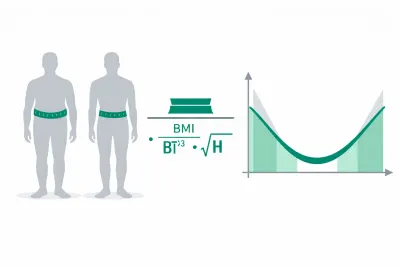
ABSI Calculator: A Body Shape Index & Mortality Risk
Free ABSI calculator computes A Body Shape Index from waist, height, and BMI to estimate visceral fat and mortality risk independent of body mass index.

Adult BMI Calculator for Men & Women — WHO BMI Guide
Use the adult BMI calculator to find your BMI with WHO categories. Enter metric or imperial units to see your status and BMI ranges quickly and clearly.

Army Body Fat Calculator — AR 600‑9 Standard Compliance
Check compliance with the Army body fat calculator per AR 600-9 standards. Enter circumference measures by sex to estimate body fat % and see pass/fail status.
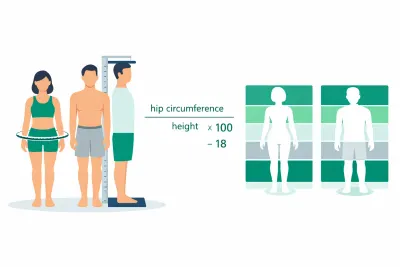
Body Adiposity Index Calculator (BAI) — Body Fat %
Free body adiposity index calculator estimates body fat percentage from hip circumference and height using the BAI formula, no weight or scale needed.
Body Composition Calculator — Fat, Lean Mass Breakdown
Use our body composition calculator to estimate body fat percentage, fat mass, and lean mass from tape measurements. Switch units and get clear categories.

Body Fat Calculator — Percentage for Men & Women (Tape)
Estimate with the body fat percentage calculator (body fat calculator) using Navy circumference equations. Supports metric/imperial and sex‑specific inputs.