If unsure, use food labels or a carb‑counting reference.
Choose a realistic target with your clinician (commonly 100–120 mg/dL or 5.6–6.7 mmol/L).
Grams of carbohydrate covered by 1 unit.
How much 1 unit lowers glucose (mg/dL).
Subtracts from correction only to reduce stacking.
0.5 u (pens), 1 u (syringes), or 0.1 u (pumps).
Educational tool, not medical advice. Check this tool’s method and limitations before interpreting a result. Talk to a qualified healthcare professional before making decisions about medication, diet, exercise, or treatment. See our Terms of Use.
Your rating helps improve Insulin Calculator: Bolus Dose From Carb Ratio and Correction. We store only an anonymized vote (no personal data).
How to Use Insulin Calculator: Bolus Dose From Carb Ratio and Correction
Step 1: Enter carbs (g)
Type the grams of carbohydrate for your meal or snack. If you need help estimating, use food labels or a trusted carb‑counting app.
Step 2: Set glucose and units
Enter your current blood glucose and choose mg/dL or mmol/L. Pick a realistic target (e.g., 100–120 mg/dL) with your clinician.
Step 3: Provide ICR and ISF (or estimate)
If you know your insulin‑to‑carb ratio (ICR) and correction factor (ISF), enter them. Otherwise, enable "Estimate from TDD" to derive ratios.
Step 4: Account for IOB
If you have recent rapid‑acting insulin on board (IOB), enter it so the calculator subtracts it from any correction dose.
Step 5: Calculate and review
Tap Calculate. Review meal bolus, correction, total, rounding, and any safety notes before dosing.
Key Features
- Insulin to carb ratio bolus calculation
- Correction dose with ISF and IOB
- TDD-based ICR and ISF estimation
- Unit toggle between mg/dL and mmol/L
- Pen and pump rounding options
- Mobile‑friendly touch interface
Understanding Your Insulin Dose Results
Insulin Dose Calculation Formula
Total bolus = meal bolus + correction dose. The meal bolus equals carbohydrate grams ÷ your insulin to carb ratio (ICR). The correction dose is the difference between your current and target glucose divided by your insulin sensitivity factor (ISF), minus any insulin on board. In symbols: Meal = carbs ÷ ICR; Correction = max(0, (current − target) ÷ ISF − IOB). The insulin calculator rounds to your selected step for practical dosing. If current glucose is at or below target, no correction is suggested and the tool highlights low‑glucose safety.
Reference Ranges and Interpretation
ICR and ISF are individualized. As a rough starting point used in diabetes education, the "500 rule" estimates ICR ≈ 500 ÷ total daily insulin (TDD), and the "1800 rule" estimates ISF ≈ 1800 ÷ TDD (mg/dL per unit). For mmol/L, ISF ≈ (1800 ÷ TDD) ÷ 18. These are educational heuristics—not prescriptions. Clinicians refine the insulin to carb ratio and correction factor based on age, activity, hypoglycemia risk, and monitoring data. After calculating your insulin dose, compare the result with your history and current context (food type, activity, illness) and discuss adjustments with your care team.
Assumptions and Limitations
This insulin calculator assumes rapid‑acting insulin taken before meals, stable absorption, and an accurate carb count. It cannot account for gastroparesis, unusual insulin action, steroids, infections, or automated pump algorithms. IOB entry is manual and approximate; pumps estimate IOB differently using insulin‑action curves. Do not use this insulin dose calculator to change prescriptions or for emergency care. Severe highs or lows require clinician‑directed action.
Complete Guide: Insulin Calculator: Bolus Dose From Carb Ratio and Correction
On this page
Free insulin calculator for bolus dosing. Enter carbs, insulin to carb ratio, correction factor, and IOB to estimate your mealtime insulin dose instantly.
This guide pairs the insulin calculator tool with plain‑English explanations so you can double‑check the math, understand what the inputs mean, and avoid common pitfalls like insulin stacking or unrealistic targets. It does not replace medical advice. Use the results to prepare questions for your clinician and to compare with your patterns from daily checks or a CGM alongside your A1C and blood sugar results.
What bolus insulin does and why dosing matters
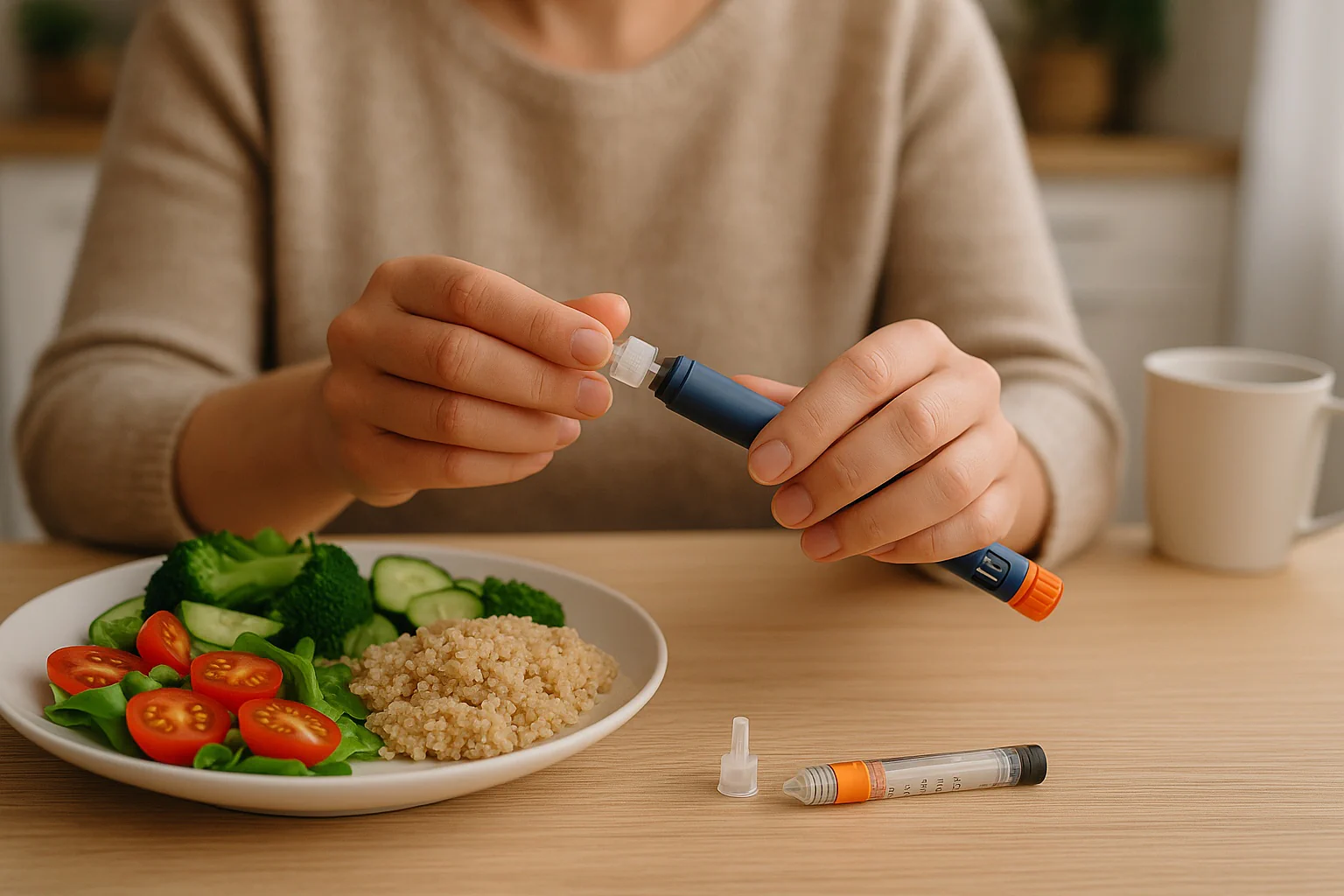
Bolus insulin is the rapid‑acting dose you take before eating or to correct a high blood glucose reading. Its primary job is to match the glucose rise from carbohydrates and to bring an elevated reading down toward a chosen target. Your body also relies on a basal influence—either a long‑acting injection or a pump's steady micro‑pulses—to cover the background glucose your liver releases between meals. This insulin calculator focuses on the bolus component: helping you estimate the right mealtime insulin dose based on what you eat and where your glucose stands right now.
Because meals and days vary, there is no single "right" bolus number. The same lunch might require different insulin during illness or after exercise. Think of the bolus as a set of dials you can adjust: one dial for carbs (your insulin to carb ratio), one dial for high‑glucose correction (your insulin sensitivity factor, or ISF), and one for timing and delivery method. An insulin dose calculator helps you set the first two dials consistently using your personal inputs, so you can make informed decisions rather than guessing.
How this insulin calculator works
The insulin dose calculation has two parts: a meal bolus and a correction dose. The meal bolus is the carbohydrate grams you plan to eat divided by your insulin‑to‑carb ratio (ICR). For example, if your ICR is 12 grams per unit, then 60 grams of carbs calls for 5 units of mealtime insulin. The correction dose addresses the gap between your current blood glucose and your target, using your insulin sensitivity factor (ISF). If your current reading is 180 mg/dL and your target is 110 mg/dL, the gap is 70. With an ISF of 50 mg/dL per unit, the correction is 70 ÷ 50 ≈ 1.4 units.
If you have insulin on board (IOB) from a recent dose, this insulin calculator subtracts that amount from the correction portion only—never from the meal bolus, because the food still needs coverage. The tool then rounds to the step you choose—typically 0.5 units for insulin pens or 0.1 for pumps. If your current glucose is already at or below target, no correction is suggested and the calculator highlights that you may need fast‑acting carbs if symptomatic. Every step of the math stays transparent so you can verify how each part contributes to the total insulin dose.
How to calculate insulin to carb ratio
Your insulin to carb ratio (ICR) tells you how many grams of carbohydrate are covered by one unit of rapid‑acting insulin. For example, an ICR of 1:12 means one unit covers approximately 12 grams of carbs. To calculate your insulin to carb ratio, diabetes educators commonly use the "500 rule": ICR ≈ 500 ÷ your total daily dose (TDD). If your TDD is 40 units, your estimated ICR is 500 ÷ 40 = 12.5 grams per unit. This insulin to carb ratio calculator automates that estimation when you enable the "Estimate from TDD" option.
The 500 rule is a starting point—not a prescription. Your actual carb to insulin ratio may differ based on time of day (many people are more insulin‑resistant in the morning), meal composition (fat and protein can affect absorption), and activity level. Clinicians refine the ratio over time using food logs, CGM traces, and post‑meal glucose patterns. Some people use body weight to arrive at a tentative TDD before data refines it, often in the range of 0.4–0.6 units/kg/day for type 1 diabetes in adults. If you need a weight reference, our ideal body weight calculator can provide a benchmark. For a dedicated tool that compares the 500 and 450 rules side by side and shows how your ratio maps to specific meal boluses, try our insulin-to-carb ratio calculator.
Picking glucose units and a target
Use the unit toggle to work in mg/dL or mmol/L. Under the hood, the insulin calculator converts mmol/L to mg/dL using the standard factor of 18 so the correction math is consistent. Your target is personal. Many adults use a pre‑meal target around 100–120 mg/dL (5.6–6.7 mmol/L), but targets are individualized based on hypoglycemia risk, age, and overall health. If you experience frequent lows, your clinician might recommend a higher target. A stable, realistic target beats chasing a single number that invites hypoglycemia.
You can also flip between units to see the same value expressed differently—helpful if your meter and clinician notes use different systems. If you only need unit conversion without dosing, see our glucose converter and the blood sugar ranges tool for context on what different glucose levels mean.
Insulin correction factor and ISF explained
The insulin sensitivity factor (ISF), also called the correction factor, estimates how much one unit of rapid‑acting insulin will lower your blood glucose. The most common estimation method is the "1800 rule": ISF ≈ 1800 ÷ TDD. With a TDD of 40 units, your estimated ISF is 1800 ÷ 40 = 45 mg/dL per unit (about 2.5 mmol/L per unit). This insulin correction factor calculator uses that rule when you enable TDD estimation, but you can also enter your known ISF directly in either mg/dL or mmol/L depending on your selected glucose unit.
Like the ICR, the correction factor varies by time of day, stress, illness, and hormonal cycles. A correction dose is calculated as: (current glucose − target glucose) ÷ ISF. The calculator then subtracts any insulin on board from this correction to prevent stacking. Understanding your correction factor helps you make safer decisions when your glucose is above target—rather than taking arbitrary correction doses, you use a consistent formula that your clinician can review and adjust over time.
Insulin on board (IOB) and stacking prevention
Insulin on board (IOB) refers to rapid‑acting insulin that is still active from a previous bolus. If you correct again before the earlier dose has worn off, the effects stack and can drive a dangerous low. Insulin pumps and some apps estimate IOB based on an insulin‑action curve (typically 3–5 hours for rapid analogs). This insulin calculator takes a simpler approach: it subtracts the IOB you enter from the correction portion only. That encourages caution while still allowing you to cover carbs fully. When in doubt, many clinicians prefer waiting for the previous dose to peak before adding more unless you have clear guidance otherwise.
Timing matters for mealtime insulin dosing too. For many rapid‑acting insulins, dosing 10–20 minutes before eating can better match the glucose rise from carbohydrates—unless you are close to or below target, in which case dosing with or after the first bites can be safer. A CGM trend arrow can inform timing decisions, but the core math in this insulin dose calculator stays the same: meal coverage from your carb ratio plus correction from your ISF, then practical rounding for your delivery device.
Rounding insulin doses for pens and pumps
Most insulin pens deliver in 0.5‑unit or 1‑unit increments. Pumps and patch devices can dose in finer steps, like 0.05 or 0.1 units. This insulin calculator lets you pick the rounding step so the result is practical to deliver with your device. If you round down, consider how the food's glycemic speed (fast carbs vs. mixed meals) and your glucose trend might affect the result; similarly, rounding up can be appropriate for slower meals or if your glucose is trending higher. The key is consistency so you can learn how your body responds and then adjust with your clinician's input.
Basal vs. bolus insulin context
Basal insulin covers background metabolic needs; bolus insulin covers food and glucose corrections. Many adults' total daily insulin ends up roughly balanced between basal and bolus, around 40–60% each, but the split changes with diet, activity level, and treatment goals. When you enter a TDD in the insulin calculator, it shows a basal reference (40–50% of TDD) as context—not as a dosing prescription. Some days meal boluses will dominate; other days—during illness or when eating low‑carb—basal may represent the larger share. What matters is whether your overall patterns are comfortable, safe, and aligned with your targets.
If you are exploring nutrition patterns to better understand your insulin needs, calculators like our carb calculator and calorie calculator can help estimate daily intake. Use them as context when reviewing your logs—never as dosing rules by themselves.
Special cases and limitations
Certain situations shift insulin needs: exercise (both during and many hours after), fever or infections, steroid medications, menstrual cycles, stress, sleep deprivation, and travel across time zones. Digestion issues like gastroparesis can delay glucose rises; high‑fat meals can cause prolonged elevations that a single bolus may not fully cover. Automated pump algorithms may recommend doses that do not match a simple ICR/ISF calculation because they account for predicted trends and prior micro‑boluses. Use this insulin calculator as a clear snapshot of standard bolus math, then layer device guidance and clinical advice on top.
Children, pregnant individuals, and older adults require tailored targets and safety margins. If you fall into these groups—or if you are newly diagnosed—work closely with your care team. This site provides insulin dose calculation tools and education; it does not manage emergencies or change prescriptions. For severe hyperglycemia or hypoglycemia, follow your clinician's emergency plan or local emergency instructions immediately.
Insulin dose calculation examples
Example 1 — Known ICR and ISF: You plan a meal with 60 g of carbohydrate. Your insulin to carb ratio is 1:12, your current glucose is 180 mg/dL, your target is 110 mg/dL, and your ISF is 50 mg/dL per unit. Meal bolus = 60 ÷ 12 = 5.0 units. Correction = (180 − 110) ÷ 50 = 1.4 units. With 0.5 units of IOB, the correction after IOB = 1.4 − 0.5 = 0.9 units. Total = 5.0 + 0.9 = 5.9 units, which rounds to 6.0 with 0.5‑unit rounding. If your meter reads in mmol/L, the insulin calculator transparently converts those values using the factor of 18 so the same logic applies.
Example 2 — Estimating from TDD: If you do not know your ICR/ISF but your TDD averages 40 units, the calculator estimates ICR ≈ 12.5 g/u and ISF ≈ 45 mg/dL per unit using the 500 and 1800 rules. With the same 60 g meal, the meal bolus is 60 ÷ 12.5 ≈ 4.8 units. A 70 mg/dL glucose gap suggests ≈ 1.6 units of correction. After subtracting 0.5 units IOB, correction = 1.1 units. Total ≈ 5.9 units—very similar to the known‑ratio example. Consistency across methods gives you confidence that the insulin dose calculation aligns with your experience.
To see how these bolus doses relate to long‑term glucose control, compare occasional finger‑stick checks and CGM trends with your A1C result. And if you need quick conversions between mg/dL and mmol/L outside of dosing, try our glucose converter.
Further reading and sources
Authoritative organizations provide accessible guides and standards for insulin dosing and diabetes self‑management:
- American Diabetes Association — Insulin & Other Injectables — Standards of Care covering diagnosis thresholds, targets, and insulin therapy principles.
- NIH/NIDDK — Insulin, Medicines, & Other Diabetes Treatments — patient‑friendly overview on insulin types, dosing, and self‑management education.
- Joslin Diabetes Center — educational resources on carb counting, insulin‑to‑carb ratios, and correction factor calculation.
Links are provided for education only. We do not endorse products and we do not provide medical advice.

Written by Jurica Šinko
Founder & CEO
Entrepreneur and health information advocate, passionate about making health calculations accessible to everyone through intuitive digital tools.
View full profileFrequently Asked Questions
How does this insulin calculator work?
This insulin calculator estimates a mealtime bolus dose in two parts: meal bolus (carbs ÷ insulin to carb ratio) plus a correction dose ((current glucose − target) ÷ ISF). If you have insulin on board, it subtracts that from the correction to prevent stacking. The result is rounded to your chosen step for practical dosing with a pen or pump.
How do I calculate my insulin to carb ratio?
The most common method is the 500 rule: divide 500 by your total daily dose (TDD) of insulin. For example, if your TDD is 40 units, your estimated insulin to carb ratio is 500 ÷ 40 = 12.5, meaning 1 unit covers about 12.5 grams of carbs. This insulin to carb ratio calculator automates that estimation when you enable the TDD option. Clinicians refine the ratio using food logs and post‑meal glucose data.
What is the difference between carb to insulin ratio and insulin to carb ratio?
They describe the same relationship from opposite directions. A carb to insulin ratio of 12:1 means 12 grams of carbs per 1 unit of insulin—identical to an insulin to carb ratio of 1:12. Most insulin calculators, including this one, express it as grams per unit (e.g., ICR = 12 g/u). Either way, you divide your carb grams by the ratio to get the meal bolus.
What is a correction factor or ISF?
The insulin sensitivity factor (ISF), also called correction factor, estimates how much one unit of rapid‑acting insulin lowers blood glucose. A common estimate uses the 1800 rule: ISF ≈ 1800 ÷ TDD. With a TDD of 40 units, ISF ≈ 45 mg/dL per unit (2.5 mmol/L per unit). The correction dose is the glucose gap divided by your ISF.
Can I use this as an insulin bolus calculator for pumps?
Yes. Set the rounding to 0.1 units to match typical pump precision. The bolus math (meal + correction − IOB) is the same whether you use a pen or pump. However, automated pump algorithms may calculate differently because they factor in predicted trends and micro‑boluses. Use this insulin bolus calculator as a reference and compare with your pump suggestion.
What about insulin on board (IOB)?
Insulin on board is rapid‑acting insulin still active from a previous bolus, typically lasting 3–5 hours. This calculator subtracts the IOB you enter from the correction portion only—never from the meal bolus—to reduce the risk of stacking. If unsure of your IOB, check your pump or wait for the prior dose to peak before correcting.
Is this tool medical advice or for emergencies?
No. This insulin dose calculator is informational and educational only. It does not replace personalized medical advice or clinical decision‑making. Do not use it for emergencies, to change prescriptions, or as a substitute for your healthcare provider. Always discuss insulin doses and targets with your clinician.
Can I use it for kids, pregnancy, or type 2 diabetes?
The bolus math (carbs ÷ ICR + correction) applies broadly, but insulin needs vary widely in children, during pregnancy, and across diabetes types. ICR and ISF values differ significantly for these groups. Use this calculator for education only and follow the specific guidance from your care team or insulin pump settings.
Related Calculators

Adjusted Body Weight Calculator — Dosing Weight (ABW)
Compute ABW for dosing with our adjusted body weight calculator, alongside IBW reference. Essential for accurate medication dosing, especially in obesity.

Alcohol Calculator: Drinks, Calories, Cost and BAC
Use our alcohol calculator to track standard drinks, alcohol calories, cost, and estimated BAC. Plan sessions, see time to sober, and make informed choices.

Alcohol Units Calculator UK — Weekly Tracking & Limits
Free alcohol units calculator for UK weekly tracking. Convert drinks to units, check against the 14-unit guideline, and see calories, standard drinks, and more.

BAC Calculator — Estimate Blood Alcohol Level by Drink
Use our BAC calculator to estimate blood alcohol levels from drinks, ABV, weight, sex, and hours. See limit markers, impairment ranges, and time to sober.

Caffeine Calculator: Daily Intake Tracker & Safe Limits
Use our caffeine calculator to total daily milligrams from coffee, tea, energy drinks, and custom doses, then check the running total against the 400 mg limit.
Carboplatin AUC Calculator — Calvert Formula Dosing
Free carboplatin AUC calculator using the Calvert formula to find chemotherapy dose in mg from target AUC, GFR, and Cockcroft-Gault creatinine clearance.