Calculate Your Weekly Alcohol Units
Use this free alcohol unit calculator to convert your drinks into UK units, track your weekly total against the 14-unit guideline, and see estimated calories. Works for beer, wine, spirits, cider, and custom drinks.
UK low-risk guideline: 14 units/week for men and women.
Quick add a drink:
No drinks added yet
Tap a preset above or use "+ Custom drink" to start tracking your weekly alcohol units.
Weekly Summary
No drinks added
0
of 14 units
0% of weekly target
14 units remaining
Daily average
0units
Estimated calories
0kcal
US standard drinks
0
AU standard drinks
0
Calculations are informational estimates based on label data. Real ABV and pour sizes vary. Not medical advice.
Educational tool, not medical advice. Check this tool’s method and limitations before interpreting a result. Talk to a qualified healthcare professional before making decisions about medication, diet, exercise, or treatment. See our Terms of Use.
Your rating helps improve Alcohol Units Calculator — Track Your Weekly UK Units. We store only an anonymized vote (no personal data).
How to Use Alcohol Units Calculator — Track Your Weekly UK Units
Step 1: Add your drinks
Tap a preset like pint of beer, wine glass, spirit measure, or cider — or use "+ Custom drink" for anything not listed.
Step 2: Adjust ABV and volume
Edit the ABV (%) and volume (ml) to match the label on your bottle or can. This ensures the alcohol units calculator gives you accurate results.
Step 3: Set your weekly count
Use the + and − buttons to enter how many of each drink you have in a typical week.
Step 4: Set your weekly target
The default is 14 UK units per week (the NHS low-risk guideline). Adjust this to match your own goal if different.
Step 5: Review your weekly summary
See your total UK units, daily average, estimated calories, US and AU standard drinks, and how many units remain within your target.
Key Features
- Convert any drink to UK alcohol units instantly
- Track weekly units against the 14-unit UK guideline
- See estimated calories from alcohol per week
- Compare UK units, US standard drinks, and AU standard drinks
- Quick presets for pints, wine, spirits, cider, and prosecco
- Custom drink entry with adjustable ABV and volume
Understanding Your Alcohol Units Results
How to Calculate Alcohol Units
UK alcohol units measure pure alcohol volume. One unit equals 10 ml (8 grams) of ethanol. The formula to calculate alcohol units is: units = volume (ml) × ABV (%) ÷ 1000. For example, a pint of 4% beer (568 ml) is 568 × 4 ÷ 1000 = 2.27 units. A 175 ml glass of 13% wine is 2.28 units. For grams of alcohol, multiply volume × ABV fraction × 0.789 g/ml (ethanol density). This lets us convert to US standard drinks (grams ÷ 14) and Australian standard drinks (grams ÷ 10).
How Many Units of Alcohol Per Week Is Safe?
The UK Chief Medical Officers advise that to keep health risks from alcohol to a low level, adults should not regularly drink more than 14 units per week, spread across three or more days with some alcohol-free days. This guideline applies equally to men and women. Our alcohol units calculator defaults to this 14-unit weekly target and shows a color-coded progress bar — green for low risk, amber for increasing risk (above 14 units), and red for higher risk (above 21 units).
These values help with planning and awareness. They are not medical advice and do not indicate legal fitness to drive or work. For estimating blood alcohol from a single session, use our BAC Calculator.
Assumptions and Limitations
Labels and pours vary. Craft beers and cocktails can be stronger than expected, and glass sizes differ by venue. Calorie estimates cover alcohol calories only (about 7 kcal per gram of ethanol) and do not include sugars or mixers. Our calculations assume standard ABV and serving size entries; revise the inputs to match what you actually drink. Results are informational only.
Complete Guide to the Alcohol Units Calculator
On this page
Knowing how many alcohol units you drink per week is the first step toward staying within UK guidelines and making informed choices about your health. This alcohol units calculator converts your real-world drinks — pints, wine glasses, spirits, cider, and more — into UK units and shows your weekly total against the recommended 14-unit limit.
Whether you're tracking units of alcohol per week for health reasons, planning a social event, or simply curious about how your drinking habits compare to UK guidelines, this guide explains how alcohol units work, how to calculate them, and how to use the results to make better decisions.
What is an alcohol unit?
A UK alcohol unit is a standardized measure of pure alcohol: exactly 10 millilitres (8 grams) of ethanol. The alcohol unit system was introduced to make it easier to compare different drinks regardless of glass size or strength. Without units, a "couple of drinks" could mean anything from 2 units (two small glasses of low-ABV wine) to over 6 units (two pints of strong IPA).
To calculate alcohol units from any drink label, use the formula: units = volume (ml) × ABV (%) ÷ 1000. For example, a 568 ml pint at 4% ABV is about 2.27 units (568 × 4 ÷ 1000). A 175 ml glass of 13% wine is roughly 2.28 units. Our alcohol unit calculator does this math automatically for every drink you add.
The beauty of the unit system is consistency. Whether you're drinking a pint of session bitter or a large glass of Malbec, units give you a single number to compare. That makes weekly tracking practical — and it's why UK health guidelines are expressed in units rather than "number of drinks."
How this alcohol units calculator works
Start by tapping a preset — such as a pint of beer, a wine glass, a spirit measure, or a cider — or add a custom item if your drink isn't listed. For each row, the calculator shows units per drink and lets you set how many you have in a typical week using simple + and − buttons.
The weekly summary updates instantly with your total UK units, a progress bar against your target, daily average, estimated calories from alcohol, and equivalent US and Australian standard drinks. The progress bar is color-coded: green means you're within the UK 14-unit guideline, amber indicates increasing risk (14–21 units), and red signals higher risk (above 21 units).
Under the hood, the app uses the established formula for UK units and the physical density of ethanol (0.789 g/ml) to estimate grams of alcohol. Grams are useful because they map directly to "standard drinks" in other countries: one US standard drink is 14 grams, one Australian standard drink is 10 grams. By computing grams first, we can show all three measures side by side.
You can edit any drink's label, volume, ABV, and type by tapping the edit icon. This means you can match exactly what you buy — brand name, specific pour size, or cocktail recipe — and the calculation updates in real time.
If you're also interested in estimating your blood alcohol concentration from a single drinking session, use our BAC Calculator which factors in weight, sex, time, and drink pacing.
How many units of alcohol per week is safe?
The UK Chief Medical Officers advise that to keep health risks from alcohol to a low level, it is safest not to regularly drink more than 14 units per week, spread across three or more days, with some alcohol-free days each week. This guideline applies equally to men and women and was updated in 2016 to reflect the latest evidence on alcohol and health.
To put 14 units per week in context: that's roughly 6 pints of 4% beer, or 6 medium (175 ml) glasses of 13% wine, or 14 single (25 ml) measures of 40% spirits spread across the week. Many people are surprised at how quickly units add up — a couple of large glasses of wine at dinner can account for over 6 units, nearly half the weekly allowance.
"Spread across several days" matters. Drinking the same total in one or two heavy sessions leads to higher peaks in blood alcohol concentration, more sleep disruption, and greater short-term risks compared with lighter amounts across more days. The weekly figure is a cap, not a target; many people will prefer an amount comfortably below 14 units, especially during training cycles or busy work periods.
The guidance is framed around long-term health risk and does not address legal impairment, fitness to drive, or workplace rules. If you need practical help translating units into real plans, this alcohol units calculator combined with our Alcohol Calculator can help you visualize totals, calories, and session pacing.
Reference: NHS guidance on alcohol units and low-risk drinking. NHS: Calculating alcohol units.
UK units vs. US and Australian standard drinks
A "standard drink" means different things in different countries. The UK unit is based on volume: 10 ml of pure alcohol. The US standard drink is defined by weight: 14 grams of alcohol (equivalent to about 17.7 ml of pure alcohol). In Australia, one standard drink is 10 grams.
Because brands vary in ABV and serving sizes, a "glass of wine" might be anywhere from 1.5 to 3 UK units depending on the pour and label strength. By showing both UK units and estimated standard drinks, this calculator lets you translate your habits if you travel, read international health advice, or use apps calibrated for a different country.
The conversion is straightforward: compute ethanol grams from the label (volume × ABV fraction × 0.789 g/ml), then divide by 8 for UK units, 14 for US standard drinks, or 10 for Australian standard drinks. You don't need to remember these figures — the calculator handles them — but understanding the difference explains why your drink might count as "more than one" in some systems.
Common drinks and their alcohol units
Here are ballpark figures for popular UK drinks to help you estimate before reaching for the calculator:
| Drink | Volume | ABV | UK Units |
|---|---|---|---|
| Pint of regular beer | 568 ml | 4% | 2.3 |
| Pint of strong lager/IPA | 568 ml | 5.5% | 3.1 |
| Beer bottle (standard) | 330 ml | 5% | 1.7 |
| Small glass of wine | 125 ml | 12% | 1.5 |
| Medium glass of wine | 175 ml | 13% | 2.3 |
| Large glass of wine | 250 ml | 13% | 3.3 |
| Bottle of wine | 750 ml | 13% | 9.8 |
| Single spirit measure | 25 ml | 40% | 1.0 |
| Double spirit measure | 50 ml | 40% | 2.0 |
| Pint of cider | 568 ml | 4.5% | 2.6 |
| Glass of prosecco | 125 ml | 12% | 1.5 |
These estimates let you mix and match quickly. For example, a Friday pub session with two pints of 4% beer (~4.5 units) and a single spirit (~1 unit) totals about 5.5 units — roughly 40% of the 14-unit weekly guideline. Use the calculator above for exact figures based on your actual drinks.
How many units in a bottle of wine, a pint of beer, and spirits?
Bottle of wine: A standard 750 ml bottle at 13% ABV contains about 9.8 UK units. At 14% that rises to 10.5 units, and a 15% red can contain 11.3 units. A single bottle of wine therefore represents 70–80% of the entire 14-unit weekly limit. If you share a bottle between two people over dinner, each person consumes roughly 5 units — more than a third of the weekly guideline.
Pint of beer: A standard pint (568 ml) of 4% beer is about 2.3 units. Stronger ales and IPAs at 5–6% push that to 2.8–3.4 units per pint. Six pints of 4% beer across a week totals about 13.6 units — just under the guideline. But six pints of 5.5% craft IPA would be 18.7 units, well over the limit.
Spirits: A single 25 ml measure of 40% spirit (gin, vodka, whisky, rum) is exactly 1 UK unit. A double (50 ml) is 2 units. Spirit measures are the most predictable way to count units, which is why many health professionals suggest using spirits with a measured pour as a way to control intake precisely.
Planning your week within the UK alcohol unit limit
The easiest way to plan is to set a weekly target (the default is 14 units) and spread it across the days where social plans are most likely. Some people keep weekdays alcohol-free, then split their target across Friday and Saturday. Others prefer smaller amounts distributed more evenly. The calculator helps you scenario-plan by adjusting counts and watching the progress bar.
A helpful tactic is to budget backwards from anchor events. If Saturday dinner includes two glasses of wine (around 4.5–6.5 units depending on pour and ABV), allocate those units first, then distribute the remainder across the rest of the week — or keep other days alcohol-free. This reduces decision fatigue: you decide once, then follow the plan.
If you want to balance hydration and recovery alongside your plan, visit the Hydration Calculator and the Water Intake Calculator. Both provide practical daily targets that pair well with nights out or training blocks.
If your plan includes a bigger occasion, consider how long it takes for alcohol to leave your system. The ETG Calculator can help you understand typical ethyl glucuronide detection windows, and our Alcohol Calculator can translate drinks into session calories and cost.
Weekly units answer “how much,” but they say nothing about control or consequences. If your total keeps landing above 14 units, the ten-item AUDIT alcohol calculator is the validated next step: it scores the WHO screening questionnaire 0–40 and places you in one of four risk zones. Note the unit mismatch when you answer it — one UK unit is 8 g of ethanol, while the WHO form is written around a 10 g standard drink, so 14 units is roughly 11 standard drinks, not 14.
Cutting back: smart swaps to reduce your weekly units
If you want to reduce your alcohol units per week without overhauling your social life, a few small tweaks go a long way. Choose beers in the 3–4% range instead of 5–6%, opt for a 175 ml wine glass instead of 250 ml, or alternate alcoholic drinks with sparkling water. Spirits are predictable — a single 25 ml measure of 40% spirit is exactly one unit — so long drinks with plenty of ice and a diet mixer keep units low while slowing your pace.
At home, stock smaller wine glasses or choose bottles with lower ABV. When out, decide on a plan before you arrive — two pints and then water, or one glass of wine and a shared dessert — and stick to it. The calculator lets you sanity-check whether the plan fits your weekly target before you leave the house.
You can also set a weekly unit allowance and "budget" for events. As you enter likely counts into the calculator, the remaining-units figure shows how much flexibility is left. If you prefer energy-budget planning, combine this tool with our Calorie Calculator or check body-composition goals using the Adult BMI Calculator.
Alcohol calories, cost, and weekly budgeting
Alcohol contains about 7 calories (kcal) per gram of ethanol, and many drinks include sugars and mixers on top. If you're tracking calories, the grams figure in the summary provides a quick proxy — multiply grams by 7 for approximate alcohol-only calories. Our calculator now shows this estimate directly in the weekly summary.
For context, a pint of 4% beer contains roughly 180 alcohol calories, a large glass of 13% wine about 230, and a single gin and slim-line tonic about 56 from the spirit alone. Over a week, alcohol calories can add up to a significant portion of daily intake without providing any nutritional value.
Another practical angle is pacing. The slower you drink, the more time your body has to metabolize alcohol, which generally leads to lower peak blood alcohol for the same total units. If you need to understand BAC curves, use the BAC Calculator.
Assumptions and limitations
Results are estimates based on label information. Real pours and ABV vary by brand, venue, and glassware; canned cocktails and craft beers may be stronger than expected. We use a standard ethanol density (0.789 g/ml) to compute grams of alcohol and show UK units, US standard drinks, and Australian standard drinks. Calorie estimates cover ethanol calories only and do not include sugars, mixers, or other ingredients.
Totals describe weekly quantity, not timing or pattern. Ten units consumed slowly across multiple days is very different from ten units in a single evening. If timing matters for your plans — early training sessions, driving, or work commitments — combine this weekly tracking tool with our session-focused calculators and give yourself generous margins for sleep and recovery.
Legal limits for driving are jurisdiction-specific and depend on factors beyond total weekly units, including timing, body mass, sex, and food intake. If you need to estimate impairment from a particular session, use the BAC Calculator and allow generous margins. When in doubt, don't drive.
Additional reading: World Health Organization resources on alcohol and health. WHO: Alcohol.

Written by Jurica Šinko
Founder & CEO
Entrepreneur and health information advocate, passionate about making health calculations accessible to everyone through intuitive digital tools.
View full profileFrequently Asked Questions
What does the alcohol units calculator measure?
This alcohol units calculator converts drinks into UK units (each equal to 10 ml of pure alcohol) and estimates your weekly total. It also shows US and Australian standard drinks, estimated calories from alcohol, and a progress bar against the 14-unit UK weekly guideline.
How do I calculate alcohol units from a label?
Multiply the volume in millilitres by the ABV percentage and divide by 1000. For example, a 568 ml pint at 4% ABV equals about 2.27 UK units (568 × 4 ÷ 1000). A 175 ml glass of 13% wine is roughly 2.28 units. Our calculator does this automatically for every drink you add.
How many units of alcohol per week is safe in the UK?
UK Chief Medical Officers advise that to keep health risks low, adults should not regularly drink more than 14 units per week, spread over three or more days with some alcohol-free days. This applies equally to men and women. Our calculator defaults to this 14-unit target.
How many units are in a bottle of wine?
A standard 750 ml bottle of wine at 13% ABV contains about 9.75 UK units (750 × 13 ÷ 1000). At 14% ABV that rises to 10.5 units. This means a single bottle of wine is roughly 70% of the recommended 14-unit weekly limit.
How many calories are in alcohol per unit?
Pure alcohol contains about 7 calories (kcal) per gram. One UK unit is approximately 8 grams of ethanol, so each unit adds roughly 56 calories before counting sugars or mixers. Our calculator estimates total weekly calories from alcohol in the summary.
What is the difference between UK units and US standard drinks?
A UK unit is based on 10 ml (8 g) of pure alcohol. A US standard drink is 14 grams of alcohol, and an Australian standard drink is 10 grams. Because of this difference, one pint of 4% beer counts as 2.27 UK units but roughly 1.3 US standard drinks. Our calculator shows both.
Why do my totals differ from bar menus or apps?
Real pours and ABV vary by brand, venue, and glassware. Craft beers and cocktails are often stronger than expected, and glass sizes differ. Always check the label ABV and enter your best estimate of serving size for accurate results.
Is my data saved or shared?
No. All calculations happen in your browser. We do not store, transmit, or share your drink entries or results. You can take a screenshot or note to track your intake over time.
Related Calculators

Adjusted Body Weight Calculator — Dosing Weight (ABW)
Compute ABW for dosing with our adjusted body weight calculator, alongside IBW reference. Essential for accurate medication dosing, especially in obesity.

Alcohol Calculator: Drinks, Calories, Cost and BAC
Use our alcohol calculator to track standard drinks, alcohol calories, cost, and estimated BAC. Plan sessions, see time to sober, and make informed choices.

BAC Calculator — Estimate Blood Alcohol Level by Drink
Use our BAC calculator to estimate blood alcohol levels from drinks, ABV, weight, sex, and hours. See limit markers, impairment ranges, and time to sober.

Caffeine Calculator: Daily Intake Tracker & Safe Limits
Use our caffeine calculator to total daily milligrams from coffee, tea, energy drinks, and custom doses, then check the running total against the 400 mg limit.
Carboplatin AUC Calculator — Calvert Formula Dosing
Free carboplatin AUC calculator using the Calvert formula to find chemotherapy dose in mg from target AUC, GFR, and Cockcroft-Gault creatinine clearance.
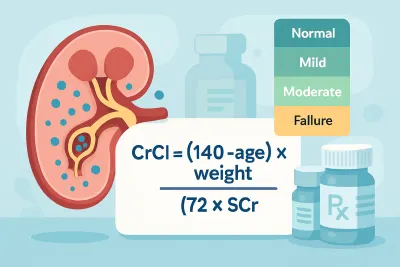
Cockcroft-Gault Calculator — Equation, Formula & Dosing
Free Cockcroft-Gault calculator using the original 1976 equation and formula. Enter age, weight, sex, and serum creatinine to get renal dose adjustments.