Enter your lab values to calculate corrected calcium
Type your measured total calcium and serum albumin to see the albumin-adjusted corrected calcium instantly. Switch between US (mg/dL, g/dL) and SI (mmol/L, g/L) units as needed.
Corrected Ca
9.84 mg/dL
Unit System
From your lab report (total, not ionized calcium).
Low albumin can make total calcium appear falsely low.
Advanced: Reference Albumin
Standard Payne constant: 4.0 g/dL. Change only if your lab uses a different normal.
Corrected Calcium
Formula: 9.2 + 0.8 × (4.0 − 3.2) = 9.84 mg/dL
Measured Ca
9.2mg/dL
Adjustment
+0.64mg/dL
Albumin
3.2g/dL
Ref. Albumin
4.0g/dL
Protein-Bound Ca
~36%
Ionized (est.)
~54%
Reference Ranges (Adults)
| Classification | Range |
|---|---|
| Hypocalcemia (Low) | < 8.6 mg/dL |
| Normal | 8.6 – 10.2 mg/dL |
| Hypercalcemia (High) | > 10.2 mg/dL |
Ranges are typical adult laboratory values. Always compare with your lab's specific reference interval.
Estimated Calcium Distribution
Approximate fractions based on current albumin. Ionized calcium is the biologically active form.
Disclaimer
This corrected calcium calculator is for educational purposes only and does not replace professional medical advice. Ionized calcium is preferred when clinical accuracy is critical. Always discuss results with your healthcare provider.
Educational tool, not medical advice. Check this tool’s method and limitations before interpreting a result. Talk to a qualified healthcare professional before making decisions about medication, diet, exercise, or treatment. See our Terms of Use.
Your rating helps improve Corrected Calcium Calculator. We store only an anonymized vote (no personal data).
How to Use Corrected Calcium Calculator
Step 1: Select your unit system
Tap US (mg/dL, g/dL) or SI (mmol/L, g/L) to match how your lab report displays calcium and albumin values.
Step 2: Enter measured total calcium
Type the total calcium value from your lab report into the Measured Total Calcium field. Use the total calcium result, not ionized calcium.
Step 3: Enter serum albumin
Type your serum albumin level into the Serum Albumin field. This is the protein level used for the albumin correction.
Step 4: Review corrected calcium result
The corrected calcium appears instantly with a visual range bar showing where your value falls relative to normal (8.6-10.2 mg/dL or 2.15-2.55 mmol/L).
Step 5: Check the detail cards
Review the adjustment delta, estimated calcium distribution, and reference ranges table to fully understand your corrected result.
Step 6: Copy or share results
Tap Copy Summary to save the corrected calcium, formula used, and classification to your clipboard for sharing with a clinician.
Key Features
- Payne albumin-correction formula (US and SI units)
- Instant auto-calculation with visual range bar
- Estimated calcium distribution breakdown
- Reference ranges with active-row highlighting
- Adjustable reference albumin for lab-specific values
- Copy summary for clinician or notes sharing
Understanding Results
How the Calcium Correction for Albumin Works
This corrected calcium calculator applies the Payne albumin-correction formula so that a total calcium result can be compared fairly across patients with different albumin levels. In US units: Corrected Ca (mg/dL) = measured Ca + 0.8 × (4.0 − albumin in g/dL). In SI units: Corrected Ca (mmol/L) = measured Ca + 0.02 × (40 − albumin in g/L). The constants 4.0 g/dL and 40 g/L represent typical reference albumin. You can adjust them in Advanced settings if your lab uses a different normal value.
Corrected Calcium Reference Ranges
Typical adult reference intervals for corrected calcium are about 8.6–10.2 mg/dL (US) or 2.15–2.55 mmol/L (SI). Each laboratory may use slightly different cutoffs. After the calcium albumin correction, results are classified as low (hypocalcemia), normal, or high (hypercalcemia). For borderline values, compare with your lab's specific interval and consider clinical context including symptoms, medications, and kidney function.
Assumptions & Limitations
The albumin-corrected calcium is an estimate, not a replacement for ionized calcium measurement. It assumes a roughly linear relationship between albumin and protein-bound calcium. Accuracy decreases in critical illness, significant pH changes, paraproteinemias, or major shifts in binding proteins. If your corrected calcium conflicts with symptoms, request an ionized calcium test. This tool is educational and does not constitute medical advice.
Complete Guide: Corrected Calcium Calculator

On this page
A corrected calcium calculator adjusts your total serum calcium for albumin levels, revealing whether calcium is truly abnormal or just appears off because albumin is low. About 40–45% of blood calcium rides on albumin, so when that carrier protein drops—from liver disease, malnutrition, or critical illness—total calcium falls even if the physiologically active ionized fraction hasn't budged. The Payne correction formula, used in clinical labs worldwide since the 1970s, provides a quick adjustment that clinicians rely on every day.
This guide walks you through exactly how the calcium correction for albumin works, when it's accurate, and when you're better off with an ionized calcium test. We'll work through a real example, compare US and SI units side by side, and cover the clinical scenarios that matter most.
What corrected calcium means and why it matters
Blood calcium exists in three forms: ionized (~50%, the active form), albumin-bound (~40–45%), and complexed with anions like phosphate and citrate (~10%). Standard chemistry panels measure total calcium—the sum of all three. That total is useful when proteins are normal, but misleading when they're not.
Consider a patient with albumin of 2.5 g/dL and total calcium of 7.8 mg/dL. The lab flags it as low. But the ionized calcium might be perfectly fine—the "low" result is an artifact of reduced binding protein, not a true calcium deficit. Correcting for albumin estimates what that total calcium would read if albumin were at its normal reference level, typically 4.0 g/dL. This single adjustment can prevent unnecessary workups and inappropriate treatment.
The calcium correction for albumin formula
The Payne formula has been the standard calcium albumin correction for over four decades. It adjusts 0.8 mg/dL of calcium for every 1.0 g/dL that albumin deviates from the reference value:
US units: Corrected Ca (mg/dL) = Measured Ca + 0.8 × (4.0 − Albumin in g/dL)
SI units: Corrected Ca (mmol/L) = Measured Ca + 0.02 × (40 − Albumin in g/L)
The 0.8 factor comes from empirical observations of the calcium-albumin binding relationship. Each gram of albumin binds roughly 0.8 mg of calcium. The SI equivalent (0.02 mmol/L per g/L) is the same relationship expressed in metric units. Some institutions use a 0.8 correction factor while others prefer 1.0—the difference is small but worth noting if your lab specifies a particular constant.
Worked example: step-by-step calculation
Let's walk through a real clinical scenario using US units.
Lab values: Total calcium = 8.0 mg/dL, Albumin = 2.5 g/dL
Step 1: Find the albumin deficit: 4.0 − 2.5 = 1.5 g/dL
Step 2: Multiply by correction factor: 0.8 × 1.5 = 1.2 mg/dL
Step 3: Add to measured calcium: 8.0 + 1.2 = 9.2 mg/dL
Result: The corrected calcium of 9.2 mg/dL falls within the normal range (8.6–10.2 mg/dL). Despite a low measured value, the patient's calcium is likely adequate—the deficit was albumin, not calcium itself.
The same patient in SI units: measured Ca 2.0 mmol/L, albumin 25 g/L. Corrected Ca = 2.0 + 0.02 × (40 − 25) = 2.0 + 0.3 = 2.3 mmol/L, which is normal (2.15–2.55 mmol/L). Both unit systems yield the same clinical conclusion. The same “correct the artifact, not the patient” logic drives our sodium correction calculator, which adjusts a falsely low sodium when glucose is high.
Corrected calcium vs. ionized calcium
Clinicians sometimes debate which test to trust. Here's how they compare:
| Feature | Corrected Calcium | Ionized Calcium |
|---|---|---|
| What it measures | Estimate of total Ca at normal albumin | Direct measure of free (active) Ca |
| Requires | Total Ca + albumin (routine labs) | Separate blood draw, anaerobic handling |
| Accuracy | Good in stable outpatients | Gold standard in all settings |
| Affected by pH | Not accounted for | Yes, varies with acid-base status |
| Reliability in ICU | Reduced—multiple confounders | Preferred for critical decisions |
| Cost/availability | No extra test needed | Additional lab order required |
For routine outpatient monitoring, the albumin-corrected value is usually sufficient. But in the ICU, during massive transfusions, or when symptoms don't match the numbers, ionized calcium is the test to request. If you're also tracking kidney function alongside calcium, our eGFR calculator can help you interpret renal labs in parallel. The same idea applies to electrolytes: low albumin hides about 2.5 mEq/L of anion gap per 1 g/dL, and the albumin-corrected anion gap calculator unmasks exactly that kind of concealed acidosis.
Units, conversions, and SI vs. US
US labs report calcium in mg/dL; most of the rest of the world uses mmol/L. The conversion is straightforward: 1 mmol/L ≈ 4.0 mg/dL. Divide mg/dL by 4 to get mmol/L, or multiply mmol/L by 4 for mg/dL. Albumin units differ too: US labs use g/dL, international labs report g/L (multiply g/dL by 10).
Our calculator handles both systems with a one-tap toggle. When you switch units, input fields and reference ranges update automatically so you always compare apples to apples. If you're converting between unit systems for research or international collaboration, keep the same correction factor convention—mixing a 0.8 factor meant for mg/dL with mmol/L values produces nonsense.
Reference ranges and clinical interpretation
Normal corrected calcium ranges aren't universal, but most adult labs use approximately these cutoffs:
| Classification | US (mg/dL) | SI (mmol/L) |
|---|---|---|
| Severe hypocalcemia | < 7.0 | < 1.75 |
| Mild hypocalcemia | 7.0 – 8.5 | 1.75 – 2.14 |
| Normal | 8.6 – 10.2 | 2.15 – 2.55 |
| Mild hypercalcemia | 10.3 – 12.0 | 2.56 – 3.0 |
| Severe hypercalcemia | > 12.0 | > 3.0 |
Borderline values (within 0.2 mg/dL of a cutoff) warrant repeat testing or an ionized calcium to confirm. Symptoms like muscle cramps, tingling, or fatigue alongside a borderline low result strengthen the case for further investigation. Similarly, persistent mild hypercalcemia with fatigue, thirst, or kidney stones should prompt parathyroid hormone (PTH) testing.
Low albumin: causes and how it affects calcium
Albumin is the most abundant plasma protein, synthesized by the liver. When albumin drops, so does the total calcium reading—even though the ionized fraction may be perfectly fine. Common causes of low albumin include:
- Liver disease — reduced albumin production (cirrhosis, hepatitis)
- Malnutrition — inadequate protein intake or absorption
- Nephrotic syndrome — albumin lost through damaged kidneys
- Inflammation/sepsis — albumin is a negative acute-phase reactant
- Burns or trauma — protein loss through damaged tissue
In all these settings, the calcium albumin correction helps distinguish true hypocalcemia from a lab artifact. To interpret the albumin value itself — whether it counts as mild, moderate, or severe hypoalbuminemia — run it through our albumin calculator. If you're evaluating liver disease alongside calcium, our liver function calculator and Child-Pugh calculator can organize the broader picture for a clinical conversation.
Hypercalcemia: when corrected calcium is high
A corrected calcium above 10.2 mg/dL (2.55 mmol/L) flags hypercalcemia. The two most common causes account for roughly 90% of cases:
- Primary hyperparathyroidism — a parathyroid adenoma secretes excess PTH, pulling calcium from bone. PTH will be elevated or "inappropriately normal."
- Malignancy — cancers release PTH-related peptide (PTHrP) or cause direct bone destruction. PTH is suppressed.
Less common causes include excess vitamin D supplementation, granulomatous diseases (sarcoidosis, tuberculosis), thiazide diuretics, and prolonged immobilization. Symptoms of hypercalcemia include kidney stones, bone pain, abdominal discomfort, confusion, and fatigue—often remembered by clinicians as "stones, bones, groans, and moans." Pair your corrected calcium review with renal assessment using our kidney function calculator, since hypercalcemia can impair kidney function.
Corrected calcium calculator limitations and accuracy
The Payne correction is a convenient estimate, but it has real limitations. A 2006 study in BMC Clinical Pathology found that corrected calcium misclassified 15–20% of results compared to ionized calcium in hospitalized patients. Accuracy declines when:
- Albumin is extremely low (< 2.0 g/dL) or extremely high
- The patient has a significant acid-base disturbance (pH shifts alter ionized Ca binding)
- Abnormal proteins are present (multiple myeloma, high globulins)
- The patient is receiving massive IV fluids or blood products
In these situations, an ionized calcium measurement provides the definitive answer. Think of the albumin correction as a screening tool: helpful for routine interpretation, but not the final word when clinical stakes are high. For a broader overview of what calcium tests measure, the NIH's MedlinePlus page provides a reliable summary: Calcium blood test (MedlinePlus).
Calcium is not the only lab value distorted by low albumin, and the arithmetic is not the same across analytes. Phenytoin is about 90% albumin-bound, so its correction divides by a proportional binding factor instead of adding a fixed 0.8 mg/dL per gram — at an albumin of 2.1 g/dL that turns a reported 6.5 mg/L into 12.5 mg/L, moving the result from subtherapeutic to therapeutic. Our corrected phenytoin calculator runs the Sheiner-Tozer equation, including the separate variant for dialysis patients. Applying calcium's additive logic to a proportionally bound drug produces answers that are wrong by a large factor, not merely imprecise.
References
- Payne RB, Little AJ, Williams RB, Milner JR. Interpretation of serum calcium in patients with abnormal serum proteins. BMJ. 1973;4(5893):643-646. doi:10.1136/bmj.4.5893.643
- Bushinsky DA, Monk RD. Calcium. Lancet. 1998;352(9124):306-311.
- MedlinePlus. Calcium blood test. U.S. National Library of Medicine. medlineplus.gov

Written by Marko Šinko
Co-Founder & Lead Developer
Computer scientist and developer working on calculator implementation, data handling, and accessible interfaces. His authorship describes development work, not independent medical review.
View full profileFrequently Asked Questions
What is a corrected calcium calculator?
A corrected calcium calculator adjusts your total calcium result for albumin levels using the Payne formula. When albumin is low, total calcium can appear falsely low even though ionized (active) calcium is normal. The correction estimates what total calcium would read at a standard albumin of 4.0 g/dL.
How do you correct calcium for albumin?
In US units: Corrected Ca (mg/dL) = measured calcium + 0.8 x (4.0 minus albumin in g/dL). In SI units: Corrected Ca (mmol/L) = measured calcium + 0.02 x (40 minus albumin in g/L). The 0.8 and 0.02 constants come from the Payne albumin-correction formula.
What is a normal corrected calcium level?
Normal corrected calcium is approximately 8.6 to 10.2 mg/dL in US units or 2.15 to 2.55 mmol/L in SI units. Values below the range suggest hypocalcemia and values above it suggest hypercalcemia. Reference ranges vary slightly between laboratories.
What is the difference between corrected calcium and ionized calcium?
Corrected calcium is an estimate derived from total calcium and albumin. Ionized calcium directly measures the free, biologically active fraction of calcium in the blood. Ionized calcium is more accurate in critical illness, acid-base disturbances, and when proteins are abnormal, but requires special sample handling.
Does low albumin always mean low calcium?
No. Low albumin reduces the protein-bound fraction of calcium, making the total calcium number look low. However, the ionized (active) calcium may be completely normal. That is exactly why the albumin correction exists: to reveal whether calcium is truly low or just appears low due to reduced albumin.
Can I use this calcium albumin correction in SI units (mmol/L)?
Yes. Toggle to SI mode and enter calcium in mmol/L and albumin in g/L. The calculator automatically applies the SI version of the Payne formula using 0.02 as the correction factor and 40 g/L as the default reference albumin.
Can I change the reference albumin value?
Yes. Open Advanced settings to adjust the reference albumin. The default is 4.0 g/dL (US) or 40 g/L (SI), which most labs use. If your laboratory lists a different normal albumin, entering that value keeps the correction internally consistent.
Is this corrected calcium calculator a medical diagnosis?
No. This tool is for educational purposes only and does not constitute medical advice or a diagnosis. Always discuss your lab results with a qualified healthcare professional, especially if you have symptoms like fatigue, muscle cramps, or confusion alongside abnormal calcium levels.
Related Calculators

Adjusted Body Weight Calculator — Dosing Weight (ABW)
Compute ABW for dosing with our adjusted body weight calculator, alongside IBW reference. Essential for accurate medication dosing, especially in obesity.

Alcohol Calculator: Drinks, Calories, Cost and BAC
Use our alcohol calculator to track standard drinks, alcohol calories, cost, and estimated BAC. Plan sessions, see time to sober, and make informed choices.

Alcohol Units Calculator UK — Weekly Tracking & Limits
Free alcohol units calculator for UK weekly tracking. Convert drinks to units, check against the 14-unit guideline, and see calories, standard drinks, and more.

BAC Calculator — Estimate Blood Alcohol Level by Drink
Use our BAC calculator to estimate blood alcohol levels from drinks, ABV, weight, sex, and hours. See limit markers, impairment ranges, and time to sober.

Caffeine Calculator: Daily Intake Tracker & Safe Limits
Use our caffeine calculator to total daily milligrams from coffee, tea, energy drinks, and custom doses, then check the running total against the 400 mg limit.
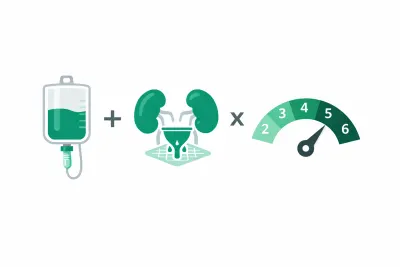
Carboplatin AUC Calculator — Calvert Formula Dosing
Free carboplatin AUC calculator using the Calvert formula to find chemotherapy dose in mg from target AUC, GFR, and Cockcroft-Gault creatinine clearance.