Calculate Your Child-Pugh Score
Enter bilirubin, albumin, INR, and select ascites/encephalopathy severity. The score and cirrhosis class update automatically as you type.
Cutoffs (mg/dL): <2 = 1 pt; 2\u20133 = 2 pts; >3 = 3 pts.
Cutoffs (g/dL): >3.5 = 1 pt; 2.8\u20133.5 = 2 pts; <2.8 = 3 pts.
Cutoffs: <1.7 = 1 pt; 1.7\u20132.3 = 2 pts; >2.3 = 3 pts.
Mild = diuretic-responsive; Severe = refractory.
Grading uses West Haven criteria (I\u2013IV).
Child-Pugh Score
10/15
1-Year Survival
~45%
2-Year Survival
~35%
Operative Risk
~80% perioperative mortality
Bilirubin
2.1 mg/dL
2/3 pts
Albumin
3.3 g/dL
2/3 pts
INR
1.8
2/3 pts
Points Breakdown
1\u20133 per criterion
Total
10/15
| Class | Score | Status |
|---|---|---|
| Class A | 5–6 | Well-compensated |
| Class B | 7–9 | Significant compromise |
| Class C | 10–15 | Decompensated |
Clinical Disclaimer
Child-Pugh is a staging tool for cirrhosis severity. Survival estimates are historical averages and vary by etiology, comorbidities, and care. For transplant allocation, use the MELD/MELD-Na score. This calculator does not replace clinical judgment.
Educational tool, not medical advice. Check this tool’s method and limitations before interpreting a result. Talk to a qualified healthcare professional before making decisions about medication, diet, exercise, or treatment. See our Terms of Use.
Your rating helps improve Child-Pugh Score Calculator. We store only an anonymized vote (no personal data).
How to Use Child-Pugh Score Calculator
Step 1: Choose Units
Select units for bilirubin (mg/dL or µmol/L) and albumin (g/dL or g/L) to match your lab report.
Step 2: Enter Lab Values
Type total bilirubin, serum albumin, and INR into the inputs. The score updates automatically as you type.
Step 3: Select Clinical Findings
Choose ascites severity (none, mild/moderate, severe) and hepatic encephalopathy grade (none, Grade I–II, Grade III–IV).
Step 4: Read Your Score
View the total Child-Pugh score (5–15), Class A/B/C badge, visual score bar, and per-criterion points breakdown.
Step 5: Review Survival & Risk
Check the 1-year and 2-year survival estimates, operative mortality risk, and the classification reference table.
Step 6: Copy or Compare
Use the Copy Summary button for documentation, or compare with our MELD score calculator for transplant prioritization.
Key Features
- Auto-calculates Child‑Pugh class (A/B/C) as you type
- Per-criterion points breakdown with visual score bar
- 1-year and 2-year survival estimates per class
- Unit toggles for bilirubin (mg/dL/µmol/L) and albumin (g/dL/g/L)
- Copy summary button for clinical documentation
- Mobile sticky result bar for quick reference
Understanding Your Child-Pugh Score Results
Child-Pugh Score Formula
The Child-Pugh score assigns 1–3 points to five criteria: total bilirubin (<2, 2–3, >3 mg/dL), serum albumin (>3.5, 2.8–3.5, <2.8 g/dL), INR (<1.7, 1.7–2.3, >2.3), ascites (none, mild/moderate, severe), and hepatic encephalopathy (none, Grade I–II, Grade III–IV). The sum (5–15) maps to Class A (5–6), Class B (7–9), or Class C (10–15).
Child-Pugh Classification Chart
Class A (5–6 points) reflects well-compensated cirrhosis with approximately 100% one-year survival. Class B (7–9 points) indicates significant functional compromise with ~80% one-year survival. Class C (10–15 points) signals decompensated disease with ~45% one-year survival and ~80% perioperative mortality. For transplant allocation and short-term mortality prediction, also calculate the MELD/MELD-Na score.
Assumptions & Limitations
Albumin can be low for non-hepatic reasons (malnutrition, nephrotic syndrome). INR may be elevated by warfarin or antibiotics. Ascites and encephalopathy grading is semi-subjective. Cholestatic diseases like PBC may inflate the bilirubin score. Always interpret the Child-Pugh score in clinical context. For detailed background, see NCBI StatPearls: Child-Turcotte-Pugh Classification.
Complete Guide: Child-Pugh Score Calculator

On this page
A child pugh score calculator converts five bedside measurements into a single cirrhosis severity grade—Class A, B, or C—in seconds. Hepatologists, surgeons, and primary-care providers rely on this score daily because it condenses albumin, bilirubin, INR, ascites status, and encephalopathy into one number that drives decisions about surgery, transplant referral, and follow-up intensity.
The scoring system was introduced by Child and Turcotte in 1964 and later modified by Pugh in 1973 to replace the original prothrombin time criterion with INR. Over half a century later it remains one of the most-cited tools in hepatology—simple enough to use at the bedside, yet informative enough to shape major clinical decisions.
What the Child-Pugh score measures
The Child-Turcotte-Pugh (CTP) score quantifies chronic liver disease severity, particularly cirrhosis. It blends three lab markers of synthetic and excretory function—albumin, total bilirubin, and INR—with two clinical observations: ascites and hepatic encephalopathy. The total ranges from 5 to 15 points.
Why these five? Bilirubin tracks the liver’s ability to process and excrete waste. Albumin and INR reflect synthetic capacity (protein and clotting factors). Ascites signals portal hypertension and sodium handling. Encephalopathy captures the brain’s exposure to toxins the liver can no longer clear. Together they paint a fuller picture than any single lab value could.
Because the score is simple and universally taught, teams across hepatology, surgery, anesthesia, and critical care communicate quickly using the same Class A/B/C shorthand. Surgeons, for example, commonly defer elective abdominal operations in Class C patients; many Class A patients can proceed after standard risk assessment.
The scoring formula step by step
Each criterion earns 1, 2, or 3 points based on fixed thresholds. Here are the exact cutoffs our calculator uses:
| Criterion | 1 Point | 2 Points | 3 Points |
|---|---|---|---|
| Total Bilirubin | <2 mg/dL | 2–3 mg/dL | >3 mg/dL |
| Serum Albumin | >3.5 g/dL | 2.8–3.5 g/dL | <2.8 g/dL |
| INR | <1.7 | 1.7–2.3 | >2.3 |
| Ascites | None | Mild/Moderate | Severe |
| Encephalopathy | None | Grade I–II | Grade III–IV |
Sum all five to get the total (minimum 5, maximum 15). Labs may be reported in different units—our calculator supports bilirubin in mg/dL or µmol/L and albumin in g/dL or g/L, converting automatically. A quick note: the Child-Pugh score uses total bilirubin, not direct (conjugated) bilirubin.
Child-Pugh score chart: classification at a glance
Below is the classification table with historical survival data and perioperative risk estimates. These numbers come from aggregated cohort studies and vary by etiology, comorbidities, and era of care—treat them as benchmarks, not predictions for individual patients.
| Class | Score Range | Severity | 1-Year Survival | 2-Year Survival | Perioperative Mortality |
|---|---|---|---|---|---|
| Class A | 5–6 | Well-compensated | ~100% | ~85% | ~10% |
| Class B | 7–9 | Significant compromise | ~80% | ~60% | ~30% |
| Class C | 10–15 | Decompensated | ~45% | ~35% | ~80% |
The jump between classes isn’t gradual—moving from Class A to B often reflects a real shift in clinical trajectory. A patient at score 6 (Class A) and one at 7 (Class B) are separated by just one point, but that boundary can change surgical eligibility, insurance documentation, and transplant discussion timelines.
The five criteria explained
Total bilirubin reflects excretory function. When hepatocytes or bile ducts are damaged, bilirubin accumulates and jaundice may develop. The Child-Pugh thresholds (<2, 2–3, >3 mg/dL) are intentionally broad—they flag meaningful shifts in clearance, not minor lab fluctuations. If your lab uses µmol/L, divide by 17.1 (or let our calculator convert automatically).
Serum albumin tracks synthetic capacity. Lower values point to reduced protein production and contribute to edema and ascites through decreased oncotic pressure. But hypoalbuminemia is multifactorial: malnutrition, renal losses, and systemic inflammation can all suppress it. In clinical practice, most hepatologists consider albumin trends over weeks rather than single-day readings.
INR captures clotting factor synthesis. As cirrhosis advances, the balance between pro- and anticoagulant factors shifts and INR tends to rise. Be aware that warfarin, certain antibiotics, and vitamin K deficiency can elevate INR independently of liver disease—that’s one reason the Child-Pugh score should never be interpreted in isolation.
Ascites indicates portal hypertension and sodium/water dysregulation. “Mild/moderate” generally means controlled with diuretics and outpatient monitoring; “severe” or refractory ascites implies frequent paracentesis or hospitalization. Ultrasound is helpful when physical exam findings are equivocal.
Hepatic encephalopathy ranges from subtle concentration lapses and sleep-wake reversal (Grade I–II) to somnolence, confusion, and coma (Grade III–IV). Precipitating factors include constipation, GI bleeding, infection, and sedatives. The West Haven criteria provide a standardized framework—ask caregivers about baseline versus current cognition to reduce inter-observer variability.
Child-Pugh Class C: what decompensation really means
Class C (score 10–15) carries clinical weight that the number alone doesn’t convey. Patients in this category face overlapping complications: refractory ascites requiring frequent large-volume paracentesis, spontaneous bacterial peritonitis (SBP) risk of 10–30% per year, recurrent hepatic encephalopathy limiting independence, and variceal bleeding from portal hypertension.
Perioperative mortality in Class C historically runs around 80% for abdominal surgery. That figure alone explains why most surgeons avoid elective procedures in decompensated cirrhosis without prior optimization. From a transplant perspective, Class C patients should be evaluated early—waiting for further decline narrows the window for successful outcomes.
Class C doesn’t always mean end-stage. Acute precipitants like infection, dehydration, or medication effects can push a Class B patient temporarily into C territory. If the Child-Pugh score worsens suddenly, look for reversible triggers before assuming irreversible progression.
Child-Pugh vs. MELD: which score should you use?
MELD (Model for End-Stage Liver Disease) uses only lab values—bilirubin, creatinine, INR, and sodium in MELD-Na—to produce a continuous 6–40 score. It was designed for transplant allocation because it predicts 90-day mortality more precisely than a three-category system. Child-Pugh, by contrast, blends objective labs with two bedside clinical findings, giving a holistic severity snapshot.
Neither replaces clinical judgment. If you’re evaluating complications or considering escalation of care, calculate both: try the MELD score calculator alongside this page. Child-Pugh is better for describing overall condition to colleagues and patients; MELD is better for transplant listing and short-term risk stratification.
For broader liver assessment, you may also find these useful: liver function calculator for a general panel, AST/ALT ratio calculator for distinguishing alcoholic from non-alcoholic liver injury, and creatinine clearance calculator for renal function (a key MELD component).
Child Pugh score calculator: worked examples with real numbers
Example 1 — compensated cirrhosis (Class A). A 52-year-old with hepatitis C cirrhosis presents with albumin 3.7 g/dL (1 pt), bilirubin 1.5 mg/dL (1 pt), INR 1.3 (1 pt), no ascites (1 pt), no encephalopathy (1 pt). Total = 5 → Class A. Management: surveillance for varices and hepatocellular carcinoma, vaccination, nutrition counseling, and ongoing antiviral therapy if not yet achieved SVR.
Example 2 — moderate compromise (Class B). A 64-year-old with alcoholic cirrhosis: albumin 3.1 g/dL (2 pts), bilirubin 2.6 mg/dL (2 pts), INR 1.9 (2 pts), mild ascites on diuretics (2 pts), no encephalopathy (1 pt). Total = 9 → Class B. Action items: sodium restriction, diuretic titration, alcohol cessation support, and transplant referral discussion depending on MELD trajectory.
Example 3 — decompensated disease (Class C). A 70-year-old with NASH cirrhosis: albumin 2.5 g/dL (3 pts), bilirubin 3.4 mg/dL (3 pts), INR 2.5 (3 pts), severe ascites (3 pts), Grade II encephalopathy (2 pts). Total = 14 → Class C. Focus shifts to complication management, safety at home, caregiver support, and honest goals-of-care discussion including transplant eligibility versus palliative measures.
Borderline case — A/B transition. A patient fluctuates between albumin 3.4 and 3.6 g/dL and between mild ascites and none. On one visit the total is 6 (Class A), on the next 7 (Class B). Rather than fixating on the letter, document the drivers of change and whether they are reversible—sodium intake, diuretic compliance, infection, or GI bleeding. Sustained improvement matters more than a single threshold crossing.
Common mistakes and pitfalls
Using direct instead of total bilirubin. The Child-Pugh score requires total bilirubin. Direct (conjugated) bilirubin alone will underestimate the true value and can shift the score by 1–2 points. Always confirm which bilirubin your lab reported.
Ignoring medication effects on INR. A patient on warfarin with an INR of 2.8 will score 3 points for INR—but that elevation may have nothing to do with liver function. Where possible, use the pre-warfarin INR or note the confound when documenting the score.
Inconsistent encephalopathy grading. Grade I-II can be subtle—mild asterixis, reversed sleep pattern, or impaired concentration that the patient themselves may not report. Use the West Haven descriptors consistently, and ask a family member or caregiver about cognitive baseline. A missed Grade I-II doesn’t just undercount the score; it delays lactulose or rifaximin initiation.
Treating the score as static. A single snapshot is informative, but the trajectory matters more. Acute events—infection, GI bleed, dehydration—can transiently worsen all five criteria. If the score jumps by 2+ points over days, investigate and treat the precipitant before concluding the disease has progressed irreversibly.
References and sources
- Child-Turcotte-Pugh Classification — StatPearls, NCBI Bookshelf (NIH)
- American Association for the Study of Liver Diseases (AASLD) practice resources
- Pugh RNH, Murray-Lyon IM, Dawson JL, et al. Transection of the oesophagus for bleeding oesophageal varices. Br J Surg. 1973;60(8):646–649.
This content is informational and does not constitute a medical diagnosis or treatment plan. Always discuss your Child-Pugh score results with a qualified healthcare provider.

Written by Jurica Šinko
Founder & CEO
Entrepreneur and health information advocate, passionate about making health calculations accessible to everyone through intuitive digital tools.
View full profileFrequently Asked Questions
What is the Child-Pugh score and how is it calculated?
The Child-Pugh (Child-Turcotte-Pugh) score rates cirrhosis severity on a 5-to-15 scale using five criteria: total bilirubin, serum albumin, INR, ascites, and hepatic encephalopathy. Each gets 1-3 points. The total maps to Class A (5-6), Class B (7-9), or Class C (10-15), with higher scores indicating worse liver function.
What values does the child pugh score calculator need?
You enter three lab values (total bilirubin, serum albumin, and INR) and select two clinical findings (ascites severity and hepatic encephalopathy grade). The calculator assigns 1-3 points per criterion, totals them, and shows the Child-Pugh class. It supports mg/dL or umol/L for bilirubin and g/dL or g/L for albumin.
What is Child-Pugh Class C and what does it mean?
Class C (score 10-15) indicates decompensated cirrhosis with significantly impaired liver function. Historical data shows roughly 45% one-year survival for Class C, compared to nearly 100% for Class A. Patients in Class C often face refractory ascites, recurrent encephalopathy, and high operative mortality (~80%), making transplant evaluation important.
Does the Child-Pugh score use total or direct bilirubin?
The Child-Pugh score uses total bilirubin, not direct (conjugated) bilirubin. The standard cutoffs are less than 2 mg/dL (1 point), 2-3 mg/dL (2 points), and greater than 3 mg/dL (3 points). If your lab reports bilirubin in umol/L, the calculator converts it automatically using the standard factor of 17.104.
What is the difference between Child-Pugh and MELD scores?
Child-Pugh combines lab values with two clinical findings (ascites, encephalopathy) to classify cirrhosis into A, B, or C. MELD uses only lab values (bilirubin, creatinine, INR, sodium) and produces a continuous 6-40 score that better predicts 90-day mortality. MELD is used for transplant allocation; Child-Pugh remains the standard for describing overall cirrhosis severity and guiding surgical risk.
How are ascites and encephalopathy graded in the Child-Pugh score?
Ascites is graded as none (1 point), mild or moderate and diuretic-responsive (2 points), or severe and refractory (3 points). Hepatic encephalopathy uses the West Haven criteria: none (1 point), Grade I-II with mild confusion or sleep changes (2 points), or Grade III-IV with somnolence to coma (3 points).
Can medications affect the Child-Pugh score?
Yes. Warfarin and certain antibiotics elevate INR independently of liver function. Diuretics can reduce ascites severity, potentially lowering the score. Lactulose and rifaximin treat encephalopathy and may improve that component. Always interpret the Child-Pugh score alongside medication history and clinical context.
Is this calculator a substitute for medical advice?
No. This Child-Pugh score calculator is an informational tool, not a medical device or diagnosis. The score should be interpreted by a healthcare provider alongside imaging, history, and other lab results. Always discuss your results with your clinician before making treatment decisions.
Related Calculators

A1C Calculator — Convert HbA1c to eAG with Targets
Use our A1C calculator to convert HbA1c to estimated average glucose (eAG). See normal, prediabetes, and diabetes thresholds in mg/dL and mmol/L. Fast results.

Albumin Calculator — Serum Albumin Level Interpretation
Free albumin calculator to interpret serum albumin levels, grade hypoalbuminemia, and compute A/G ratio plus albumin-corrected calcium from your lab results.
Albumin-Corrected Anion Gap Calculator — Hidden Acidosis
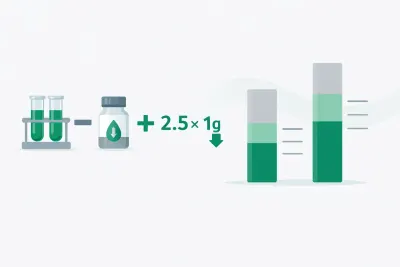
Use our albumin-corrected anion gap calculator to raise the anion gap by 2.5 per 1 g/dL of low albumin and reveal a hidden high-gap metabolic acidosis.

ANC Calculator: Absolute Neutrophil Count & Neutropenia
Free ANC calculator to calculate absolute neutrophil count from WBC and differential. Get ANC in cells/uL and x10^9/L with instant neutropenia grading.
Anion Gap Calculator — Metabolic Acidosis Evaluation
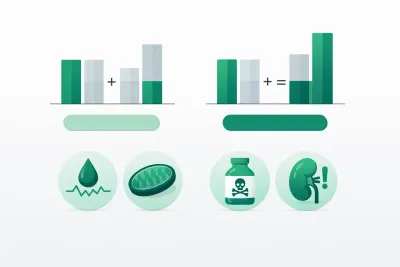
Free anion gap calculator finds serum anion gap from sodium, chloride, and bicarbonate, with albumin correction and delta ratio for metabolic acidosis.
AST/ALT Ratio Calculator — Free De Ritis Ratio Tool
Use our free AST/ALT ratio calculator to compute the De Ritis index instantly. Visual ratio chart, enzyme-level assessment, and clinical patterns guide.