Calculate Your Daily Morphine Milligram Equivalents
Total Daily MME
0.0
Total Daily MME
0.0 MME/day
Medication 1
—
Disclaimer: This MME calculator is for educational awareness only and is not medical advice. Conversion factors are approximate and vary by source. Methadone and fentanyl require special caution. Do not adjust therapy based on MME alone \u2014 always consult a healthcare provider and follow local protocols.
Educational tool, not medical advice. Check this tool’s method and limitations before interpreting a result. Talk to a qualified healthcare professional before making decisions about medication, diet, exercise, or treatment. See our Terms of Use.
Your rating helps improve MME Calculator: Morphine Equivalent Dose Converter. We store only an anonymized vote (no personal data).
How to Use MME Calculator: Morphine Equivalent Dose Converter
Step 1: Select an opioid
Choose the opioid from the Medication dropdown. The MME calculator supports morphine, oxycodone, hydrocodone, hydromorphone, fentanyl patches, methadone, and more.
Step 2: Enter the dose
Type the dose per administration in mg. For fentanyl patches, enter the patch strength in mcg/hr (e.g., 25).
Step 3: Set frequency
Enter how many times per day the medication is taken. Fentanyl patches are treated as continuous and need no frequency.
Step 4: Add more medications
Tap “Add Medication” for each opioid in the regimen. Each row shows its own MME contribution.
Step 5: Review total MME and risk level
The total daily MME updates automatically with a risk indicator and progress bar showing thresholds at 50 and 90 MME/day.
Step 6: Copy or review breakdown
Use the MME breakdown chart to see each medication’s share. Copy the summary for documentation. Switch to the Conversion Table tab to check reference factors.
Key Features
- CDC-aligned MME conversion factors for 12 opioids
- Add multiple medications and view running MME total
- Visual MME breakdown bar showing per-drug contribution
- Risk flags at ≥50 and ≥90 MME/day with progress indicator
- Built-in opioid conversion factor reference table
- Copy summary to clipboard for documentation
Understanding Your MME Results
MME Calculation Formula
This MME calculator uses the formula: Daily MME = (dose per administration × doses per day) × conversion factor. Each opioid has a specific factor relative to oral morphine: oxycodone ×1.5, hydromorphone ×4, oxymorphone ×3, hydrocodone ×1, codeine ×0.15, tramadol ×0.1, tapentadol ×0.4, and meperidine ×0.1. Fentanyl patches convert at mcg/hr × 2.4 = MME/day. Methadone uses tiered factors (4, 8, 10, or 12) based on total daily dose. The calculator sums all medications into one total daily morphine milligram equivalent.
MME Reference Ranges and Risk Thresholds
The CDC Clinical Practice Guideline for Prescribing Opioids (2022) identifies key MME thresholds for risk assessment:
- Below 50 MME/day — Lower relative risk. Standard monitoring recommended.
- 50–89 MME/day — Increased overdose risk. Reassess benefits vs. harms, consider non-opioid alternatives, and review naloxone access.
- 90+ MME/day — Substantially higher overdose risk. Avoid increasing without careful justification. Evaluate tapering strategies and multidisciplinary pain management.
These thresholds are not rigid prescribing limits. They are clinical decision points that should prompt a conversation about function, adverse effects, and safer alternatives. Individual patient factors including tolerance, organ function, and concurrent sedatives affect actual risk.
Assumptions & Limitations
MME conversion factors are approximations that vary across published sources. They do not account for individual tolerance, age, hepatic or renal function, drug interactions, or concurrent benzodiazepine use. Methadone has a uniquely long and variable half-life that makes conversions especially approximate. Fentanyl patch absorption varies with skin temperature and integrity. Buprenorphine is excluded from totals as a partial agonist. Use this MME calculator for educational awareness only — never adjust therapy based on MME alone without clinical guidance.
Complete Guide: How to Use an MME Calculator for Opioid Safety

On this page
An MME calculator is the fastest way to convert a mixed opioid regimen into a single daily morphine milligram equivalent number — the standard metric for comparing opioid exposure across medications. Whether you're a prescriber reviewing a patient's total daily MME, a pharmacist screening for high-risk thresholds, or a patient trying to understand your own medication burden, this morphine equivalent calculator gives you the answer in seconds.
This guide explains exactly how MME conversion works, walks through step-by-step calculation examples for common opioids including fentanyl patches and methadone, and covers the clinical context behind the 50 and 90 MME/day risk thresholds identified by the CDC.
What Is MME? Understanding the MME Calculator Metric
Morphine milligram equivalent (MME) is a standardized way to express the potency of different opioids relative to oral morphine. Because each opioid has a different strength — hydromorphone is 4 times more potent than morphine per milligram, while codeine is only 0.15 times as potent — raw doses are not directly comparable. MME solves this by converting every opioid to an equivalent amount of morphine.
The total daily MME is the sum of all converted opioid doses a patient receives in 24 hours. This single number enables risk assessment, tapering tracking, and team communication using a common reference point. It does not measure pain control, function, or individual tolerance — it is purely an exposure metric.
How to Calculate MME Per Day
The MME calculation formula for most oral opioids follows three steps:
- Calculate total daily dose: Multiply the dose per administration by the number of daily doses. For example, oxycodone 10 mg taken 3 times daily = 30 mg/day.
- Apply the MME conversion factor: Multiply the total daily dose by the drug-specific factor. Oxycodone uses ×1.5, so 30 mg/day × 1.5 = 45 MME/day.
- Sum all medications: Add the MME from every opioid in the regimen. If the patient also takes hydromorphone 2 mg twice daily (4 mg/day × 4 = 16 MME), the total is 45 + 16 = 61 MME/day.
Our MME calculator automates this process: select each medication, enter the dose and frequency, and the tool computes per-drug MME and the running total instantly. The built-in conversion factor reference table lets you verify the math.
Opioid MME Conversion Factor Table
The conversion factors below align with the CDC 2022 Clinical Practice Guideline and are widely used in clinical and pharmacy practice. Factors vary slightly between sources — always confirm with your institution's reference.
| Opioid (Oral) | MME Factor | Dose for 30 MME |
|---|---|---|
| Morphine | ×1 | 30 mg/day |
| Oxycodone | ×1.5 | 20 mg/day |
| Hydrocodone | ×1 | 30 mg/day |
| Hydromorphone | ×4 | 7.5 mg/day |
| Oxymorphone | ×3 | 10 mg/day |
| Codeine | ×0.15 | 200 mg/day |
| Tramadol | ×0.1 | 300 mg/day |
| Tapentadol | ×0.4 | 75 mg/day |
| Meperidine | ×0.1 | 300 mg/day |
| Fentanyl (patch) | mcg/hr × 2.4 | 12.5 mcg/hr |
| Methadone | Tiered* | Varies |
*Methadone MME conversion tiers: 1–20 mg/day → ×4 | 21–40 mg/day → ×8 | 41–60 mg/day → ×10 | ≥61 mg/day → ×12. Factors are approximate and vary by source.
Methadone and Fentanyl: Special MME Conversion Rules
Methadone has non-linear potency relative to morphine — as the daily dose increases, the conversion factor climbs sharply. A patient on methadone 20 mg/day converts at ×4 (= 80 MME), but 60 mg/day converts at ×10 (= 600 MME). This makes methadone one of the most dangerous opioids to convert, and many clinicians avoid simple MME calculations for methadone altogether. Methadone also has a uniquely long and variable half-life (8–59 hours), which our drug half-life calculator can help visualize.
Fentanyl patches deliver medication continuously in micrograms per hour (mcg/hr), not milligrams per dose. The MME conversion is: patch strength × 2.4 = MME/day. A 25 mcg/hr fentanyl patch equals approximately 60 MME/day, and a 100 mcg/hr patch equals approximately 240 MME/day. Absorption can vary with skin temperature, body fat, and patch placement, so these conversions are estimates.
Worked Examples: Step-by-Step MME Calculations
Example 1 — Two oral opioids:
- Oxycodone 5 mg, 4 times daily: 5 × 4 = 20 mg/day × 1.5 = 30 MME/day
- Hydromorphone 2 mg, 3 times daily: 2 × 3 = 6 mg/day × 4 = 24 MME/day
- Total daily MME: 30 + 24 = 54 MME/day (above 50, flags for review)
Example 2 — Fentanyl patch with breakthrough:
- Fentanyl 50 mcg/hr patch: 50 × 2.4 = 120 MME/day
- Morphine IR 15 mg, 4 times daily (breakthrough): 15 × 4 = 60 mg/day × 1 = 60 MME/day
- Total daily MME: 120 + 60 = 180 MME/day (high risk, well above 90 MME threshold)
Example 3 — Methadone tiered conversion:
- Methadone 30 mg, twice daily: 30 × 2 = 60 mg/day total
- 60 mg/day falls in the 41–60 tier, so factor = ×10
- MME: 60 × 10 = 600 MME/day
- Note: if the dose were 20 mg/day (tier ×4), MME would be only 80 — demonstrating methadone's non-linear potency
MME Thresholds and Overdose Risk
The CDC Clinical Practice Guideline for Prescribing Opioids for Pain (2022) uses two key MME thresholds for clinical decision-making. At 50 MME/day, the guideline recommends reassessing whether the benefits of continued opioid therapy outweigh the risks, discussing naloxone co-prescribing, and considering non-opioid pain management alternatives. At 90 MME/day, the risk of overdose is approximately 2–9 times higher than at lower doses, and the guideline advises against increasing dosage without strong clinical justification.
These thresholds are clinical decision points, not rigid prescribing limits. A patient stable on 100 MME/day with good function and no adverse effects may be appropriately managed at that level. Conversely, a patient at 40 MME/day with concurrent benzodiazepines or sleep apnea may face higher risk than the number alone suggests. Context matters — the MME calculator provides the number; the clinician provides the judgment.
Why Buprenorphine Is Excluded from MME Calculations
Buprenorphine is a partial opioid agonist with a ceiling effect on respiratory depression, which makes it fundamentally different from full agonists like morphine or oxycodone. Assigning an MME conversion factor to buprenorphine would overstate its risk profile and could discourage its use in medication-assisted treatment for opioid use disorder. The CDC and most clinical references recommend excluding buprenorphine from MME totals. Our MME calculator lists buprenorphine in the medication dropdown but automatically excludes it from the running total.
Opioid Rotation vs. MME Conversion
MME shows total daily opioid exposure but is not the same as equianalgesic conversion for opioid rotation. When switching a patient from one opioid to another, clinicians typically reduce the calculated equianalgesic dose by 25–50% to account for incomplete cross-tolerance. This safety reduction is critical — applying raw MME conversion factors during rotation can lead to overdose.
If your goal is to switch between specific opioids, use our dedicated opioid conversion calculator, which applies cross-tolerance dose reductions and supports targeted conversion workflows. Use this MME calculator when you need to assess total exposure across a multi-drug regimen, not to guide a specific drug switch.
Tapering Strategies and MME Monitoring
Tracking MME during an opioid taper provides a clear, objective measure of progress. A typical slow taper reduces the dose by 5–10% every 2–4 weeks, monitoring for withdrawal symptoms, pain levels, and functional status at each step. The MME calculator helps visualize the total exposure at each stage, making it easier to set realistic milestones and communicate progress to the care team.
Successful tapering usually combines gradual dose reduction with non-opioid adjuncts: physical therapy, cognitive-behavioral strategies, non-opioid analgesics (NSAIDs, acetaminophen, gabapentinoids), and sleep hygiene. Tracking function — daily activities, sleep quality, mood — alongside MME gives a more complete picture than dose numbers alone. Our pain scale calculator can help standardize symptom tracking over time.
Common MME Calculation Mistakes to Avoid
- Using a single factor for methadone: Methadone's conversion factor changes at different dose levels. Applying ×4 to a 60 mg/day dose (correct factor: ×10) underestimates MME by 60%.
- Confusing fentanyl units: Fentanyl patches are in mcg/hr, not mg. Entering “25 mg” instead of “25 mcg/hr” would produce a wildly incorrect result.
- Including buprenorphine in totals: This overstates risk and may discourage appropriate use of buprenorphine for opioid use disorder treatment.
- Using MME as a rigid prescribing limit: Forced tapering based solely on an MME number, without considering patient stability and function, can cause harm including withdrawal, uncontrolled pain, and transition to illicit substances.
- Assuming symmetric conversion for rotation: Converting “to methadone” and “from methadone” use different approaches. MME does not substitute for equianalgesic rotation tables.
- Ignoring concurrent sedatives: Benzodiazepines, gabapentinoids, and muscle relaxants increase respiratory depression risk at any MME level. The number alone does not capture total sedation burden.
Documentation and Clinical Communication
When documenting MME in clinical notes, record the date, each medication with its dose and frequency, the conversion factor used, the per-drug MME, and the total daily MME. Note any assumptions — for example, the methadone tier applied or whether a fentanyl patch is worn continuously. Include the clinical context: treatment goals (function vs. flare control), recent dose changes, and planned follow-up date.
The “Copy Summary” button in our MME calculator generates a formatted text block with all of this information, which can be pasted directly into an EHR note or shared with a colleague. Standardized documentation reduces errors when care transitions between providers or settings.
For geriatric patients or those with impaired kidney function, consider lower effective thresholds and more frequent monitoring. Our eGFR calculator can help assess renal clearance capacity, and our dosage calculator supports weight-based dose verification.
When Should You Use an MME Calculator?
An MME calculator is most useful in these specific clinical and educational scenarios:
- Multi-opioid regimens: When a patient takes two or more opioids, the MME calculator sums them into a single exposure number that would be tedious to compute by hand.
- Risk threshold screening: Pharmacy and prescriber systems often flag patients at or above 50 and 90 MME/day. This calculator shows exactly where the total falls.
- Taper monitoring: Tracking the total daily MME at each taper step provides an objective measure of progress over weeks or months.
- Team communication: When multiple providers manage pain, a documented MME total ensures everyone is working from the same baseline number.
- Patient education: Showing patients their total MME and how each medication contributes can support shared decision-making about dose changes.
References and Further Reading
- CDC Clinical Practice Guideline for Prescribing Opioids for Pain (2022) — the primary reference for MME thresholds, conversion factors, and risk assessment.
- NIH/NIDA: Prescription Opioids — DrugFacts — overview of opioid mechanisms, risks, and treatment options.
- CMS Opioid Morphine Equivalent Conversion Factors — federal reference table used in Medicare Part D analyses.
This guide is for educational awareness only and does not constitute medical advice. Always use local protocols, institutional references, and clinical judgment when converting, tapering, or rotating opioid medications.

Written by Marko Šinko
Co-Founder & Lead Developer
Computer scientist and developer working on calculator implementation, data handling, and accessible interfaces. His authorship describes development work, not independent medical review.
View full profileFrequently Asked Questions
What is an MME calculator and how does it work?
An MME calculator converts each opioid you take into morphine milligram equivalents (MME) by multiplying the total daily dose by a drug-specific conversion factor, then sums all medications into one total daily MME number for easy comparison.
How do I calculate MME per day?
For each opioid, multiply the dose per administration by the number of daily doses, then multiply by the MME conversion factor. For example, oxycodone 10 mg taken 3 times daily equals 30 mg/day times 1.5, which gives 45 MME/day. Add the MME from all opioids for the total.
What is the MME conversion factor for fentanyl patches?
For transdermal fentanyl, multiply the patch strength in mcg/hr by 2.4 to get MME/day. A 25 mcg/hr patch equals approximately 60 MME/day, and a 50 mcg/hr patch equals approximately 120 MME/day.
How is methadone converted to MME?
Methadone uses a tiered conversion factor because its potency increases non-linearly with dose: 1 to 20 mg/day uses a factor of 4, 21 to 40 mg/day uses 8, 41 to 60 mg/day uses 10, and 61 mg/day or more uses 12. This makes methadone conversions approximate and source-dependent.
Should buprenorphine be included in MME calculations?
No. Buprenorphine is a partial opioid agonist with a ceiling effect and is not recommended for MME-based risk comparisons. This MME calculator excludes buprenorphine from totals by design, following CDC and clinical guidance.
What do the 50 MME and 90 MME thresholds mean?
At 50 MME/day or above, CDC guidelines recommend closer review of risks versus benefits. At 90 MME/day or above, the overdose risk increases significantly. These are not rigid prescribing limits but prompts for reassessment, non-opioid alternatives, and shared decision-making.
Can I use this MME calculator for opioid rotation?
MME shows total exposure but does not account for cross-tolerance reductions needed during opioid rotation. For switching between specific opioids, use an equianalgesic conversion tool like our opioid conversion calculator, which applies dose reduction safety factors.
Does this calculator store my medication data?
No. This MME calculator runs entirely in your browser with no server calls. Your medication entries are never collected, stored, or transmitted. Close the page and the data is gone.
Related Calculators

Adjusted Body Weight Calculator — Dosing Weight (ABW)
Compute ABW for dosing with our adjusted body weight calculator, alongside IBW reference. Essential for accurate medication dosing, especially in obesity.

Alcohol Calculator: Drinks, Calories, Cost and BAC
Use our alcohol calculator to track standard drinks, alcohol calories, cost, and estimated BAC. Plan sessions, see time to sober, and make informed choices.

Alcohol Units Calculator UK — Weekly Tracking & Limits
Free alcohol units calculator for UK weekly tracking. Convert drinks to units, check against the 14-unit guideline, and see calories, standard drinks, and more.

BAC Calculator — Estimate Blood Alcohol Level by Drink
Use our BAC calculator to estimate blood alcohol levels from drinks, ABV, weight, sex, and hours. See limit markers, impairment ranges, and time to sober.

Caffeine Calculator: Daily Intake Tracker & Safe Limits
Use our caffeine calculator to total daily milligrams from coffee, tea, energy drinks, and custom doses, then check the running total against the 400 mg limit.
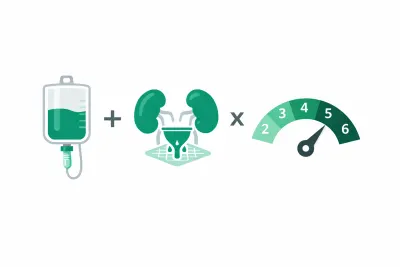
Carboplatin AUC Calculator — Calvert Formula Dosing
Free carboplatin AUC calculator using the Calvert formula to find chemotherapy dose in mg from target AUC, GFR, and Cockcroft-Gault creatinine clearance.