Use the Drug Half Life Calculator
Enter a drug's half-life and the time since your last dose to instantly see how much medication remains and when it will be eliminated. The drug half life calculator updates results in real time as you type.
Estimate medication elimination time
Eliminated
87.5%
After 24 hr
3.0 half-lives
The drug's elimination half-life. Check prescribing info or a pharmacy resource.
How long ago the last dose was taken.
Enter to see estimated mg remaining at the selected time.
For repeated dosing: calculates accumulation ratio at steady state.
Time to reach this elimination percentage (between 1 and 99).
Drug Elimination After 24 hr
87.5% eliminated
3.0 half-lives passed
12.5% remaining
Elimination constant
0.0866 /hr
Half-life (hours)
8.00
To 95% eliminated
34.6 hr
Steady state
~40.0 hr
Elimination Timeline
Time to reach each elimination threshold
| Eliminated | Remaining | Half-lives | Time |
|---|---|---|---|
| 50% | 50.0% | 1.0 | 8.0 hr |
| 75% | 25.0% | 2.0 | 16.0 hr |
| 87.5% | 12.5% | 3.0 | 24.0 hr |
| 90% | 10.0% | 3.3 | 26.6 hr |
| 95% | 5.0% | 4.3 | 34.6 hr |
| 97.5% | 2.5% | 5.3 | 42.6 hr |
| 99% | 1.0% | 6.6 | 53.2 hr |
Time to 95% eliminated: 34.6 hr (34.6 hours)
Half-Life Step-Down
How the drug level drops each half-life
Disclaimer: This calculator provides estimates based on a simple first-order elimination model. Individual results vary due to age, organ function, genetics, drug interactions, and formulation type. These numbers are educational and do not replace clinical judgment or prescribing information.
Educational tool, not medical advice. Check this tool’s method and limitations before interpreting a result. Talk to a qualified healthcare professional before making decisions about medication, diet, exercise, or treatment. See our Terms of Use.
Your rating helps improve Drug Half Life Calculator. We store only an anonymized vote (no personal data).
How to Use Drug Half Life Calculator
Step 1: Enter the drug half-life
Type the medication's half-life value and select minutes, hours, or days. Find this in prescribing information or a pharmacy reference.
Step 2: Enter time since last dose
Type how long ago the last dose was taken. Results update instantly showing the elimination percentage and remaining fraction.
Step 3: Add dose amount (optional)
Enter the dose in mg to see exactly how many milligrams remain in the body at the selected time.
Step 4: Set dosing interval (optional)
Add a dosing interval (e.g., every 12 or 24 hours) to calculate the accumulation ratio with repeated dosing.
Step 5: Review the elimination timeline
Check the full timeline table and step-down chart showing how the drug level drops from 50% to 99% eliminated.
Key Features
- Instant elimination percentage and mg remaining after any time
- Full elimination timeline from 50% to 99% cleared
- Visual half-life step-down chart showing drug level decay
- Accumulation ratio for repeated dosing intervals
- Customizable target elimination percentage (1–99%)
- Steady-state time estimation for regular dosing
Understanding Results
Formula
This tool uses a first‑order elimination model. If a medication's half‑life is t½, the elimination constant is k = ln(2) / t½. The fraction remaining after time t is e−k·t, which is the same as (1/2)t / t½. To find time to a target level, rearrange to t = t½ × log2(1/p), where p is the remaining fraction (e.g., 0.05 for 95% eliminated).
Reference Ranges & Interpretation
Practical landmarks: ~3.32 half‑lives for 90% eliminated, ~4.32 for 95%, ~5.32 for 97.5%, and ~6.64 for 99%. These points help you estimate washout and the time to near steady state when dosing regularly. Effects may persist longer than the molecule if downstream pathways take time to reset.
Assumptions & Limitations
Estimates assume first‑order kinetics without prolonged absorption. Individual factors (age, renal/hepatic function, genetics, formulation, and interactions) can lengthen or shorten effective half‑life. Numbers are educational and not a substitute for clinical judgment or prescribing information.
Complete Guide: Drug Half Life Calculator

On this page
A drug half life calculator answers one of the most common medication questions: how long until this drug is out of my system? Half-life determines how quickly a medication wears off, how often you need to take it, and how much builds up with repeated doses. This guide walks through the pharmacokinetics behind the tool, shows a worked example with real numbers, and explains what the results mean for dosing decisions.
What half-life actually means
A drug's elimination half-life is the time needed for the amount in the body to fall by exactly half. If a pain reliever has a half-life of 4 hours, then 4 hours after taking it, roughly 50% of the original dose remains in the bloodstream. After 8 hours (two half-lives), 25% remains. After 12 hours, 12.5%. The decline is exponential, not linear—meaning the drug doesn't disappear at a constant rate. Instead, each half-life removes half of whatever's left.
This matters because half-life governs nearly everything about dosing schedules. Short half-life drugs (2–4 hours) need frequent dosing to maintain therapeutic levels. Long half-life drugs (24+ hours) accumulate more but only need once-daily or even weekly dosing. Extended-release formulations are designed to slow absorption and effectively lengthen the time drug stays in the therapeutic range, even though the molecule's actual elimination half-life hasn't changed.
How this drug half life calculator works
Enter the half-life from your medication's prescribing information, type the time since your last dose, and this medication half life calculator instantly shows what percentage has been eliminated. Results update in real time—no button to press. Optionally, enter the dose amount in milligrams to see exactly how many mg remain. Add a dosing interval and the tool computes the accumulation ratio, showing how much higher your steady-state level will be compared with a single dose. If your real question is “how long until drug is out of system,” this also works as a drug elimination time calculator and half life elimination calculator.
Everything runs on a first-order, one-compartment elimination model. That's the standard pharmacokinetic model taught in every pharmacy program and used in most clinical drug references. It assumes the rate of elimination is proportional to the current drug level—a good approximation for the majority of medications at therapeutic doses.
The elimination formula explained
The core equation links half-life to the elimination rate constant: k = ln(2) / t½, where ln(2) is approximately 0.693. Once you know k, the fraction remaining at any time t is e−kt. An equivalent and sometimes more intuitive form is (1/2)t/t½—literally "how many times has the amount halved?"
To flip the question—"how long until X% is eliminated?"—rearrange to t = t½ × log2(1/p), where p is the remaining fraction. For 95% eliminated, p = 0.05, so t = t½ × 4.32. That's where the "about 4–5 half-lives for near-complete elimination" rule comes from.
Elimination timeline: 50% to 99%
The table below shows the standard elimination milestones. These numbers apply to any drug following first-order kinetics—only the clock speed (the half-life) changes.
| Half-lives | Remaining | Eliminated | If t½ = 6 hr | If t½ = 24 hr |
|---|---|---|---|---|
| 1 | 50.0% | 50.0% | 6 hr | 1 day |
| 2 | 25.0% | 75.0% | 12 hr | 2 days |
| 3 | 12.5% | 87.5% | 18 hr | 3 days |
| 3.32 | 10.0% | 90.0% | 19.9 hr | 3.3 days |
| 4 | 6.25% | 93.75% | 24 hr | 4 days |
| 4.32 | 5.0% | 95.0% | 25.9 hr | 4.3 days |
| 5 | 3.13% | 96.87% | 30 hr | 5 days |
| 5.32 | 2.5% | 97.5% | 31.9 hr | 5.3 days |
| 6.64 | 1.0% | 99.0% | 39.9 hr | 6.6 days |
Notice that the first half-life removes 50% of the drug, but going from 95% to 99% eliminated takes another 2.3 half-lives. Most of the clearance happens early. That's why many clinical references use 5 half-lives as the practical cutoff for "eliminated."
Worked example with real numbers
Suppose a patient takes 400 mg of a medication with a half-life of 12 hours. How much remains after 36 hours?
- Calculate k: k = 0.693 / 12 = 0.0578 per hour
- Count half-lives: 36 hours / 12 hours = 3 half-lives
- Fraction remaining: (1/2)3 = 0.125, so 12.5% remains
- Milligrams remaining: 400 mg × 0.125 = 50 mg
- Time to 95% eliminated: 12 × 4.32 = 51.8 hours
After 36 hours, about 50 mg of the original 400 mg dose is still present—87.5% has been eliminated. To reach 95% elimination, the patient would need to wait approximately 52 hours total from the last dose. Enter these same inputs in the calculator above and you'll get matching results instantly.
Repeated dosing and the accumulation ratio
When you take a medication on a schedule, each dose stacks on top of what remains from the previous ones. The accumulation ratio (R) quantifies this build-up: R = 1 / (1 − e−kτ), where τ is the dosing interval. A few examples make the concept concrete:
- Half-life 12 hr, dosed every 12 hr: R = 2.0 (levels are 2x a single dose at steady state)
- Half-life 12 hr, dosed every 24 hr: R = 1.33 (minimal accumulation)
- Half-life 24 hr, dosed every 8 hr: R = 4.1 (significant build-up)
Higher accumulation isn't inherently dangerous—many drugs are intentionally dosed to produce it. But it does mean steady-state peak and trough levels differ substantially from first-dose levels. Prescribers factor this in when choosing dose size and interval. For dose planning, our dosage calculator handles general dose arithmetic, while the mg to mL dose calculator converts between mass and volume units.
Steady state and washout timing
Steady state occurs when the amount of drug absorbed per dose equals the amount eliminated between doses. At that point, blood levels follow a repeating sawtooth pattern of peaks and troughs. For first-order elimination, reaching steady state takes approximately 4 to 5 half-lives regardless of dose size or interval—the half-life alone controls the timeline.
The same rule works in reverse. When you stop a medication, it takes 4–5 half-lives for the drug to wash out. A drug with a 36-hour half-life needs roughly a week to clear. One with a 5-day half-life (like some biologics) needs about a month. Washout timing drives ECG follow-up too: after stopping a QT-prolonging drug like methadone or sotalol, the corrected QT interval only returns to baseline once the drug has cleared, so the repeat ECG belongs at the 5-half-life mark — our QTc calculator compares Bazett and Fridericia corrections against the 450/460 ms thresholds when that recheck comes due. If kidney or liver function is compromised, the effective half-life gets longer, pushing both steady-state onset and washout further out. You can estimate renal function with our creatinine clearance calculator or eGFR calculator. Long-acting drugs like corticosteroids need a gradual stop rather than a simple washout—our steroid taper calculator schedules that step-down.
Factors that change a drug's half-life
Published half-life values are population averages. Your actual elimination rate can differ because of:
- Organ function: Liver and kidney impairment slow metabolism and excretion, often doubling or tripling effective half-life.
- Age: Neonates and elderly patients typically eliminate drugs more slowly due to immature or declining organ function.
- Drug interactions: CYP enzyme inhibitors (like grapefruit juice, ketoconazole) can extend half-life; inducers (like rifampin, carbamazepine) can shorten it.
- Genetics: CYP2D6 poor metabolizers, for instance, may have a half-life 2–3x longer than extensive metabolizers for certain medications.
- Body composition: Lipophilic drugs distribute into fat tissue, creating a "deep compartment" that extends the terminal half-life beyond what simple models predict.
- Formulation: Extended-release, depot injections, and transdermal patches control the absorption rate, which affects how long drug levels remain above the therapeutic threshold.
- Protein binding: Only unbound drug is cleared, so a fall in albumin raises the free fraction and speeds elimination of the total pool. Phenytoin is the textbook case — its half-life also stretches from 12 to 36 hours as concentrations rise, because clearance saturates inside the therapeutic range.
That last factor is why some drug levels cannot be read at face value. When albumin is low, a reported total concentration understates the active free drug, and the fix is an albumin adjustment rather than a half-life estimate — our corrected phenytoin calculator handles that Sheiner-Tozer correction and flags when it changes the therapeutic band.
Digoxin shows how far renal function can stretch a half-life. Because both clearance and volume of distribution fall as kidneys fail, the half-life runs 30–40 hours at a normal creatinine clearance but past 85 hours below 20 mL/min — the difference between reaching steady state in a week and reaching it in nearly three, which is why so many digoxin levels are drawn far too early. Our digoxin dosing calculator prints the half-life and the days to steady state alongside the suggested regimen.
For medications with narrow therapeutic windows (warfarin, lithium, phenytoin), even small changes in half-life matter clinically. In those cases, blood level monitoring replaces calculator-based estimates. For pediatric patients where weight-based dosing is critical, our pediatric dose calculator provides age-appropriate guidance.
Related calculators
These tools complement the drug half life calculator for common medication questions:
- Dosage Calculator — general dose arithmetic for once-off calculations.
- Dose Calculator (mg / mL) — convert milligrams to milliliters and back.
- Pediatric Dose Calculator — weight-based dosing for children.
- Geriatric Dose Calculator — age-aware dosing adjustments for older adults.
- Creatinine Clearance Calculator — estimate renal function (Cockcroft-Gault).
- eGFR Calculator — estimated glomerular filtration rate.
- Opioid Conversion Calculator — equianalgesic dose comparison.
- IV Drip Rate Calculator — infusion rate in gtt/min and mL/hr.
- Caffeine Half-Life Calculator — the same decay curve applied to coffee, with a bedtime cutoff time.
Sources and limitations
This calculator uses a standard first-order, one-compartment pharmacokinetic model. Equations are drawn from foundational clinical pharmacology texts including Goodman & Gilman's and Rowland & Tozer's Clinical Pharmacokinetics and Pharmacodynamics. The model does not account for multi-compartment distribution, saturable (zero-order) kinetics, enterohepatic recirculation, or active metabolites.
For authoritative drug-specific half-life data, consult: FDA Drugs, NCBI Bookshelf, and DailyMed.
Results are educational estimates. For medication changes, timing around procedures, or safety-critical decisions, always consult a qualified healthcare provider or pharmacist.

Written by Marko Šinko
Co-Founder & Lead Developer
Computer scientist and developer working on calculator implementation, data handling, and accessible interfaces. His authorship describes development work, not independent medical review.
View full profileFrequently Asked Questions
What is a drug half life?
A drug half-life is the time it takes for the concentration of a medication in the body to decrease by half. For example, if a drug has a half-life of 6 hours, only 50% of the original dose remains after 6 hours, 25% after 12 hours, and so on.
How long does it take for a drug to be completely eliminated?
Most pharmacologists consider a drug effectively eliminated after 5 to 7 half-lives, when 97% to 99% has been cleared. For a drug with an 8-hour half-life, that means roughly 40 to 56 hours for near-complete elimination.
How do you calculate drug elimination time from half-life?
Multiply the half-life by the number of half-lives needed for your target. For 90% eliminated, multiply by 3.32. For 95%, multiply by 4.32. For 99%, multiply by 6.64. A 10-hour half-life drug reaches 95% elimination in about 43.2 hours.
What does the drug half life calculator estimate?
It estimates the percentage and milligrams of drug remaining after a given time, the time to reach elimination targets from 50% to 99%, the accumulation ratio for repeated dosing, and steady-state timing.
How does repeated dosing affect drug levels in the body?
With repeated doses, each new dose adds to leftover drug from previous doses. The accumulation ratio (R) measures how much higher steady-state levels are compared to a single dose. Shorter dosing intervals relative to the half-life cause more accumulation.
How long until a medication reaches steady state?
Steady state is typically reached after 4 to 5 half-lives of regular dosing. At that point, the amount eliminated between doses equals the amount absorbed. For a drug with a 24-hour half-life, expect roughly 4 to 5 days to reach steady state.
What factors can change a drug half-life?
Age, liver and kidney function, genetics, body weight, drug interactions, and the specific formulation (immediate-release vs extended-release) all affect how quickly a drug is eliminated. Impaired kidney or liver function typically lengthens the half-life.
Is the drug half life calculator a substitute for medical advice?
No. This calculator provides educational estimates based on a simplified first-order elimination model. Individual elimination varies based on many clinical factors. Always consult a healthcare provider or pharmacist for medication-specific guidance.
Related Calculators

Adjusted Body Weight Calculator — Dosing Weight (ABW)
Compute ABW for dosing with our adjusted body weight calculator, alongside IBW reference. Essential for accurate medication dosing, especially in obesity.

Alcohol Calculator: Drinks, Calories, Cost and BAC
Use our alcohol calculator to track standard drinks, alcohol calories, cost, and estimated BAC. Plan sessions, see time to sober, and make informed choices.

Alcohol Units Calculator UK — Weekly Tracking & Limits
Free alcohol units calculator for UK weekly tracking. Convert drinks to units, check against the 14-unit guideline, and see calories, standard drinks, and more.

BAC Calculator — Estimate Blood Alcohol Level by Drink
Use our BAC calculator to estimate blood alcohol levels from drinks, ABV, weight, sex, and hours. See limit markers, impairment ranges, and time to sober.

Caffeine Calculator: Daily Intake Tracker & Safe Limits
Use our caffeine calculator to total daily milligrams from coffee, tea, energy drinks, and custom doses, then check the running total against the 400 mg limit.
Carboplatin AUC Calculator — Calvert Formula Dosing
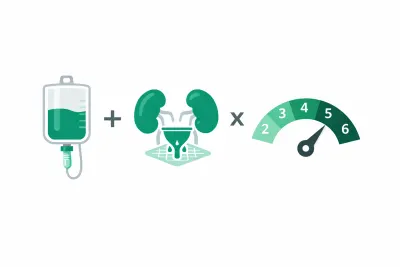
Free carboplatin AUC calculator using the Calvert formula to find chemotherapy dose in mg from target AUC, GFR, and Cockcroft-Gault creatinine clearance.