Estimate with the Muscle Mass Calculator
Currently assumes 52% of lean mass is skeletal muscle.
Advanced: custom muscle share
Estimates for adults. Information only.
Enter your weight and body fat % above to see your skeletal muscle mass estimate, body composition breakdown, and personalized insights.
- Enter a measured body fat % for best results — trends matter more than single readings.
- Training level adjusts the assumed share of lean mass that is skeletal muscle.
- Use the same scale and time of day for consistent measurements.
- Add height to see your Skeletal Muscle Index (SMI) normalized for stature.
Educational tool, not medical advice. Check this tool’s method and limitations before interpreting a result. Talk to a qualified healthcare professional before making decisions about medication, diet, exercise, or treatment. See our Terms of Use.
Your rating helps improve Muscle Mass Calculator — Skeletal Muscle Estimate. We store only an anonymized vote (no personal data).
How to Use Muscle Mass Calculator — Skeletal Muscle Estimate
Step 1: Choose sex and units
Select Male or Female, then pick Metric (cm, kg) or US (ft/in, lb). The muscle mass calculator adjusts its assumptions based on sex.
Step 2: Enter weight and body fat %
Type your body weight and a measured body fat percentage. This lets the calculator split your weight into fat mass and lean mass accurately.
Step 3: Add height and age (optional)
Enter height to see your Skeletal Muscle Index (SMI) normalized for stature, and age for contextual guidance on muscle health.
Step 4: Select training level
Choose Sedentary, Active, Strength, or Athlete to set the assumed share of lean mass that is skeletal muscle. Advanced users can set a custom percentage.
Step 5: Read your body composition results
View your estimated skeletal muscle mass (SMM) in kg and lb, a visual body composition breakdown bar, lean mass, fat mass, muscle percentage of body weight, and SMI.
Key Features
- Skeletal muscle mass estimate from weight and body fat %
- Visual body composition breakdown (muscle, lean, fat)
- Skeletal Muscle Index (SMI) with height input
- Training level presets and custom muscle share slider
- Full Metric and US (Imperial) unit support
- Age-aware contextual guidance
Understanding Your Skeletal Muscle Mass Results
How to Calculate Muscle Mass — The Formula
This muscle mass calculator estimates skeletal muscle mass (SMM) from everyday measurements. First, fat mass is calculated as body weight × (body fat % ÷ 100). Lean mass is then body weight − fat mass. Finally, we estimate how much of that lean mass is skeletal muscle using a share that depends on your training level. In formula form: SMM = weight × (1 − body fat %) × muscle share of lean mass. If you enter height, the calculator also computes your Skeletal Muscle Index (SMI = SMM ÷ height²) to normalize for stature.
Skeletal Muscle Mass Ranges for Men and Women
Skeletal muscle mass varies widely with sex, age, frame size, and training background. On average, healthy adult men carry skeletal muscle mass representing roughly 40–50% of total body weight, while women typically fall in the 30–40% range. Trained lifters of any sex tend to be at the higher end. Because of this variability, there is no single "good" SMM number that fits everyone. Instead, use the muscle mass calculator to establish your personal baseline and then track trends over time. During fat loss, maintaining a steady SMM is a positive sign. During a muscle-gain phase, a gradual rise in SMM with modest fat gain suggests you are on track.
For the Skeletal Muscle Index (SMI), rough reference ranges for whole-body SMI are approximately 8.5–10.75 kg/m² for men and 6.75–9.0 kg/m² as average. Values above these ranges suggest above-average muscularity, while values below may warrant attention — especially for older adults concerned about sarcopenia.
Assumptions & Limitations
Body fat measurement methods (tape, calipers, home BIA scales) each have inherent error and are sensitive to conditions like hydration and time of day. Lean mass also includes water, organs, and connective tissue, so short-term changes in glycogen or fluids can shift numbers. Our SMI uses whole-body SMM; clinical sarcopenia cutoffs (such as those from the EWGSOP2 consensus) often use limb-only mass from DXA, so do not treat this as a diagnosis. This calculator is for informational purposes only and is not medical advice.
Complete Guide: Muscle Mass Calculator — Skeletal Muscle Estimate

On this page
Calculate skeletal muscle mass with our free muscle mass calculator. Enter weight and body fat % to see SMM, lean mass, fat mass, SMI, and body composition.
What Is Skeletal Muscle Mass (SMM)?
Skeletal muscle mass (SMM) is the total mass of the muscles you can voluntarily contract — the tissue that moves your joints, supports posture, and powers everyday tasks and workouts. It does not include cardiac muscle (heart) or smooth muscle (intestines, blood vessels). In healthy adults, skeletal muscle commonly makes up 30–50% of body weight, but the exact proportion depends on sex, age, genetics, and training background. Because muscles are metabolically active tissue, having adequate skeletal muscle mass supports strength, functional independence, metabolic health, and even insulin sensitivity.
Direct measurement of skeletal muscle mass requires specialized tools such as DXA scans, MRI, CT imaging, or multi-frequency bioelectrical impedance analysis (BIA). Those aren't practical for most people on a regular basis. That's why our muscle mass calculator provides an approachable way to estimate SMM from values you can measure at home: body weight and body fat percentage. The result is an estimate, not a clinical diagnosis, but it's useful for watching trends and making informed training or nutrition decisions.
How the Muscle Mass Calculator Works
The core idea behind our skeletal muscle calculator is straightforward. First, we split your total body weight into fat mass and lean mass using your body fat percentage. Then we estimate how much of that lean mass is skeletal muscle. Finally, we display skeletal muscle mass as an absolute amount (kg and lb) and as a percentage of total body weight, along with a visual body composition breakdown. If you enter height, we also compute a Skeletal Muscle Index (SMI) value — skeletal muscle mass divided by height squared — to normalize your result for stature.
The calculator also shows your body composition in three segments: skeletal muscle (green), other lean mass such as organs, water, and bone (blue), and body fat (amber). This visual makes it easy to see how your body is composed at a glance and track changes over time.
How to Calculate Skeletal Muscle Mass Step by Step
Here is the step-by-step process the muscle mass calculator uses to estimate your skeletal muscle mass. You can also calculate this manually if you prefer:
- Determine your body fat percentage. Use calipers, a BIA scale, circumference equations, or our Body Fat Percentage Calculator.
- Calculate fat mass. Multiply your body weight by your body fat percentage divided by 100. For example: 80 kg × (20% ÷ 100) = 16 kg fat mass.
- Calculate lean body mass. Subtract fat mass from total body weight. Example: 80 kg − 16 kg = 64 kg lean mass.
- Estimate the skeletal muscle share. Multiply lean mass by the muscle fraction for your training level (typically 45–58% of lean mass). Example: 64 kg × 0.52 = 33.3 kg estimated skeletal muscle mass.
- Calculate SMI (optional). Divide SMM by height in meters squared. Example: 33.3 kg ÷ (1.75 m)² = 10.88 kg/m².
Our calculator automates all of these steps and provides the results instantly in both Metric and US (Imperial) units. You can also cross-check your lean body mass with our Lean Body Mass Calculator for additional validation.
Choosing or Estimating Your Body Fat Percentage
Body fat percentage can come from several methods: circumference equations (using a tape measure), skinfold calipers, consumer smart scales (BIA), or clinical tools such as DXA and hydrostatic weighing. Each has pros and cons. Circumference methods are quick and repeatable if you measure the same way each time. Calipers can be reasonably accurate with experienced technique. Home BIA devices are convenient but sensitive to hydration, time of day, and recent meals. Clinical tools are the most precise but not always accessible or affordable.
For everyday tracking of skeletal muscle mass, pick one method you can repeat easily and use it under similar conditions — same time of day, same hydration state. Consistency matters more than the absolute number. If you want a cross-check, use our Lean Body Mass Calculator to compare formula-based lean mass with your body-fat-derived lean mass.
Training Level and the Muscle Fraction of Lean Mass
When you select a training level in the skeletal muscle mass calculator, you're choosing an assumption about the share of your lean mass that is skeletal muscle. Sedentary adults tend to have a lower muscle fraction because they carry relatively more water, organ mass, and connective tissue as a proportion of lean mass. Athletes and regular strength trainers trend higher because resistance training increases the proportion of lean mass that is contractile muscle tissue.
Our default values differ by sex: males range from 50% (sedentary) to 58% (athlete) of lean mass, while females range from 45% to 53%. If you're unsure, select "Active" and focus on trends over time. Advanced users can open the custom slider to set any value between 40% and 65% that best matches their context based on body composition testing history.
If you're aggressively cutting calories or retaining water, short-term fluctuations can shift measured lean mass. That doesn't mean muscle appeared or vanished overnight — it's often hydration or glycogen changes. Averaging two to three measurements per week produces steadier, more meaningful signals.
How to Read Your Muscle Mass Results
Start with the primary number: your estimated skeletal muscle mass in kg (and lb). Then look at the percentage of total body weight. People often expect a single "good" number, but muscle is highly context-dependent. Age, sex, frame size, and training history all matter. Rather than chasing an arbitrary target, track your personal baseline and celebrate positive trends — for example, holding muscle during fat loss or slowly adding muscle over months of progressive training and adequate protein.
The body composition breakdown bar shows you the three-way split of your body weight at a glance: skeletal muscle (green), other lean tissue (blue), and body fat (amber). Watch how these proportions shift over weeks and months rather than focusing on daily fluctuations. Holding muscle while fat falls is exactly what the body recomposition calculator models — it projects both compartments month by month from your calories, protein, and training age.
If height is entered, the Skeletal Muscle Index (SMI) shows your skeletal muscle mass relative to stature. This combats the illusion that two people of very different heights have comparable muscle just because the raw kilograms match. You can also compare your lean-mass-focused progress with FFMI (Fat-Free Mass Index), which uses total lean mass instead of skeletal muscle only.
Skeletal Muscle Mass for Men vs. Women
Men and women differ in average skeletal muscle mass due to hormonal profiles, frame sizes, and body composition patterns. On average, men carry skeletal muscle representing approximately 40–50% of body weight, while women typically fall in the 30–40% range. These are broad averages — individual variation is large, and training can significantly shift these numbers upward for both sexes.
For women specifically, skeletal muscle mass is often a less-discussed metric compared to body fat percentage, but it's equally important. Adequate muscle supports bone density (critical for preventing osteoporosis), metabolic rate, joint stability, and functional strength. Women who strength train regularly often see their muscle percentage climb well above population averages. Our muscle mass calculator for women uses sex-specific muscle fraction defaults to provide more accurate estimates.
For a complementary view of body composition by sex, try the Body Composition Calculator or the Ideal Body Weight Calculator to see how your weight relates to height and frame.
SMI vs. ASM: What the Skeletal Muscle Index Means
In research literature, "SMI" often refers to appendicular skeletal muscle (limb-only) mass divided by height squared (ASM ÷ height²). Our skeletal muscle index calculator shows SMI using whole-body skeletal muscle mass, which is more practical for self-tracking but produces higher values than limb-only measurements. You should not directly compare this SMI with clinical sarcopenia cutoffs (typically < 7.0 kg/m² for men and < 5.5 kg/m² for women using DXA-measured ASM).
Treat this SMI as a relative gauge to compare your own readings across time, not as a diagnostic label. The value is most useful when tracked consistently — if your SMI is climbing over months of training, you're building muscle relative to your frame.
How Age Affects Skeletal Muscle Mass (Sarcopenia)
After approximately age 30, adults begin losing skeletal muscle mass gradually — a process that accelerates after age 50, with typical losses of 1–2% per year in sedentary individuals. This age-related decline is called sarcopenia, and it's associated with reduced strength, increased fall risk, metabolic slowdown, and loss of functional independence.
The good news is that sarcopenia is not inevitable. Resistance training is the most effective intervention for maintaining and even rebuilding muscle mass at any age. Combined with adequate protein intake (typically 1.2–2.0 g per kg of body weight for older adults), regular strength training can dramatically slow or reverse age-related muscle loss. Our muscle mass calculator includes age context — when you enter an age of 50 or above, you'll see a tailored note about the importance of maintaining skeletal muscle mass.
For personalized protein targets, use our Protein Calculator. If you're tracking overall fitness as you age, the VO2 Max Calculator and Ideal Body Weight Calculator can provide additional insight into your health trajectory.
Practical Ways to Gain Skeletal Muscle Mass Safely
Muscle growth (hypertrophy) is driven primarily by progressive resistance training, adequate protein, sufficient energy intake, quality sleep, and patience. Most people make the best progress by training each major muscle group 2–3 times per week, using a mix of compound lifts (squats, deadlifts, bench press, rows) and accessory work, and steadily increasing volume or load as movements get easier. High-effort sets in the 5–30 rep range can build muscle when you are close to technical failure while maintaining good form.
Protein needs for lifters are commonly estimated around 1.6–2.2 g per kg of body weight per day. To plan your targets precisely, try our Protein Calculator or the goal-based Protein Calculator for Weight Loss. If you're unsure about daily calories, use the TDEE Calculator or Calorie Calculator and aim for a modest caloric surplus (200–400 kcal above maintenance) when prioritizing muscle gain.
For those interested in overall body shape changes alongside muscle growth, tools like the Waist-to-Hip Ratio Calculator and Macronutrient Calculator offer complementary perspectives beyond the scale.
Tracking Muscle Mass Progress Like a Pro
Good tracking is consistent, simple, and sustainable. We recommend taking measurements at the same time of day, under similar conditions. If possible, weigh yourself after using the restroom and before breakfast, note your body fat using your chosen method, and then update this muscle mass calculator. Two or three readings per week are enough. Focus on the weekly or monthly average rather than day-to-day noise.
To add context beyond body composition, log performance markers: sets, reps, estimated 1RMs, and recovery quality (sleep, perceived effort). If max strength is a goal, estimate it with the One-Rep Max Calculator or Rep Max Calculator. For energy balance management over time, the Maintenance Calorie Calculator or Weight-Loss Calorie Calculator can help you steer your intake without guesswork.
Common Mistakes When Estimating Muscle Mass
The most frequent pitfall is reading too much into a single measurement. Real bodies fluctuate from hydration, glycogen stores, recent meals, and normal biological variation. Another trap is switching measurement methods every few weeks — for example, going from calipers to a different smart scale brand. If your method changes, your baseline shifts, making trend analysis unreliable. Stick with one approach long enough to see meaningful patterns.
Other common mistakes include: setting an unrealistic training level (choosing "Athlete" when you train casually), ignoring the role of nutrition in muscle maintenance, and comparing your numbers directly to someone with a very different body type. Focus on your own trajectory, progressive overload in training, and consistent nutrition.
For more detailed body composition analysis beyond skeletal muscle, explore our Body Composition Calculator and the FFMI Calculator. These tools complement your SMM estimate and can make plateaus or progress easier to interpret.
A Note on Health and Safety
This site provides information and tools — not medical advice. If you have a medical condition, are pregnant, or are recovering from injury, discuss your plans with a licensed professional. For general guidance on physical activity, see the U.S. guidelines at the Office of Disease Prevention and Health Promotion. For age-related muscle loss (sarcopenia), see consensus materials such as the EWGSOP2 report. These resources are external and non-commercial.
You might also find these helpful:

Written by Marko Šinko
Co-Founder & Lead Developer
Computer scientist and developer working on calculator implementation, data handling, and accessible interfaces. His authorship describes development work, not independent medical review.
View full profileFrequently Asked Questions
What does the muscle mass calculator estimate?
The muscle mass calculator estimates your skeletal muscle mass (SMM) by splitting body weight into fat mass and lean mass using your body fat percentage, then calculating the portion of lean mass that is skeletal muscle based on your training level. It shows SMM in kg and lb, a visual body composition breakdown, and an optional Skeletal Muscle Index (SMI).
How do I calculate my skeletal muscle mass?
Enter your body weight and body fat percentage into the calculator. It calculates lean mass (weight minus fat mass), then estimates skeletal muscle as a share of that lean mass. The formula is: SMM = body weight × (1 − body fat %) × muscle share. Training level sets the muscle share, or you can use the advanced slider for a custom value.
What is a good skeletal muscle mass for men and women?
There is no single universal target because muscle varies with sex, age, frame size, and training history. As a general reference, healthy men often have skeletal muscle around 40–50% of body weight and women around 30–40%. Focus on tracking your personal trend over time rather than matching a single number.
What is Skeletal Muscle Index (SMI) and how is it calculated?
SMI is skeletal muscle mass divided by height squared (kg/m²). It normalizes muscle for stature so you can compare readings across time regardless of body size. Our calculator uses whole-body SMM for this index. Clinical sarcopenia cutoffs often use limb-only mass from DXA, so treat this SMI as a practical self-tracking metric, not a diagnosis.
Do I need a measured body fat percentage?
A measured body fat percentage gives the most accurate results. You can estimate it with our Body Fat Percentage Calculator using a simple circumference method, then enter that value here. Calipers, smart scales (BIA), and DXA scans are other common sources of body fat data.
How accurate is this skeletal muscle mass estimate?
Accuracy depends on the quality of your body fat input, measurement consistency, and the chosen training level. The calculator provides a useful estimate for personal tracking and trend analysis. For clinical-grade measurements, DXA or MRI scanning would be needed. Use the same method and conditions each time for the most reliable trends.
Does the muscle mass calculator support Metric and US (Imperial) units?
Yes. You can enter height in cm or ft/in and weight in kg or lb. The calculator converts between units automatically. Switching units preserves your entered values so you can compare results in either system without re-entering data.
How does age affect skeletal muscle mass?
After about age 30, adults begin losing muscle mass gradually, and the rate accelerates after 50 — typically 1–2% per year without resistance training. This age-related loss is called sarcopenia. The calculator provides age context when you enter your age, and regular strength training with adequate protein intake is the most effective way to maintain muscle at any age.
Related Calculators
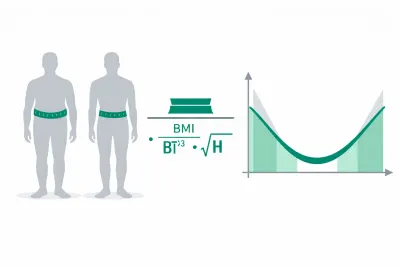
ABSI Calculator: A Body Shape Index & Mortality Risk
Free ABSI calculator computes A Body Shape Index from waist, height, and BMI to estimate visceral fat and mortality risk independent of body mass index.

Adult BMI Calculator for Men & Women — WHO BMI Guide
Use the adult BMI calculator to find your BMI with WHO categories. Enter metric or imperial units to see your status and BMI ranges quickly and clearly.

Army Body Fat Calculator — AR 600‑9 Standard Compliance
Check compliance with the Army body fat calculator per AR 600-9 standards. Enter circumference measures by sex to estimate body fat % and see pass/fail status.
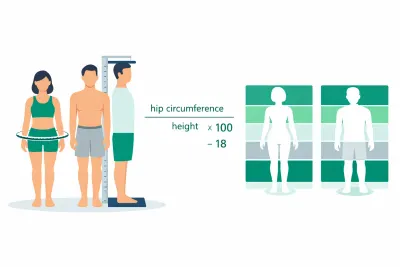
Body Adiposity Index Calculator (BAI) — Body Fat %
Free body adiposity index calculator estimates body fat percentage from hip circumference and height using the BAI formula, no weight or scale needed.
Body Composition Calculator — Fat, Lean Mass Breakdown
Use our body composition calculator to estimate body fat percentage, fat mass, and lean mass from tape measurements. Switch units and get clear categories.

Body Fat Calculator — Percentage for Men & Women (Tape)
Estimate with the body fat percentage calculator (body fat calculator) using Navy circumference equations. Supports metric/imperial and sex‑specific inputs.