Calculate BSA for Medication Dosing
Enter height and weight to instantly calculate body surface area using five validated formulas. Use the built-in BSA dose calculator to convert per-m² prescriptions into patient-specific doses for chemotherapy and other BSA-based protocols.
Units
Preferred formula
Simple, widely used for chemo dosing
Mosteller Body Surface Area
1.818 m²
Height
170 cm
Weight
70 kg
Height (ft/in)
5' 7"
Weight (lb)
154 lb
Formula Comparison
All results in square meters (m²)
Mostellerpreferred
Simple, widely used for chemo dosing
1.818 m²
Du Bois
Classic allometric model (1916)
1.810 m²
-0.4%
Haycock
Good for pediatric populations
1.826 m²
+0.4%
Boyd
Log-adjusted weight exponent
1.835 m²
+0.9%
Gehan-George
Well-cited alternative model
1.831 m²
+0.7%
Visual Comparison
Mosteller
1.818
Du Bois
1.810
Haycock
1.826
Boyd
1.835
Gehan-George
1.831
BSA-Based Dose Calculator
Enter a per-m² dose to calculate the patient-specific dose using Mosteller BSA (1.818 m²).
Enter dose/m²
BSA Reference Ranges
| Population | Typical BSA |
|---|---|
| Neonate (newborn) | 0.20 - 0.25 m² |
| Infant (1 year) | 0.40 - 0.50 m² |
| Child (6 years) | 0.70 - 0.85 m² |
| Adolescent (12 years) | 1.10 - 1.40 m² |
| Adult female (avg) | 1.55 - 1.75 m² |
| Adult male (avg)← you | 1.70 - 1.95 m² |
| Large adult | 2.00 - 2.40 m² |
Clinical disclaimer
BSA is an estimate for educational and protocol-review purposes. It does not account for edema, ascites, amputations, or extreme body composition. Always verify doses with institutional protocols, pharmacy checks, and clinical judgment before prescribing.
Educational tool, not medical advice. Check this tool’s method and limitations before interpreting a result. Talk to a qualified healthcare professional before making decisions about medication, diet, exercise, or treatment. See our Terms of Use.
Your rating helps improve BSA Calculator: Body Surface Area for Drug Dosing. We store only an anonymized vote (no personal data).
How to Use BSA Calculator: Body Surface Area for Drug Dosing
Step 1: Select Units
Choose Metric (cm, kg) or US/Imperial (ft/in, lb). The calculator auto-converts between systems.
Step 2: Enter Height and Weight
Type your height and body weight. BSA results update instantly as you type -- no button click needed.
Step 3: Pick a Preferred Formula
Select Mosteller (recommended for chemo dosing), Du Bois, Haycock, Boyd, or Gehan-George. All five results appear side by side.
Step 4: Review BSA Results
Check your BSA in m² with the classification gauge, formula comparison table, and reference ranges for your population group.
Step 5: Calculate a Dose (Optional)
Enter a per-m² dose (e.g., 375 mg/m² for rituximab) to get the patient-specific total dose based on your BSA.
Step 6: Copy or Reset
Use the Copy button to save a full summary to your clipboard, or Reset to start over with default values.
Key Features
- 5 validated BSA formulas (Mosteller, Du Bois, Haycock, Boyd, Gehan-George)
- BSA-based dose calculator for chemo and medication protocols
- Side-by-side formula comparison with percentage differences
- Reference ranges table for pediatric through adult populations
- Metric and US/Imperial unit support with auto-conversion
- Visual BSA gauge and classification badge
Understanding Your BSA Calculator Results
BSA Calculator Formulas Used
This BSA calculator computes body surface area using five validated equations. The most common is the Mosteller formula: BSA = √((height in cm × weight in kg) / 3600). For a 170 cm, 70 kg adult, that yields approximately 1.818 m².
The other formulas are Du Bois (0.007184 × W0.425 × H0.725), Haycock (0.024265 × W0.5378 × H0.3964), Gehan-George (0.0235 × W0.51456 × H0.42246), and Boyd, which uses a logarithmic weight-exponent adjustment. All report BSA in m². Differences between formulas typically stay under 5%, but institutions standardize on one equation to keep chemotherapy dosing consistent.
Reference Ranges by Population
Typical adult BSA is roughly 1.6-1.9 m². Average adult females fall around 1.55-1.75 m²; adult males around 1.70-1.95 m². Neonates start near 0.20-0.25 m², rising to about 0.70-0.85 m² by age six. These ranges help clinicians spot data-entry errors and sanity-check doses.
Some oncology protocols cap BSA at 2.0 m² to prevent excessive doses in very large patients. Others adjust dose cycle-by-cycle based on weight changes during treatment. The reference table in the calculator highlights which population band your BSA falls into.
Using BSA for Chemotherapy Dose Calculation
The built-in dose calculator multiplies your BSA by a per-m² dose to give the total patient dose. For example, rituximab at 375 mg/m² for a patient with BSA 1.818 m² equals roughly 682 mg. Always verify the result against your regimen sheet and pharmacy order before administering.
Assumptions & Limitations
BSA is an estimate derived from height and weight only. It does not capture edema, ascites, amputations, or differences in lean vs. fat mass. For drugs cleared primarily by the kidneys (e.g., carboplatin), AUC-based or creatinine-clearance-based dosing may replace or supplement BSA. Fixed dosing is gaining ground for some newer agents. Always follow local protocols, double-check calculations, and apply clinical judgment.
Complete Guide: BSA Calculator: Body Surface Area for Drug Dosing

A 175 cm, 82 kg patient is scheduled for docetaxel at 75 mg/m². The pharmacist enters height and weight into a BSA calculator, gets 1.996 m² by Mosteller, multiplies by 75, and dispenses 150 mg. If someone fat-fingers the weight as 62 kg instead of 82 kg, BSA drops to 1.74 m² and the dose falls to 130 mg—a 13% underdose that could compromise treatment efficacy. That's why BSA matters: it's the scaling factor between a protocol on paper and the actual milligrams a patient receives.
Below we compare all five validated BSA formulas side by side, walk through a complete dose calculation, and tackle the edge cases that trip up even experienced clinicians: amputees, morbidly obese patients, neonates, and the ongoing debate over BSA capping at 2.0 m².
Why clinicians still rely on body surface area
Body surface area estimates how much skin covers the outside of the human body. You can't wrap a measuring tape around a living person and get this number directly, so clinicians rely on validated equations that use height and weight as proxy inputs. The result, expressed in m², correlates loosely with metabolic rate, cardiac output, and the volume of distribution for many drugs—making it a practical scaler for medication dosing.
Typical adult BSA falls between 1.6 and 1.9 m². A 170 cm, 70 kg adult yields roughly 1.82 m² by the Mosteller equation. Neonates start near 0.20–0.25 m², and large adults can exceed 2.4 m². The number changes with growth, weight gain, or weight loss during treatment—which is exactly why many oncology teams recalculate BSA before each chemotherapy cycle.
Historically, Du Bois and Du Bois published the first allometric BSA model in 1916 based on direct surface measurements from a small cadaver study. Later researchers—Mosteller (1987), Haycock (1978), Boyd (1935), and Gehan-George (1970)—refined the constants and validated their equations against larger, more diverse populations. Despite methodological differences, the formulas typically agree within 5% for adults of average build.
The five BSA formulas compared
Each formula takes height (cm) and weight (kg) and returns BSA in m². Here's how they work and when each has an edge:
| Formula | Equation | Best for |
|---|---|---|
| Mosteller | √(H × W / 3600) | General clinical use, chemo dosing |
| Du Bois | 0.007184 × W0.425 × H0.725 | Classic reference, historical studies |
| Haycock | 0.024265 × W0.5378 × H0.3964 | Pediatric populations |
| Boyd | Log-adjusted weight exponent | Wide weight ranges |
| Gehan-George | 0.0235 × W0.51456 × H0.42246 | Research, alternative validation |
In practice, the choice often comes down to institutional policy. Mosteller dominates in North American oncology because it's simple enough to verify by hand—a useful safety check. If your pharmacy system or clinical trial protocol specifies a different formula, use that one consistently to avoid inter-observer variability in dose calculations.
BSA in chemotherapy and medication dosing
BSA-based dosing has been the backbone of chemotherapy prescribing since the 1950s. The logic: drugs with narrow therapeutic windows need doses proportional to body size to achieve consistent blood concentrations. A flat dose that works for a 60 kg patient could under-dose someone at 90 kg or overdose a 45 kg patient.
That said, BSA isn't perfect. A 2016 review in the Journal of Clinical Oncology noted that BSA-based dosing explains only a fraction of inter-patient pharmacokinetic variability for many agents. For carboplatin, AUC-based dosing using the Calvert formula (which relies on creatinine clearance) produces more predictable exposure than BSA scaling. For immune checkpoint inhibitors and some monoclonal antibodies, fixed-dose regimens have replaced BSA dosing entirely because body size barely affects clearance.
Still, BSA remains essential for the majority of cytotoxic agents, including doxorubicin, cyclophosphamide, docetaxel, 5-fluorouracil, and rituximab. Knowing how to calculate and verify a BSA-based dose is a core competency for oncology pharmacists, nurses, and physicians.
Worked example: calculating a chemotherapy dose from BSA
Suppose a patient is 175 cm tall and weighs 82 kg. The oncologist orders docetaxel at 75 mg/m².
- Calculate BSA (Mosteller): √((175 × 82) / 3600) = √(3.986) = 1.996 m²
- Multiply by dose per m²: 1.996 m² × 75 mg/m² = 149.7 mg
- Round per protocol: many institutions round to the nearest 5 or 10 mg, yielding 150 mg
- Check against BSA cap: if the protocol caps at 2.0 m², the max dose would be 150 mg—this patient is just under the cap
This is the same math the BSA dose calculator above performs automatically. Enter 75 in the "Dose per m²" field with the patient's measurements, and it returns the total dose instantly. The advantage of the calculator: you see all five formula results at once and can compare before committing to one.
Pediatric BSA: why it matters even more for children
Children aren't small adults—their body composition, organ maturity, and drug metabolism differ significantly. BSA-based dosing is standard in pediatric oncology precisely because weight-based dosing (mg/kg) can overdose neonates and infants whose renal and hepatic clearance is still developing.
The Haycock formula was developed with pediatric data and performs well from birth through adolescence. Mosteller is also widely accepted. A typical 1-year-old has a BSA around 0.40-0.50 m²; by age six, that rises to 0.70-0.85 m². Even small measurement errors in a child's height or weight can shift BSA enough to change the dose, so re-measure carefully and document your method.
BSA also drives fluid therapy in some pediatric settings: the surface-area method prescribes 1,500–2,000 mL/m²/day of maintenance IV fluid, an alternative to the weight-tiered Holliday-Segar approach used by the pediatric maintenance fluid calculator. Oncology and renal services often prefer the BSA method because it stays proportional in larger adolescents, where the weight-based 4-2-1 formula gets capped near 100 mL/hr.
For growth monitoring and nutritional assessment alongside BSA, the Child BMI Percentile Calculator and Toddler Growth Percentile Calculator provide complementary metrics.
BSA calculation for amputees
Standard BSA formulas assume an intact body. When a limb is missing, the equations overestimate surface area because they don't know part of the body is gone. There's no universally agreed correction method, but two approaches appear in clinical literature:
- Use actual (post-amputation) weight with pre-amputation height. This partially corrects the estimate since the missing limb's weight is excluded.
- Apply a percentage correction based on the "rule of nines" used in burn assessment. An above-knee amputation removes roughly 16% of body weight; a below-knee amputation about 7%. Subtract that fraction from the BSA result.
Neither method is perfect. Consult your pharmacy team and document the approach you used. Some institutions have internal guidelines for amputee dosing that override general BSA rules.
BSA vs BMI vs lean body mass
These three metrics capture different dimensions of body size, and confusing them leads to dosing errors:
| Metric | Formula | Primary use |
|---|---|---|
| BSA | √(H × W / 3600) | Medication dosing (chemo, immunosuppressants) |
| BMI | W / H² (kg/m²) | Population health screening, weight classification |
| LBM | Various (Boer, James, Hume) | Anesthesia, drugs distributed in lean tissue |
For more on these related measures, see the Adult BMI Calculator, Lean Body Mass Calculator, and Body Fat Percentage Calculator.
BSA capping: when protocols limit the number
Some chemotherapy protocols cap BSA at 2.0 m² (occasionally 2.2 m²) regardless of the patient's actual body surface area. The rationale: for very large patients, scaling doses linearly with BSA can push total doses into ranges with unacceptable toxicity, particularly for agents with steep dose-response curves.
BSA capping is controversial. Capping may under-dose obese patients, potentially reducing efficacy. The American Society of Clinical Oncology (ASCO) published guidelines in 2012 recommending against routine capping and in favor of using actual body weight for BSA calculation in obese patients. However, individual drug protocols may override this recommendation. Always check the specific regimen sheet and discuss with the prescribing oncologist.
Common drugs dosed by BSA
This is not exhaustive—always verify against your formulary—but these agents are frequently dosed per m²:
| Drug | Typical dose range | Notes |
|---|---|---|
| Doxorubicin | 40-75 mg/m² | Lifetime cumulative limit 450-550 mg/m² |
| Cyclophosphamide | 500-1500 mg/m² | Hydration protocol required |
| Docetaxel | 60-100 mg/m² | Premedication with dexamethasone |
| Rituximab | 375 mg/m² | Also available as fixed subcutaneous dose |
| 5-Fluorouracil | 200-1000 mg/m² | Wide range depending on protocol |
| Hydrocortisone | 8-10 mg/m²/day | Physiologic replacement (non-oncology) |
For general dose conversion tools, see our Dosage Calculator and mg/mL Dose Calculator. For renal-adjusted dosing (relevant to carboplatin and others), the Creatinine Clearance Calculator is essential.
Limitations and when BSA falls short
BSA has real blind spots. It doesn't account for body composition: two patients with identical BSA can have very different proportions of fat, muscle, and fluid. Conditions like edema, ascites, and severe dehydration change effective body size in ways the formulas can't capture. For drugs that distribute primarily into lean tissue, BSA may overestimate the appropriate dose in obese patients.
Alternatives gaining ground include therapeutic drug monitoring (measuring actual blood levels and adjusting), AUC-targeted dosing (the Calvert formula for carboplatin, which doses off kidney clearance instead of body surface area), and flat/fixed dosing for agents where body size has minimal impact on pharmacokinetics. Pharmacogenomics—particularly for 5-FU (DPD deficiency screening)—adds another layer beyond body size.
None of this makes BSA obsolete. For the majority of cytotoxic chemotherapy, it remains the standard dosing parameter and the one you'll use most often. But it's a starting point for dose calculation, not the final word. Clinical judgment, lab monitoring, and protocol-specific rules refine the number before it reaches the patient.
References
- Mosteller RD. Simplified calculation of body-surface area. N Engl J Med. 1987;317(17):1098. doi:10.1056/NEJM198710223171717
- Du Bois D, Du Bois EF. A formula to estimate the approximate surface area if height and weight be known. Arch Intern Med. 1916;17(6):863-871.
- Griggs JJ, et al. Appropriate chemotherapy dosing for obese adult patients with cancer: ASCO clinical practice guideline. J Clin Oncol. 2012;30(13):1553-1561. doi:10.1200/JCO.2011.39.9436

Written by Marko Šinko
Co-Founder & Lead Developer
Computer scientist and developer working on calculator implementation, data handling, and accessible interfaces. His authorship describes development work, not independent medical review.
View full profileFrequently Asked Questions
What is body surface area (BSA)?
Body surface area is an estimate of total skin area expressed in square meters (m2). Typical adult BSA ranges from about 1.6 to 1.9 m2. Clinicians use BSA to scale medication doses, especially in oncology and pediatrics, because it correlates with metabolic rate and drug clearance better than weight alone.
How do you calculate BSA for chemotherapy dosing?
Most oncology protocols use the Mosteller formula: BSA = square root of (height in cm times weight in kg divided by 3600). For a 170 cm, 70 kg patient that gives approximately 1.818 m2. Multiply this by the per-m2 dose (e.g., 375 mg/m2 for rituximab) to get the patient-specific total dose.
Which BSA formula is most accurate?
No single formula is definitively most accurate because BSA cannot be directly measured in living patients. Mosteller is the most widely used in clinical practice for its simplicity and reliability. Du Bois is the oldest validated model, and Haycock performs well in pediatric populations. Differences between formulas are typically under 5%.
What drugs use BSA to calculate the dose?
Many chemotherapy agents use BSA-based dosing, including carboplatin (sometimes AUC-based instead), doxorubicin, cyclophosphamide, rituximab, docetaxel, and 5-fluorouracil. Some non-oncology drugs like hydrocortisone replacement therapy also use BSA. Always follow your specific protocol for the agent being prescribed.
Can I use this BSA calculator for children and infants?
Yes. The calculator works across all body sizes from neonates to large adults. Pediatric teams commonly use Mosteller or Haycock formulas. A typical 6-year-old has a BSA around 0.70 to 0.85 m2. Always apply pediatric dose caps and follow institutional guidelines.
How do you calculate BSA for an amputee?
Standard BSA formulas do not account for amputations. One approach is to use actual measured weight (post-amputation) with pre-amputation height. Some clinicians subtract the estimated percentage of body weight for the missing limb (e.g., about 16% for an above-knee amputation) and adjust accordingly. Consult your pharmacy team for institution-specific guidance.
Is BSA or weight better for medication dosing?
It depends on the drug. BSA-based dosing works well for agents with narrow therapeutic windows where body size affects distribution, which is common in chemotherapy. Weight-based dosing (mg/kg) is often used for antibiotics, anticoagulants, and many pediatric medications. Some newer therapies use fixed doses that do not depend on size at all.
Is my data stored when I use this calculator?
No. This BSA calculator runs entirely in your browser. No personal health data is saved, transmitted, or stored on any server. You can use it at the bedside or in clinic without creating any identifiable record.
Related Calculators
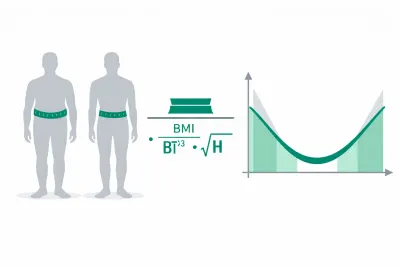
ABSI Calculator: A Body Shape Index & Mortality Risk
Free ABSI calculator computes A Body Shape Index from waist, height, and BMI to estimate visceral fat and mortality risk independent of body mass index.

Adult BMI Calculator for Men & Women — WHO BMI Guide
Use the adult BMI calculator to find your BMI with WHO categories. Enter metric or imperial units to see your status and BMI ranges quickly and clearly.
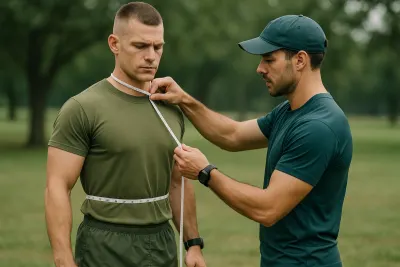
Army Body Fat Calculator — AR 600‑9 Standard Compliance
Check compliance with the Army body fat calculator per AR 600-9 standards. Enter circumference measures by sex to estimate body fat % and see pass/fail status.
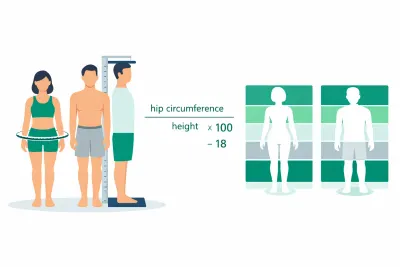
Body Adiposity Index Calculator (BAI) — Body Fat %
Free body adiposity index calculator estimates body fat percentage from hip circumference and height using the BAI formula, no weight or scale needed.
Body Composition Calculator — Fat, Lean Mass Breakdown
Use our body composition calculator to estimate body fat percentage, fat mass, and lean mass from tape measurements. Switch units and get clear categories.

Body Fat Calculator — Percentage for Men & Women (Tape)
Estimate with the body fat percentage calculator (body fat calculator) using Navy circumference equations. Supports metric/imperial and sex‑specific inputs.