Weight Loss Percentage Calculator
Weight change
7.8%
Total
-7.0 kg
Informational only. Not medical advice.
Weight Loss Percentage
Total change
-7.0 kg
-15.4 lb
Weekly pace
—
Weeks tracked
—
Goal Progress
58% of goal reached
Add start and as-of dates to estimate a timeline.
Projection assumes the same average weekly pace continues.
Weight Loss Percentage Reference
| % Lost | Category |
|---|---|
| 0 – 2% | Small change |
| 2 – 5% | Early progress |
| 5 – 10% | Meaningful progress |
| 10 – 15% | Significant change |
| 15%+ | Major transformation |
- Switch between kg and lb at any time — your entries convert automatically.
- A loss of about 5 – 10% of starting weight is considered clinically meaningful for most adults.
- Large, rapid changes can be water or glycogen; focus on multi-week trends.
- Weigh at a consistent time (e.g., morning, before breakfast) for more reliable comparisons.
This calculator is for informational purposes only and does not replace medical advice. It reports the arithmetic difference between two weight readings. It cannot distinguish fat loss from water or lean mass changes. Consult a healthcare professional for personalized guidance.
Educational tool, not medical advice. Check this tool’s method and limitations before interpreting a result. Talk to a qualified healthcare professional before making decisions about medication, diet, exercise, or treatment. See our Terms of Use.
Your rating helps improve Weight Loss Percentage Calculator. We store only an anonymized vote (no personal data).
How to Use Weight Loss Percentage Calculator
Step 1: Choose units
Select Metric (kg) or US (lb). Values convert automatically when you switch.
Step 2: Enter starting and current weight
Type your starting weight and current weight. The calculator shows percent lost, total change in both kg and lb, and a color-coded status badge instantly.
Step 3: Add dates for weekly pace
Enter a start date and as-of date to see your average weekly pace with a rate classification (slow, recommended, aggressive).
Step 4: Set a goal weight
Enter a goal weight to see a progress bar, estimated weeks remaining, and an approximate target date based on your current pace.
Step 5: Copy or compare results
Tap Copy Summary to save your results. Check the reference table below to see how your weight loss percentage compares to clinical thresholds.
Key Features
- Instant weight loss percentage calculation
- Total change in kg and lb side by side
- Average weekly pace with rate classification
- Goal progress bar and timeline estimate
- Visual reference table for weight loss thresholds
- Metric and US unit auto-conversion
Understanding Results
Formula
The calculation is straightforward. Percent weight loss = (Starting weight − Current weight) ÷ Starting weight × 100. If the result is negative, it means weight gain. Total change is simply Current weight − Starting weight (negative numbers indicate loss). When you add dates, average weekly pace = Total change ÷ Weeks.
Example: If you started at 90 kg and now weigh 81.5 kg, then percent loss = (90 − 81.5) ÷ 90 × 100 = 9.4%. Total change = −8.5 kg (≈ −18.7 lb). If that change happened across 12 weeks, your average pace is −0.71 kg/week (≈ −1.6 lb/week).
Reference ranges & interpretation
Many adults see meaningful health improvements after about 5–10% loss from their starting weight. Smaller changes (2–5%) can be encouraging early progress. Day‑to‑day weight can swing from water, sodium, and glycogen, so look at multi‑week averages rather than single readings.
Typical weekly pace targets are about 0.5–1.0 kg (1–2 lb) per week for many adults. Faster rates are not necessarily better—they are simply harder to maintain and can reflect water loss. Sustainable habits, adequate protein, and sleep consistently support better long‑term outcomes.
Use this result to sanity‑check your plan: if your percentage of weight lost is rising but energy and training quality are poor, consider a smaller deficit, more protein, or a higher step count instead of additional cardio. Consistency and recovery drive durable change more than short, very aggressive cuts.
Assumptions & limitations
This tool does not diagnose or prescribe. It reports the arithmetic difference between two readings. It cannot tell how much change is fat versus water or lean mass. If you have a medical condition, are pregnant, or are managing weight for a sport or procedure, consider speaking with a clinician or registered dietitian for personalized guidance.
Complete Guide: Weight Loss Percentage Calculator

On this page
A weight loss percentage calculator turns two numbers — your starting weight and current weight — into the single most useful metric for tracking progress. Raw kilograms or pounds lost can mislead: losing 5 kg matters far more to someone who started at 60 kg (8.3% lost) than to someone who started at 120 kg (4.2% lost). Percentage normalizes the comparison, which is exactly why clinical researchers and bariatric programs use it as their primary outcome measure.
This guide covers the math behind the tool, walks through real examples, and explains what the research says about different weight loss thresholds. If you already know your numbers, scroll up to the calculator; otherwise, read on.
Why percentage beats raw pounds or kilograms
Imagine two people who each lost 7 kg. Person A dropped from 70 to 63 kg — a 10% change that likely reshaped their body composition. Person B went from 130 to 123 kg — just 5.4%, which may not even be noticeable in the mirror. The raw number is identical, but the physiological impact isn't.
Percent weight change also makes it easy to compare your own progress across time. If you lost 3% in month one and 1.5% in month two, you can spot the slowdown immediately — without doing mental math about whether 2.7 kg versus 1.4 kg is better or worse at your new, lower starting point. That's what makes a percent weight loss calculator more practical than a simple subtraction.
The formula and a worked example
The math is one fraction:
Weight loss % = (Starting weight − Current weight) ÷ Starting weight × 100
Worked example: You weighed 198 lb on January 1 and now weigh 183 lb. The change is 198 − 183 = 15 lb. Divide by the starting weight: 15 ÷ 198 = 0.0758. Multiply by 100 and you get 7.6% weight loss. That 15 lb lands squarely in the "meaningful progress" bracket that research links to measurable health improvements.
If the result is negative (current weight is higher than starting weight), it simply means weight gain. The same formula works for a weight gain calculator scenario — you just interpret the sign differently.
What different weight loss percentages actually mean
Not all weight loss is created equal. Clinical guidelines cluster outcomes into ranges:
| % Lost | What the evidence says |
|---|---|
| Under 2% | Often within normal day-to-day fluctuation. Keep tracking but don't over-interpret a single reading. |
| 2 – 5% | Early signal that your calorie deficit and activity level are working. You may notice clothes fitting differently before the scale moves dramatically. |
| 5 – 10% | Clinically meaningful. A 2016 meta-analysis in Obesity Reviews confirmed that a 5-10% reduction improves blood pressure, fasting glucose, and triglycerides in overweight adults. |
| 10 – 15% | Major metabolic benefit. The Diabetes Prevention Program found that participants who lost ≥10% cut their risk of developing type 2 diabetes by 58% over three years. |
| 15%+ | Substantial transformation. Often requires medical supervision. GLP-1 medications like semaglutide have pushed mean weight loss into this range in clinical trials — see the Ozempic dosage calculator for the week-by-week titration schedule those trials used. |
Weekly pace: what counts as safe?
The CDC and NHS both recommend 0.5 – 1.0 kg (1 – 2 lb) per week for most adults. That translates to a daily deficit of roughly 500 – 1,000 calories — which you can estimate using the weight loss calorie calculator. Going faster isn't automatically dangerous, but rates above 1.5 kg per week usually involve water and glycogen depletion rather than fat loss, and they're hard to maintain.
A practical rule: if your weekly pace stays between 0.5% and 1% of your current body weight, you're in a sweet spot that preserves muscle while losing fat. This calculator classifies your weekly rate (slow, recommended, aggressive) so you can adjust without guesswork. Pair it with the TDEE calculator to set a deficit that matches your activity level.
Setting goals and reading the timeline
Enter a goal weight and the calculator shows three things: a progress bar (how far you've come relative to start → goal), estimated weeks remaining at your current pace, and an approximate calendar date. These are projections, not promises — your pace will slow as body weight drops because your basal metabolic rate decreases with a smaller body.
Plan for a plateau somewhere around the 8 – 12 week mark. At that point, revisit your calorie target with the calorie calculator and adjust downward by 100 – 200 calories, or add 2,000 – 3,000 steps per day. Small changes restart progress without the pain of a dramatic overhaul.
Plateaus, fluctuations, and when to worry
Your body weight can swing 1 – 3 lb (0.5 – 1.5 kg) within a single day from water, sodium, glycogen, and gut contents. A high-sodium meal the night before can mask an entire week of fat loss on the scale. That's why this tool emphasizes weekly averages over individual readings.
True plateaus — where your weekly average stays flat for three or more weeks — signal one of three things: (1) your calorie intake has crept up, (2) your activity has dropped, or (3) your body's energy needs have decreased because you now weigh less. Option 3 is the most common and the easiest to fix.
Menstrual cycles add another layer for women. Weight can spike 1 – 2 kg in the luteal phase and drop back afterward. Comparing the same week of each cycle (cycle day 7, for instance) smooths out this noise better than comparing arbitrary weeks. For additional body metrics that complement scale weight, try the waist-to-height ratio calculator or the body fat percentage calculator.
Another often-overlooked factor: strength training can add lean mass while you lose fat, keeping scale weight stagnant even as your body composition improves. If the scale hasn't budged but your waist measurement shrinks by a centimeter or two, you're making real progress that the scale misses. That's exactly why combining a weight change percentage calculator with a tape measure and regular progress photos gives you a much more complete picture than any single metric alone.
How to get the most from this weight loss percentage calculator
First, weigh yourself consistently — same time of day, same clothing, same scale. Morning readings before eating and after using the bathroom produce the least variability. Second, use the date fields. Without dates, you only get a snapshot; with dates, you unlock your weekly pace and the goal timeline projection. Third, revisit the calculator every week or two rather than daily. A single-day spike will distort your percentage, but a week-over-week comparison filters out noise.
If you tap Copy Summary, the tool saves your result as plain text that you can paste into a notes app, health journal, or message to a coach. Tracking your percent weight change over months — not just the raw number — makes it far easier to spot when a plateau is forming or when your pace is accelerating.
Five mistakes that skew your numbers
- Weighing at different times of day. Morning (after the bathroom, before eating) is the most consistent checkpoint. Evening weight can be 1 – 2 kg higher than morning weight in the same person.
- Comparing daily readings instead of weekly averages. A single bad day on the scale leads to panic and rash diet changes. Average 7 readings to see the real trend.
- Ignoring context. Five kilograms lost means different things at different starting points. That's the entire reason to use a weight change percentage calculator rather than staring at the raw number.
- Dropping protein too low. Calorie restriction without adequate protein (1.6 – 2.2 g/kg of lean mass) accelerates muscle loss. Use the protein calculator to set your target.
- Setting an unrealistic timeline. Aiming for 15% loss in 8 weeks is roughly 1.9% per week — aggressive by any standard. A 16 – 24 week plan for the same goal is more sustainable and preserves more muscle.
Related calculators worth trying
Planning a weight loss journey involves more than one metric. Estimate your daily energy needs with the calorie calculator, build a calorie deficit plan with the weight loss calorie calculator, or forecast when you'll hit a milestone using the weight loss date calculator. For body composition context, check the adult BMI calculator, the body fat percentage calculator, or the lean body mass calculator. If you're tracking macros alongside weight, the macro calculator pairs well with this tool.
References
- Centers for Disease Control and Prevention (CDC). Losing Weight: Getting Started. cdc.gov
- National Institute of Diabetes and Digestive and Kidney Diseases (NIDDK). Factors Affecting Weight and Health. niddk.nih.gov
- Diabetes Prevention Program Research Group. 10-year follow-up of diabetes incidence and weight loss. The Lancet 2009;374(9702):1677-86.

Written by Marko Šinko
Co-Founder & Lead Developer
Computer scientist and developer working on calculator implementation, data handling, and accessible interfaces. His authorship describes development work, not independent medical review.
View full profileFrequently Asked Questions
How do I calculate my weight loss percentage?
Weight loss percentage = (starting weight minus current weight) divided by starting weight times 100. For example, going from 90 kg to 83 kg: (90 - 83) / 90 x 100 = 7.8% lost. Enter both weights above and the calculator does this instantly.
What is a good weight loss percentage per week?
Most health organizations recommend losing about 0.5 to 1.0 kg (1 to 2 lb) per week, which usually translates to roughly 0.5 to 1% of body weight per week. Faster rates often reflect water loss rather than fat loss and are harder to sustain.
What percentage of weight loss is considered significant?
A 5 to 10% reduction from your starting weight is clinically meaningful for most adults. Research shows that even a 5% loss can improve blood pressure, cholesterol, and blood sugar levels. A 10% loss significantly reduces the risk of type 2 diabetes and heart disease.
How do I calculate percent weight change between two weights?
Use the formula: (current weight minus starting weight) divided by starting weight times 100. A negative result means weight loss; a positive result means weight gain. This weight change calculator shows both the percentage and the total change in kg and lb.
Does the calculator work with both kilograms and pounds?
Yes. Switch between Metric (kg) and US (lb) at any time. Your entered values convert automatically, and the results always show both units side by side so you can compare easily.
Can I estimate how long it will take to reach my goal weight?
Yes. Enter a goal weight along with your start date and today's date. The calculator divides the remaining weight by your average weekly pace to estimate weeks to goal and shows an approximate target date. The progress bar shows how far along you are.
Why does my weight fluctuate day to day?
Daily weight swings of 1 to 3 lb (0.5 to 1.5 kg) are normal and caused by water retention, sodium intake, glycogen stores, and digestive contents. Weigh yourself at the same time each day (ideally morning before breakfast) and compare weekly averages, not single readings.
Is my data saved or shared?
No. All calculations happen in your browser and nothing is stored or transmitted. Use the Copy Summary button to save your results, or take a screenshot for your records.
Related Calculators
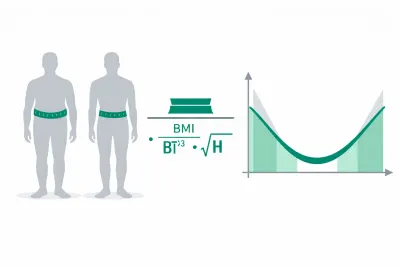
ABSI Calculator: A Body Shape Index & Mortality Risk
Free ABSI calculator computes A Body Shape Index from waist, height, and BMI to estimate visceral fat and mortality risk independent of body mass index.

Adult BMI Calculator for Men & Women — WHO BMI Guide
Use the adult BMI calculator to find your BMI with WHO categories. Enter metric or imperial units to see your status and BMI ranges quickly and clearly.

Army Body Fat Calculator — AR 600‑9 Standard Compliance
Check compliance with the Army body fat calculator per AR 600-9 standards. Enter circumference measures by sex to estimate body fat % and see pass/fail status.
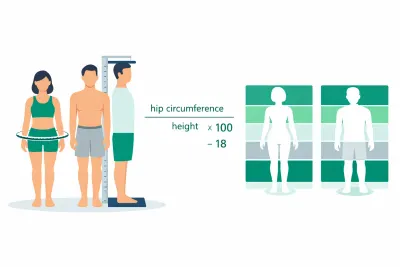
Body Adiposity Index Calculator (BAI) — Body Fat %
Free body adiposity index calculator estimates body fat percentage from hip circumference and height using the BAI formula, no weight or scale needed.
Body Composition Calculator — Fat, Lean Mass Breakdown
Use our body composition calculator to estimate body fat percentage, fat mass, and lean mass from tape measurements. Switch units and get clear categories.

Body Fat Calculator — Percentage for Men & Women (Tape)
Estimate with the body fat percentage calculator (body fat calculator) using Navy circumference equations. Supports metric/imperial and sex‑specific inputs.