Estimate Your Sunburn Time by UV Index
Adjusted UV Index
Burn time
33 min
With SPF: 8 hr 20 min
Pick the closest match for your natural, unexposed skin.
Typical use delivers roughly 50% of labeled SPF in real-world conditions.
UV rises ~12% per 1,000 m elevation.
For guidance only. Individual responses vary.
Adjusted UV Index
Time to First Redness
33 min
without sunscreen
Time with SPF 30
8 hr 20 min
effective SPF ~15
High UV — SPF 30-50 essential. Limit midday sun, wear a hat.
Set a reapply reminder every 120 minutes, or after swimming/sweating.
Base UVI
6
Cloud Factor
×1.0
Altitude Factor
×1.00
Surface Factor
×1.00
Burn Time by Skin Type at UV 6.0
| Skin Type | MED | No SPF | With SPF 30 |
|---|---|---|---|
| I | 200 | 22 min | 5 hr 34 min |
| II | 250 | 28 min | 6 hr 57 min |
| III | 300 | 33 min | 8 hr 20 min |
| IV | 400 | 44 min | 11 hr 7 min |
| V | 500 | 56 min | 13 hr 54 min |
| VI | 600 | 67 min | 16 hr 41 min |
UV Index Burn Time Reference Table (Skin Type III)
| UV Index | Risk Level | Burn Time | With SPF 30 |
|---|---|---|---|
| 1 | Low | 3 hr 20 min | 50 hr 2 min |
| 2 | Low | 1 hr 40 min | 25 hr 1 min |
| 3 | Moderate | 67 min | 16 hr 41 min |
| 4 | Moderate | 50 min | 12 hr 30 min |
| 5 | Moderate | 40 min | 10 hr |
| 6 | High | 33 min | 8 hr 20 min |
| 7 | High | 29 min | 7 hr 9 min |
| 8 | Very High | 25 min | 6 hr 15 min |
| 9 | Very High | 22 min | 5 hr 34 min |
| 10 | Very High | 20 min | 5 hr |
| 11 | Extreme | 18 min | 4 hr 33 min |
| 12 | Extreme | 17 min | 4 hr 10 min |
Sun Safety Reminders
- Reapply broad-spectrum sunscreen at least every 2 hours and after swimming or sweating.
- Seek shade and cover up during peak hours (10 AM to 4 PM) when UV is strongest.
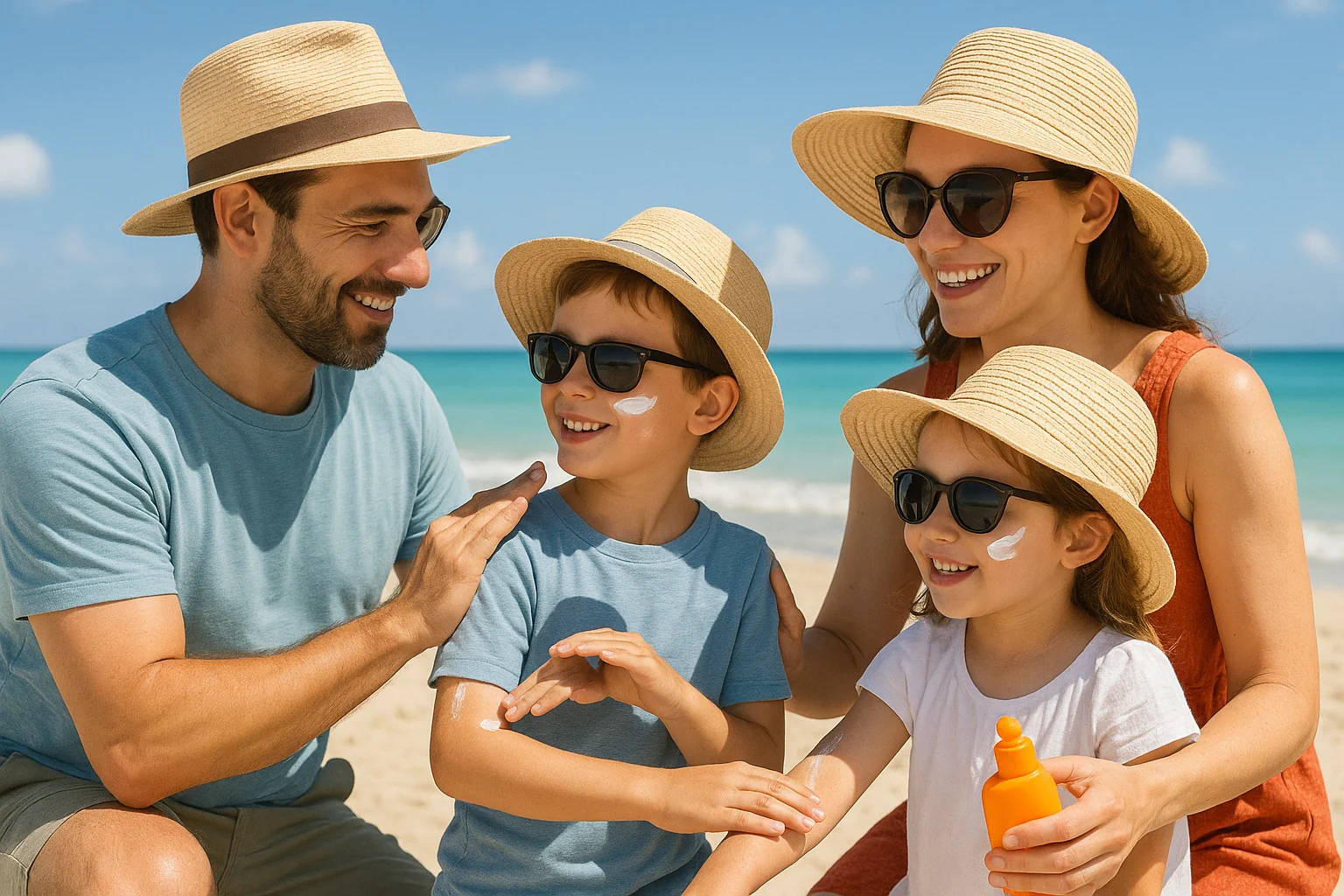
- Wear sunglasses that block UVA and UVB, plus a wide-brim hat for face and neck protection.
- Snow, sand, and water reflect UV onto your skin even in shade. Plan shorter exposure cycles.
- This calculator is an educational tool, not medical advice. If you notice skin changes, consult a healthcare professional.
Educational tool, not medical advice. Check this tool’s method and limitations before interpreting a result. Talk to a qualified healthcare professional before making decisions about medication, diet, exercise, or treatment. See our Terms of Use.
Your rating helps improve UV Index Calculator: Burn Time, SPF & Sun Exposure. We store only an anonymized vote (no personal data).
How to Use UV Index Calculator: Burn Time, SPF & Sun Exposure
Step 1: Set the UV index
Move the slider to match the current UV index from your weather app or local forecast (0 to 12).
Step 2: Choose your skin type
Select your Fitzpatrick skin type (I through VI) from the dropdown. Pick the lighter option if you are between two types.
Step 3: Pick your SPF
Tap an SPF button (None, 15, 30, 50, 70, or 100) and choose Typical use or Ideal application quality.
Step 4: Adjust conditions
Set cloud cover, altitude in meters, and surface type (water, sand, snow) to refine the UV adjustment.
Step 5: Read your burn time
View estimated minutes to first redness with and without SPF, the burn time comparison table for all skin types, and the full UV index reference table.
Step 6: Copy or share results
Tap Copy Results to save a text summary to your clipboard for easy reference or sharing.
Key Features
- Sunburn time estimation by Fitzpatrick skin type (I–VI)
- SPF protection calculator with real-world application factor
- Burn time comparison table across all six skin types
- UV Index reference table with burn times at every level
- Environmental adjustments for clouds, altitude, and surface reflection
- Reapply reminder timer and SPF advice by UV level
Understanding Your UV Burn Time Results
Burn Time Formula
The UV index calculator estimates minutes to first redness using a formula based on the minimal erythemal dose (MED) and the adjusted UV index:
Burn time (minutes) = (0.667 × MED) ÷ adjusted UVI
MED values by skin type: Type I = 200 J/m², Type II = 250, Type III = 300, Type IV = 400, Type V = 500, Type VI = 600. The adjusted UVI applies multipliers for cloud cover (0.5–1.0), altitude (+12% per 1,000 m), and surface reflection (1.0–1.8). SPF extends burn time by multiplying the unprotected duration, discounted to ~50% of the labeled value for typical application.
Reference Ranges & Interpretation
UV Index 0–2 is low risk; 3–5 moderate; 6–7 high; 8–10 very high; 11+ extreme. At UV 6, fair skin (Type II) burns in roughly 28 minutes unprotected. At UV 10, that drops to about 17 minutes. The burn time comparison table in the calculator shows times for all six skin types at your current UV level. Shade, broad-spectrum SPF 30+, a wide-brim hat, and UPF clothing are the most effective protection layers.
Clouds reduce UV but not always by much: thin clouds may only cut 10–20%. Altitude adds roughly 12% UV per 1,000 meters of elevation. Snow reflects about 80% of UV and sand about 15%, so beach and ski environments demand shorter exposure cycles even with sunscreen. Always reapply SPF every 2 hours and after swimming or sweating.
Assumptions & Limitations
This tool does not model time of day, ozone thickness, latitude, or shade geometry. It assumes direct, uncovered skin exposure. Real sunscreen performance depends on the amount applied, even coverage, skin contact time, water resistance, and reapplication schedule. For infants under 6 months and people on photosensitizing medications, discuss sun protection with a clinician before relying on any calculator.
This UV index calculator is an educational tool, not medical advice. Individual burn times vary based on recent sun history, medications, and skin conditions. If you notice blistering, new or changing moles, or any unusual skin response, seek medical attention.
Complete Guide: UV Index Calculator: Burn Time, SPF & Sun Exposure
On this page
A UV index calculator turns the abstract UV number from your weather app into something you can act on: estimated minutes before your skin starts to redden. At UV 8 with fair skin (Type II) and no sunscreen, that window is roughly 21 minutes. Add SPF 30 with typical application and you might get about 2.5 hours—still not unlimited, and still demanding reapplication. Knowing your personal burn time changes how you plan a beach day, a lunch run, or a weekend hike.
This guide explains how the UV index burn time estimate works, walks through a real calculation step by step, compares all six Fitzpatrick skin types, and covers the environmental factors that most people overlook. If you want to understand why two days at the same temperature can feel completely different on your skin, read on.
What the UV index actually measures
The UV Index is a standardized scale from 0 to 11+ that reflects the intensity of sunburn-producing ultraviolet radiation at ground level. It was developed by the WHO to give people a consistent way to judge sun risk across countries and climates. The scale groups neatly: 0–2 is low, 3–5 moderate, 6–7 high, 8–10 very high, and 11+ extreme.
One thing catches people off guard: UV doesn't track temperature. A crisp 18°C day at 2,500 m altitude can deliver UV 9, while a humid 32°C afternoon at sea level under thin cloud might sit at UV 5. That disconnect is why checking UVI alongside temperature gives you a better picture. For heat-stress planning, pair this with the heat index calculator and the humidity calculator.
Worked example: UV 7, fair skin, SPF 30
Suppose your weather app shows UV 7 on a clear day at sea level. You have Fitzpatrick Type II skin (fair, usually burns) and you're applying SPF 30 normally. Here's the math:
- MED for Type II: 250 J/m². This is the UV energy needed to produce first visible redness on untanned Type II skin.
- Adjusted UVI: 7.0 (clear sky × 1.0, sea level × 1.0, no reflective surface × 1.0).
- Unprotected burn time: (0.667 × 250) / 7.0 = 166.75 / 7.0 ≈ 24 minutes.
- Effective SPF: Typical real-world application delivers about 50% of the label, so SPF 30 → effective SPF ~15.
- Protected time: 24 min × 15 ≈ 356 minutes (~5 hr 56 min). But you must still reapply every 2 hours and after swimming or sweating.
Now change one factor: you're on fresh snow at 2,000 m altitude. The adjusted UVI jumps to 7.0 × 1.24 (altitude) × 1.8 (snow) ≈ 15.6. Your unprotected burn time drops to about 11 minutes, and even with SPF 30 you'd only get around 2 hr 40 min. Same UV forecast, dramatically different outcome.
Skin types (I–VI) and burn time differences
The Fitzpatrick scale classifies skin by its response to UV exposure. It isn't a precise medical diagnostic—it's a practical shorthand that lets you estimate MED without laboratory testing. The spread is significant: Type I skin (MED 200) burns three times faster than Type VI (MED 600) at the same UV index.
If you're between two types, the safer bet is to choose the lighter one. MED also shifts with recent tanning history, certain medications (tetracyclines, retinoids, some NSAIDs), and individual biology. Our estimates lean conservative—better to come in early than to discover you miscalculated at UV 9 with no shade in sight.
Your Fitzpatrick type also feeds a longer-horizon question. Type I carries roughly twice the melanoma risk of Type IV, but mole count matters more — over 100 moles multiplies risk almost sevenfold. Our skin cancer risk calculator combines skin type, mole count, blistering sunburn history and family history into a single melanoma risk multiplier and a screening interval.
UV index calculator burn time reference table
This table shows approximate minutes to first redness by UV index and skin type, assuming clear sky, sea level, no reflective surface, and no sunscreen. Use it as a quick lookup when your weather app reports the UV index:
| UV Index | Type I | Type II | Type III | Type IV | Type V | Type VI |
|---|---|---|---|---|---|---|
| 2 | 67 min | 83 min | 100 min | 133 min | 167 min | 200 min |
| 4 | 33 min | 42 min | 50 min | 67 min | 83 min | 100 min |
| 6 | 22 min | 28 min | 33 min | 44 min | 56 min | 67 min |
| 8 | 17 min | 21 min | 25 min | 33 min | 42 min | 50 min |
| 10 | 13 min | 17 min | 20 min | 27 min | 33 min | 40 min |
| 12 | 11 min | 14 min | 17 min | 22 min | 28 min | 33 min |
These numbers assume unprotected, untanned skin under direct sun. Altitude, snow, sand, and water all shorten these times. The calculator above adjusts for those variables automatically.
SPF in the real world: what the label doesn't tell you
Lab-tested SPF values assume 2 mg/cm² of sunscreen on the skin. Most people apply about half that. A 2019 study in Acta Dermato-Venereologica found that typical application gives roughly 40–50% of labeled protection. That's why our calculator includes a “Typical use” mode that halves the SPF number—it's closer to reality for most people.
Does that mean SPF 100 is twice as good as SPF 50? Not in a meaningful way. SPF 30 blocks about 97% of UVB; SPF 50 blocks 98%; SPF 100 blocks 99%. The marginal gain shrinks fast. What matters more than label number: apply enough (a shot-glass amount for full body), cover easily missed spots (ears, back of neck, tops of feet), and reapply every 2 hours without exception.
Broad-spectrum formulas add UVA protection, which matters for long-term skin health even when you don't burn. Water-resistant formulas hold up during swimming and sweating but still break down over time. Clothing with UPF rating provides the most consistent defense because it doesn't wash off or thin out. A UPF 50 shirt blocks 98% of UV regardless of how much you sweat, making it the most reliable single layer of protection for active outdoor days.
Clouds, altitude, and reflective surfaces
Three environmental factors modify how much UV reaches your skin beyond the base UV index:
- Clouds: Heavy overcast cuts UV by roughly 50%. Thin or scattered clouds? Only 10–20% reduction. Some cloud types even amplify UV briefly through edge scattering.
- Altitude: UV increases about 10–12% per 1,000 meters. A ski lodge at 3,000 m can have 36% more UV than the parking lot at sea level.
- Surface reflection: Fresh snow bounces back ~80% of incoming UV. Sand reflects ~15%, water ~10%. That reflected UV hits you from below—under your chin, behind your ears, under your nose—places sunscreen often misses.
These factors stack. A partly cloudy day at 2,000 m on snow can deliver adjusted UV well above 12, even when the base forecast says 8. Plan hydration alongside sun protection. The water intake calculator and hydration calculator help you dial in fluid needs for active outdoor days.
Three mistakes that shorten your safe sun time
After reviewing the dermatology literature and common user questions, three errors come up repeatedly:
- Applying too little sunscreen. Most people use a quarter to half the tested amount. That turns SPF 50 into SPF 12–25 in practice. Measure it: a teaspoon for the face, a shot glass for the body.
- Forgetting to reapply. Sunscreen degrades from UV exposure, sweat, and friction. Two hours is the maximum interval, not a suggestion. After swimming or toweling off, reapply immediately regardless of time elapsed.
- Ignoring reflected UV. Sitting under a beach umbrella on white sand still exposes you to ~15% reflected UV from below. Snow is worse at 80%. Shade alone isn't full protection when you're surrounded by reflective surfaces. Even calm water reflects enough UV to accelerate burns on exposed areas like the chin, neck, and under the nose.
Kids, medications, and sensitive skin
Children's skin is thinner and more vulnerable to UV damage. The American Academy of Dermatology recommends keeping infants under 6 months out of direct sunlight entirely. For older children, build habits early: hat, sunglasses, shade at recess, and sunscreen reapplication during sports.
Several common medications increase photosensitivity: doxycycline, hydrochlorothiazide, certain NSAIDs, retinoids, and some antidepressants. If you're on any of these, your effective MED drops below the standard estimate. Consult your prescriber about sun precautions and consider using the calculator's next-lighter skin type as a conservative proxy.
Older adults often have thinner skin and may be on multiple medications that increase UV sensitivity. Cumulative lifetime UV exposure is the primary modifiable risk factor for most skin cancers, which makes consistent protection at every age important. For anyone managing chronic conditions or assessing broader lifestyle risk, the cancer risk calculator provides context on additional modifiable factors beyond sun exposure.
Practical sun safety checklist
- Check today's UV index before heading out. Use the calculator to estimate your burn window.
- Clothing first: a wide-brim hat, UV-blocking sunglasses, and long sleeves beat any sunscreen.
- Apply broad-spectrum SPF 30+ generously. Cover ears, back of neck, and tops of feet.
- Set a phone timer to reapply every 2 hours (or sooner if swimming/sweating).
- Plan shade breaks during peak UV hours (10 AM–4 PM).
- Hydrate actively. Pair with the heat index calculator on hot days.
- On windy cold days, UV can still be intense. Check the wind chill calculator for comfort planning, but don't skip sun protection.
- If you notice new or changing moles, a burn that blisters, or skin that doesn't heal, see a dermatologist.
Don't forget the eyes: UV exposure contributes to cataracts and pterygium. Choose sunglasses that block 99–100% of UVA and UVB. Wraparound styles or a hat brim reduce peripheral exposure. For broader outdoor health context, the air quality calculator flags smoke and pollution risks on top of UV.
References
- World Health Organization. The UV Index. WHO Q&A.
- Fitzpatrick TB. The validity and practicality of sun-reactive skin types I through VI. Arch Dermatol. 1988;124(6):869–871.
- Petersen B et al. Sun and ski holidays improve vitamin D status, but are associated with high levels of DNA damage. J Invest Dermatol. 2014;134(11):2806–2813.
- Ou-Yang H et al. High-SPF sunscreens (SPF ≥ 70) may provide ultraviolet protection above minimal recommended levels. J Am Acad Dermatol. 2012;67(6):1220–1227.

Written by Jurica Šinko
Founder & CEO
Entrepreneur and health information advocate, passionate about making health calculations accessible to everyone through intuitive digital tools.
View full profileFrequently Asked Questions
How long does it take to get sunburned based on the UV index?
Burn time depends on UV index and skin type. At UV 6, fair skin (Type II) may redden in about 28 minutes without sunscreen, while medium skin (Type III) gets roughly 33 minutes. At UV 10, those times drop to around 17 and 20 minutes respectively. Higher UV means faster burns.
What SPF should I use for a UV index of 6, 8, or 10?
At UV 6 (high), SPF 30 or above is recommended. At UV 8-10 (very high), SPF 50+ offers better protection. Real-world application typically delivers about half the labeled SPF, so applying generously and reapplying every 2 hours matters more than chasing higher numbers.
How does the UV index calculator estimate burn time?
The formula divides the minimal erythemal dose (MED) for your skin type by the adjusted UV index: minutes = (0.667 x MED) / adjusted UVI. MED ranges from 200 J/m2 for very fair skin (Type I) to 600 J/m2 for deeply pigmented skin (Type VI). Cloud cover, altitude, and surface reflection modify the base UV value.
What are Fitzpatrick skin types I through VI?
The Fitzpatrick scale classifies skin by its response to UV. Type I is very fair and always burns. Type II is fair and usually burns. Type III is medium and sometimes burns. Type IV is olive, rarely burns. Type V is dark brown, very rarely burns. Type VI is deeply pigmented and hardly ever burns. Choosing the right type gives a more accurate burn time estimate.
Does sunscreen really multiply my safe sun exposure time?
SPF extends time before redness, but real-world protection is lower than the label. Most people apply only half the tested amount, so SPF 30 often behaves closer to SPF 15 in practice. Reapply every 2 hours and after swimming or sweating regardless of SPF number.
Do clouds reduce the UV index?
Thick overcast can cut UV by roughly 50%, but thin or broken clouds only reduce it 10-20%. On partly cloudy days you can still burn quickly. Snow reflects about 80% of UV and sand about 15%, which can increase your effective UV exposure even in partial shade.
Can I get sunburned at UV index 2 or 3?
Yes, though it takes longer. At UV 2, fair skin (Type I) may start to redden after about 67 minutes of unprotected exposure. At UV 3, that drops to roughly 44 minutes. People with very fair skin should still use SPF 15+ and limit extended midday exposure even on low-UV days.
Is this UV index calculator a substitute for medical advice?
No. This is an educational planning tool. Individual sensitivity varies based on medications, skin conditions, and recent sun history. If you notice new or changing moles, blistering burns, or unusual skin changes, consult a healthcare professional promptly.
Related Calculators

Adult Vaccination Schedule Calculator — Expert Guide
Use the adult vaccination schedule calculator to see age‑ and risk‑based recommendations. Review boosters, travel needs, and timing with a printable plan.

Age Calculator: Exact Years, Months and Days Online
Use our age calculator to find your exact age in years, months and days. See totals in days, weeks, hours and minutes, compare ages and plan dates. No sign‑in.

Air Quality Calculator: AQI Levels and Health Tips
Calculate AQI from PM2.5, PM10, and O₃ with our air quality calculator. Get color‑coded categories, activity guidance, and smart tips for masks and ventilation.
Allergen Calculator for Pollen Count & Allergy Levels
Check local pollen levels and likely triggers with the Allergen Calculator. See allergen risk tiers, plan for high‑risk days, and get prevention tips.

Pooled Cohort Equations Calculator — PCE ASCVD Risk
Free pooled cohort equations calculator (PCE) estimates 10-year ASCVD risk from cholesterol, blood pressure, and smoking, with visual ACC/AHA risk tiers.

ASCVD Risk Calculator — Free 10-Year ASCVD Risk Estimate
Calculate your 10-year ASCVD risk with the free ASCVD risk calculator. Uses Pooled Cohort Equations with what-if scenarios and ACC/AHA risk categories.